What is Champions?
What if leadership was centered on what makes us human?
What if a small percentage of people could transform the world we live in?
What happens when political leadership loses its humanity? When healthcare systems, businesses, faith communities and schools lose theirs? When neighbours, friends — even families — begin to lose sight of the humanity in one another?
Dydine's story, a remarkable story of survival and becoming a champion of her own humanity, offers a rare insight to these questions.
I have been privileged to know Dydine for over 14 years. Her story and the story of Champions are intertwined. More on this later.
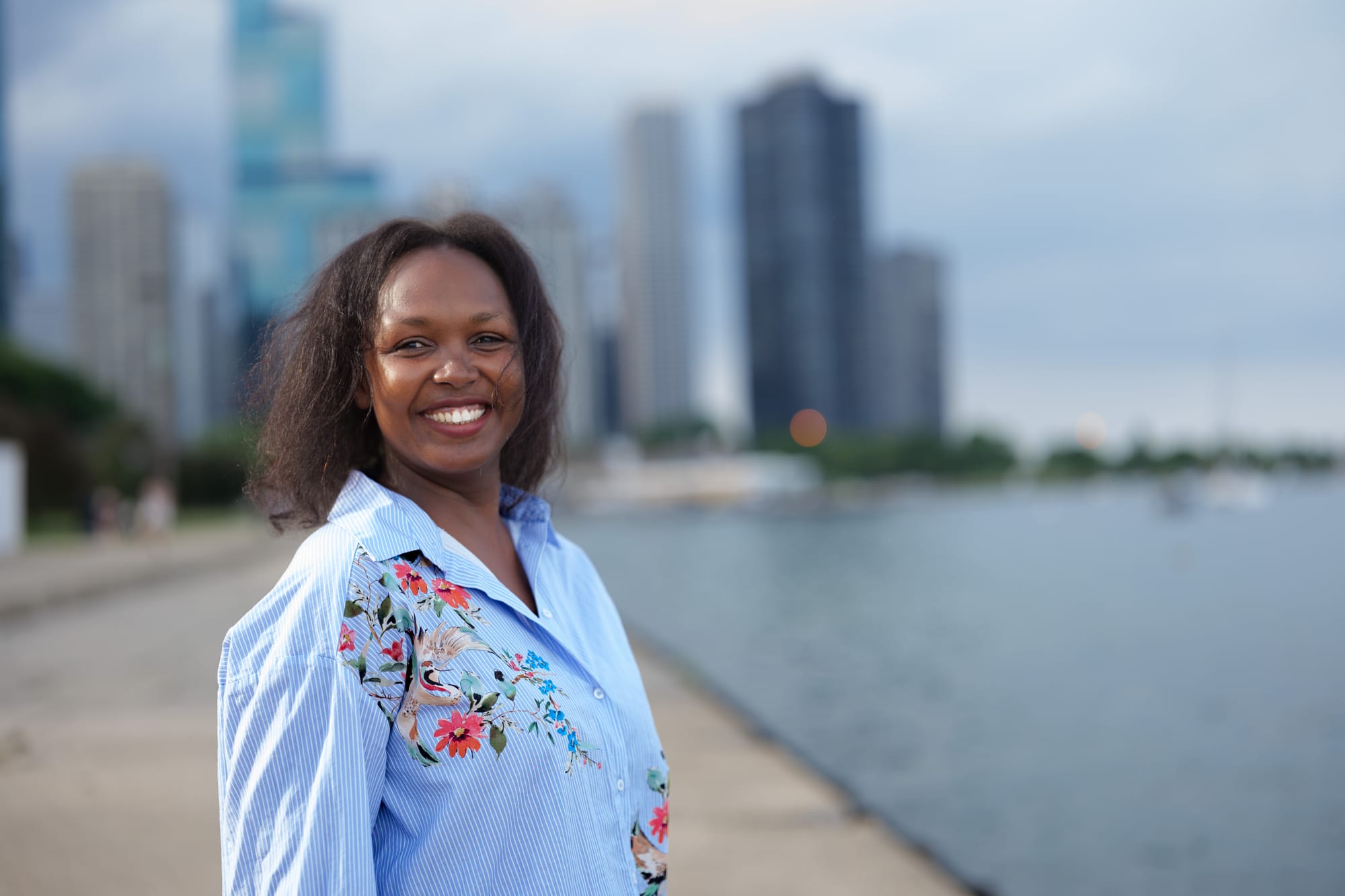
She now lives in Los Angeles. I invited her to Chicago to spend a few days to better understand Champions.
In Chicago, Dydine saw Champions at work — not as an abstract idea, but as something changing how people lead, trust, relate and care for one another.
Join as a member, read and share Stories of Humanity, and help fund the next generation of young Champions.
Her message is simple and powerful:
Humanity is already within us, but has to be activated, strengthened and called forward.

So what is Champions and how should we describe it?
My friend Andy is a journalist of some 40 years, so we played around with some descriptions.
The following ones seem to hit the right notes.
Champions is a movement enabling people, teams and communities to thrive by centering leadership on what makes us human.
We want to convey that Champions is a movement of people, it's about people.
We also want to convey the essence of 'centering', of grounding leadership in what makes us human.
And to communicate the outcome is thriving, that humanity is a performance multiplier — it creates added value, and a sustainable, positive legacy.
So there are the three key pillars: a movement, centering leadership on what makes us human, and this leads to thriving.
The link with thriving is key. Our view is that humanity and thriving are two sides of the same coin, you cannot separate them.
If you want thriving, you had better ensure that humanity is at the core, the center; and if you center your leadership on what makes you human, then you will see thriving.
Join as a member, read and share Stories of Humanity, and help fund the next generation of young Champions.
The important observation is that humanity is a performance multiplier, not a nice-to-have or optional-extra.
We created a follow-on sentence that explains the methodology, which uses a very particular leverage model, drawing from 'the 3.5% rule', the power of individuals and small cohorts to enable systemic change.
This brings real hope. It means that situations that may seem hopeless or insurmountable, are not as hopeless as you may think. The '3.5% rule', or its equivalent, brings hope.
The 3.5% rule relates to research by Dr Erica Chenoweth. More on that during another post. The key point is that history and research tells us it only takes a small percentage to enable widespread transformation that benefits all.
By inspiring small cohorts of Champions to act as agents of change, the program creates ripple effects that can transform organizations, communities and, ultimately, the course of history.
Dydine is very much one of these Champions, which is why I invited her to be an Ambassador for Champions, because she is a Champion, in a real, everyday sense.
Her life, her story brings hope.
It is how she chooses to show up each day, and encourages us to do the same.
Dydine

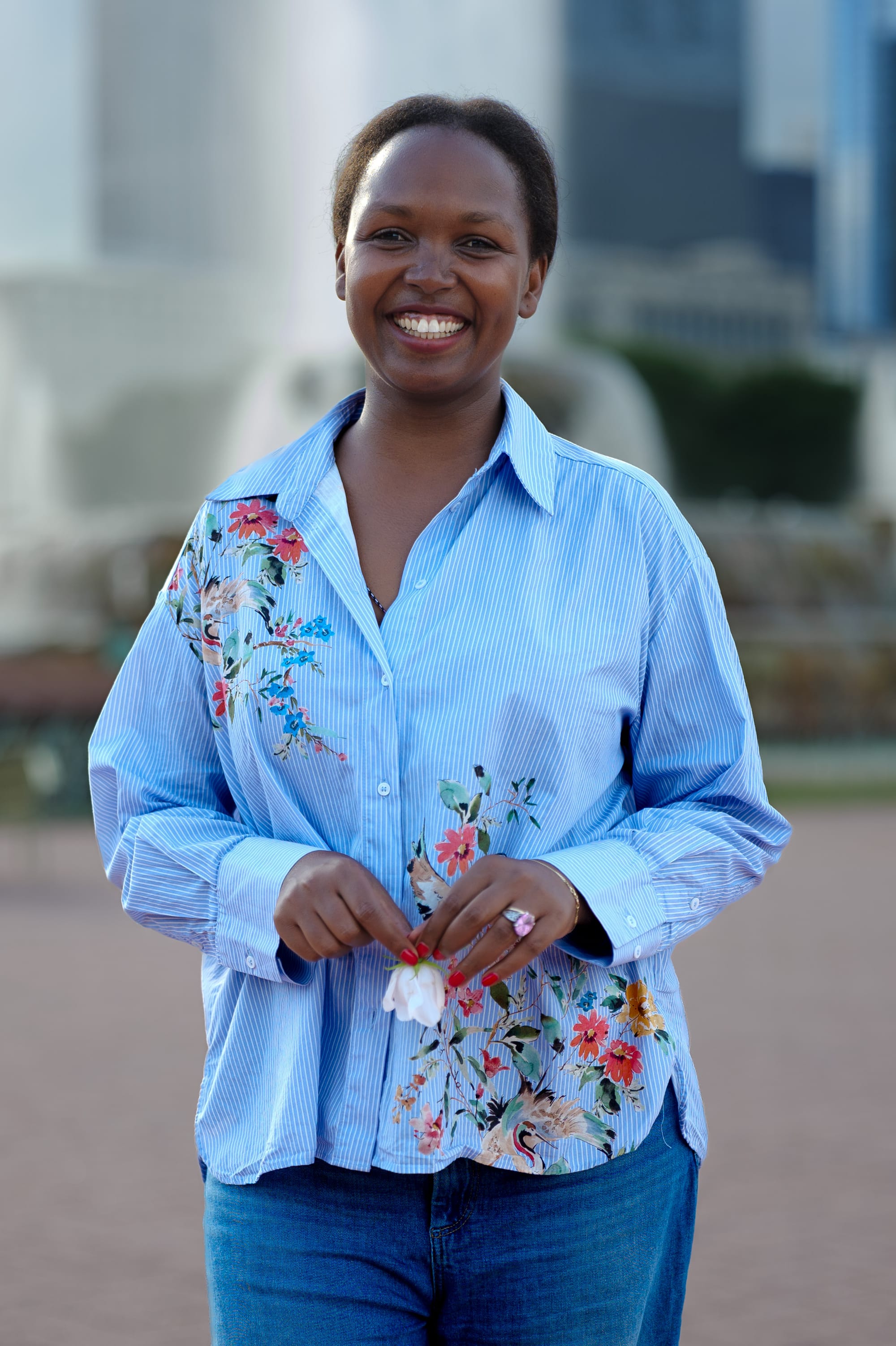
Dydine is a survivor of the 1994 genocide against the Tutsi in Rwanda.
She was 3-and-half years old during the genocide, a small girl.
She now lives in Los Angeles with her husband Alex, together with their adorable dog, Malaika (which means angel).
Mark asks Dydine about Champions
In the above video, Dydine speaks to Mark Reddy about what is Champions and what it means to be human. She offers some profound insights.
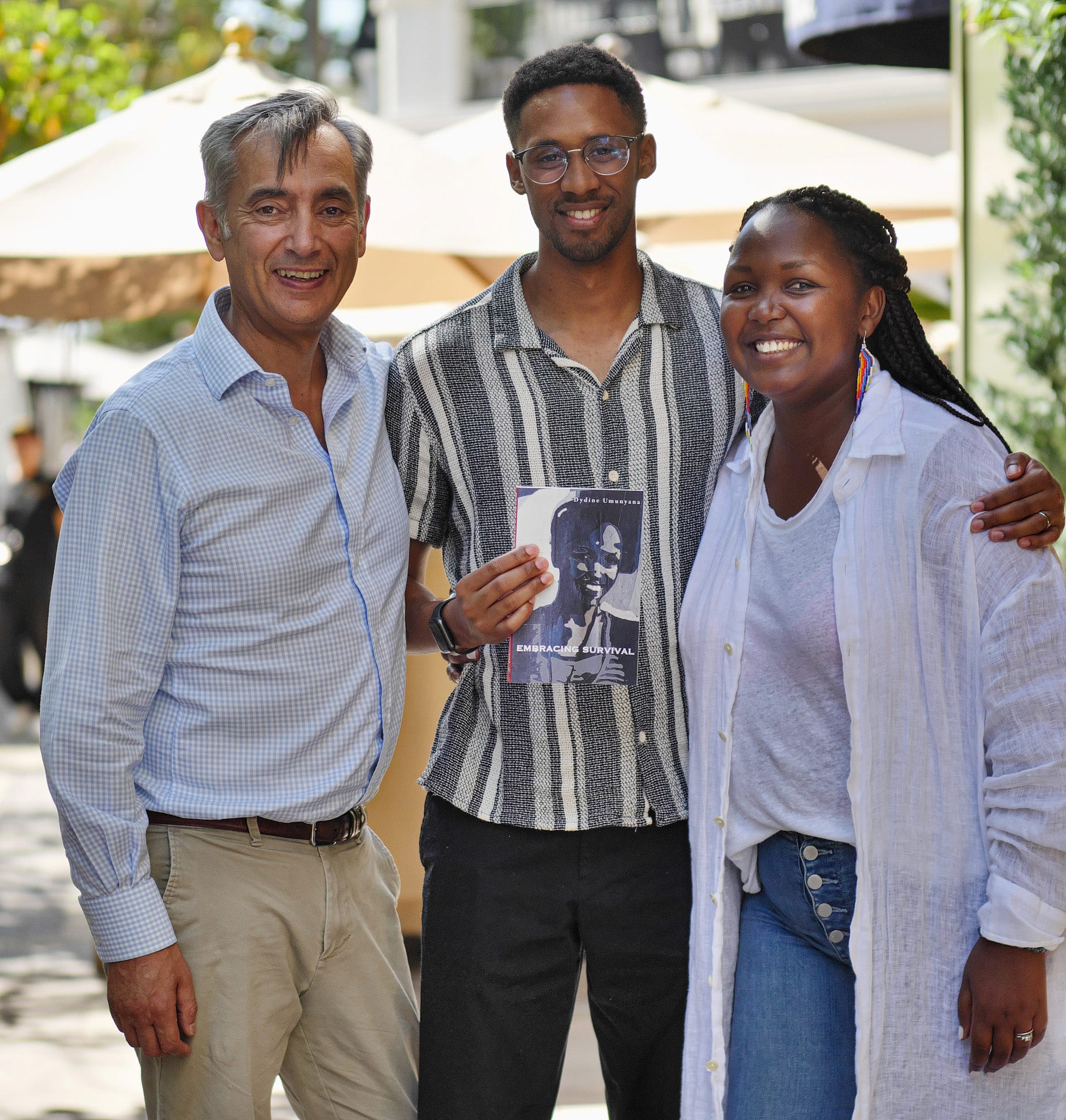
I have known Dydine since 2012, when I was serving in a senior development role with the Aegis Trust and supporting the work of the Kigali Genocide Memorial. Dydine was a Youth Peace Ambassador for the Aegis Trust, also connected with the Memorial. We've stayed in touch since.
Join as a member, read and share Stories of Humanity, and help fund the next generation of young Champions.
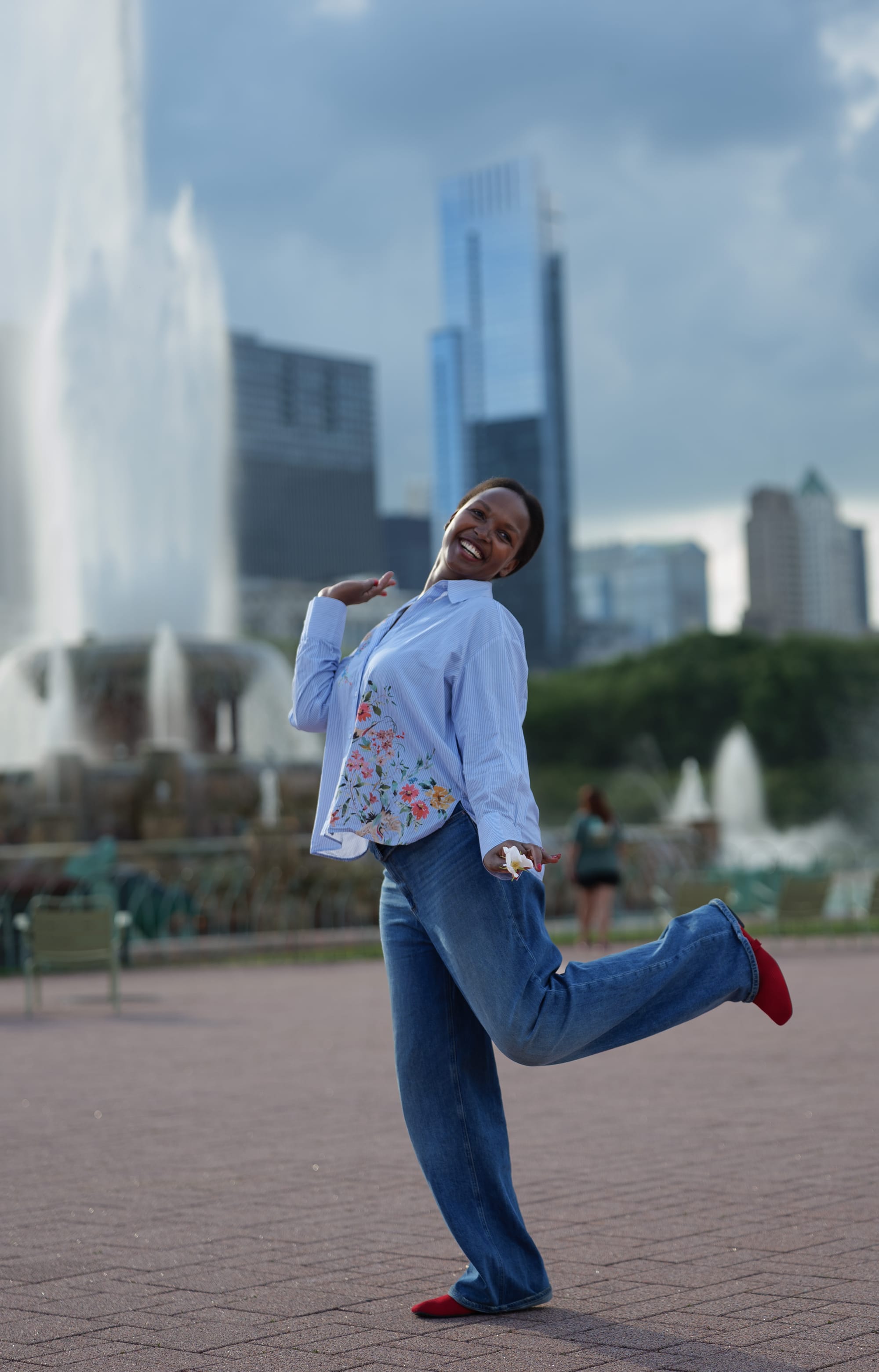
I invited Dydine to Chicago this June to learn more about Champions. It was her first time in the city. She was pleased to be there in the summer!
But the visit was not really about Chicago.

It was about seeing whether an idea born from Rwanda’s experience of reconciliation could speak to the pressures, divisions and leadership challenges of life today for America, the UK, the world — in healthcare, in communities, and especially among young people.
The answer, for Dydine, came quickly.
Transforming Healthcare
The day before she had visited the senior team at Union Health Services, a long-established, union-led healthcare organization in Chicago, where Champions has been working with staff and leaders since June 2025.
What struck her was not a strategy document, a set of slides, or even the language of the program. It was the people.
She saw joy, energy and people talking about their work with renewed pride.
Yes they have challenges, but they are facing them with humanity-centered leadership.

And in healthcare, that matters deeply.
As Dydine put it, when you are saving lives, it matters that you can still find joy in your work.
Join as a member, read and share Stories of Humanity, and help fund the next generation of young Champions.
Caring for others is not mechanical. It asks something of the whole person.
If staff are depleted, disconnected or afraid to be human at work, the whole system suffers, with burnout being a natural outcome, the result of a system that is not centered on humanity, on what makes us human.
What Dydine saw at Union Health Services was something different.
She saw leaders and staff beginning to trust one another.

She heard how people had become more willing to speak honestly, to be vulnerable, to share what they were carrying.
One leader, described staff coming into her office and feeling able to cry, to be vulnerable. For Dydine, that was not weakness. It was a sign that something important had shifted.
A workplace had become more human, discovering, activating and strengthening its own humanity, and developing the antidote to burnout — humanity in the workplace, in relationships, in the choices people make, in the systems and policies they create.
Champions is not only a skills program. It works deeper, at the level of identity — helping people ask who they choose to become and how they will show up for others. It builds on the Champions Pathway of Choice, Connection and Creation.
Choice is where everyone starts. We choose who we want to be and repeat these choices each day, they become part of who we are, our identity. This relates to the ‘power of one’, the power of individuals to effect change through their choices.
Connection, making the right connections, relationships, whether mentors, peers or others, calls this choice forward, gives leverage momentum. Like coals in fire, they create heat and energy when placed together.
And creation is what follows, when we turn choice and connection into action, the inevitable outcome of when choice and connection are combined.
Join as a member, read and share Stories of Humanity, and help fund the next generation of young Champions.
That is what Champions is about, helping people to understand they have agency, the power to change the future.

Champions is a humanity leadership program that is creating a movement, a movement where leadership is centered on what makes us human, on humanity.
Humanity leadership helps people think, relate and act differently — strengthening trust, empathy, accountability, resilience and the ability to work well with others.
It is not about being soft. It is not about avoiding difficult conversations. It is about helping people become more fully human in the way they lead, serve, listen, challenge, repair and create.
Ubumuntu - goodness
For Dydine, the word at the heart of this is ubumuntu.

In Kinyarwanda, ubumuntu means humanity — but not merely in the abstract English sense.
It means the goodness of being human. It means the human inside us that is capable of kindness, conscience, generosity and responsibility.
Also, our creativity, judgement, resilience, the ability to overcome adversity, to inspire others, having the capacity to act for the good of others, even at our own expense.
Join as a member, read and share Stories of Humanity, and help fund the next generation of young Champions.
In Rwandan culture, to say someone has ubumuntu is to say they are a good human being. To say someone has lost it is to say something deeply human has been suppressed or forgotten.
But Dydine is clear: humanity is not gone forever. It can be buried. It can be distorted. It can be silenced by fear, anger, ideology, trauma or pressure.
But it can be found again. That is why Champions matters.

It is a program, and a reminder.
It reminds people that the capacity for goodness already exists within them.
It helps them bring that humanity out into the world — in families, workplaces, schools, communities and public life.
Dydine’s own life gives this message unusual weight.
Dydine's Story - A Story of Humanity
As a survivor of the 1994 genocide against the Tutsi in Rwanda, she grew up surrounded by memory, trauma and loss.
She was three and half, nearly four, at the time. The aftermath was her childhood.
When she first encountered peace education as a young person, at the Kigali Genocide Memorial in early 2010 — where we later met — it helped her see her country’s history not only through the lens of her own pain, but with a wider perspective.

It helped her understand that other young people, even children of perpetrators, were also carrying the consequences of a history they had not chosen.
That new understanding changed her.
It did not erase what had happened. It did not make injustice less real. But it opened a different path.
She experienced how the aftermath of the genocide, its consequences, destroyed her family life, her childhood, stripping away the love and humanity she would have otherwise received.
She could have become bitter, angry, or given up on life.
At age 13, she nearly did.
As the oldest of four children, living with a father with severe PTSD and violent behaviour, and a mom that was desperately trying to hold the family together, life was tough for Dydine. As the eldest, the weight of responsibility was on her shoulders, and it almost became too much.
Dydine says she went to a nearby lake.
She chose the lake because her traumatized father had often expressed that he would rather see his children killed by water than by machetes, as his entire family had been murdered during the genocide.
Join as a member, read and share Stories of Humanity, and help fund the next generation of young Champions.
She was listening to the traumatised voice of her father, whose own humanity, and mental capacity, had been shattered by the inhumanity of the genocide.
However, when she arrived at the lake, she began to think about her younger brothers and sister. She worried about how they would handle the news of her death and how they would survive without her.
Somehow, somewhere, Dydine found that capacity within her — she found her own humanity, or at the least a spark.
Overcome with emotion for her siblings, she cried heavily and ended up falling asleep on the beach.
We say in Champions that humanity is ultimately about the capacity to act for the good of others. Dydine found that capacity, her humanity.
Her life was saved when a guard woke her up around 6:00 PM, kicking her out of the area because children were not permitted to be at the beach that late.
A somewhat sudden crash back into reality, but something important had changed. That spark had been lit and would now grow.
She safely returned home to her siblings, who were waiting for her, realizing that she would have to keep pushing forward, despite her profound anger and pain.
We talk about the Champions Pathway, how we champion our own humanity through the three core movements of Choice, Connection and Creation.
Dydine's story matches this perfectly. It started with her choice, her choice to focus on others, her siblings. It would have been so easy to allow her pain to dominate, to end her own suffering, and who would have blamed her?
But she somehow found an alternative, found her humanity and made a choice, an important choice.
Connections were key, even critical, from the guard on the beach who 'saved her', to her family, and then later, as you'll see, others - and my life's privilege to be part of these, but there are many more besides. After all, there is no monopoly on being human.
But she still needed to create, to make it happen, to create a new future.
And these movements of choice, connection and creation are a pathway that can help guide each day.
It's like each day is a lifetime, choosing how we show up, connecting with the right people, whether by chance or choice, and then creating, making it happen — and seeing the results.
Join as a member, read and share Stories of Humanity, and help fund the next generation of young Champions.
And so, Dydine began to see how stories could heal, how young people could be helped to understand themselves, and how the future could be shaped by choice rather than inherited pain.

This is one of the reasons Dydine connects so strongly with Champions.
She knows what it is like to feel pain, loss and an almost hopeless and unbearable situation.
She also knows what it means for a young person to be met by adults and mentors who say, "Your life is not over, your future is not already written, you have value, you have choices, you can create something good".
Giving Young People Hope and Agency
As she reflected in Chicago, she knows young people are at a fragile stage of life.
They are open to possibility, but also vulnerable to manipulation. Anger can be turned towards destruction, but it can also be redirected towards courage, service and purpose.
That is one of the great questions of our time.
What do we do with the energy of young people?
Do we leave them to be shaped by the loudest voices — cynicism, hatred, division, grievance and despair?
Or do we create spaces where they can discover their own humanity, strengthen their confidence, learn to trust others, and become leaders who build rather than break?

She has been in their shoes.
She knows first hand the pain and grief that can come from adversity, even the pain of growing up, finding yourself, who you are and who you want to become?
Dydine believes the answer matters urgently.
She made the point powerfully: hate is often loud. It is passionate. It gathers attention.
Goodness, love and kindness can be quieter.
They can even become shy. But young people notice what is loud. They are shaped by what they see, hear and experience.
That is why humanity must become organised.
Join as a member, read and share Stories of Humanity, and help fund the next generation of young Champions.
And that is why Champions exists and why she is so excited to join the movement.
Champions - how do we center leadership on what makes us human?
At its core, Champions is about turning humanity into practice.
Through stories, reflection, cohort learning and practical challenges, participants strengthen self-awareness, relationships, accountability and the confidence to act for the good of others.
Champions does this through a simple pathway, we call the Champions Pathway: Choice, Connection and Creation — helping people choose who they want to become, build relationships that call that forward, and create change others can see and experience.
It is about small choices that change the atmosphere of a room. About choosing how we show up, how we respond, taking ownership for our choices.
It is about connections. Understanding that humanity is a team sport, we are not meant to be alone. We need the right connections, and they need us. It is understanding that we can play a critical role, and yet it is not only about us, it is about the team, about others also.
And finally, it is about making it happen, about creating new futures that otherwise would not exist. And this creation becomes a feedback loop, creating confidence and strength.
This is combined with leadership tools and techniques, rooted in processes that ensure our leadership, our lives are centered on what makes us human, with all of the wonderful benefits that arise in our homes, our places of work and in our communities.

And as Dydine reflected, we complete each other.
Every person is a piece of the wider human puzzle. Even when someone feels alone, their life still matters. Their contribution still matters. Without them, the picture is incomplete.
That is a profound message for today.
Many people today are lonely, exhausted or unsure where they belong.
Many workplaces are under pressure, young people are anxious about the future and communities are divided by mistrust.
Champions is not simply offering inspiration.
It is offering a practical way to rebuild the human foundations that allow people and systems to thrive.
Global Youth Pilot
Champions is developing a Global Youth Pilot in partnership with Northeastern University, World Youth Clubs, the UK National Association of Boys and Girls Clubs, Y20 — the official youth engagement group of the G20 — and other partners.
Join as a member, read and share Stories of Humanity, and help fund the next generation of young Champions.
The pilot will bring together young people from different countries to become part of a growing movement of Humanity Champions.
Through an online program, participants will develop the capabilities the world urgently needs: empathy, resilience, self-awareness, trust, dialogue and the ability to resolve conflict.

They will become Champions, equipped to create ripple effects in their own communities — mentoring peers, initiating projects and helping others lead with courage, purpose and humanity.
The pilot will also support the development of a Digital Humanity Badge: a verifiable certificate of achievement that recognises participants’ growth.
This will help unlock opportunity and create measurable value for participants, partners and funders.
The goal is simple but ambitious: to build a global network of young Humanity Champions who strengthen trust, cooperation and wellbeing wherever they go.
Dydine’s story and example offer a powerful message of hope for young people: the future is not fixed — we can change it.
In a world too often shaped by division, burnout and declining trust, this pilot is a practical step towards a different future.
What can you do?
If we lose our humanity, the consequences are visible around us. But the future is not fixed.
Champions exists to help people choose a different future — one shaped by trust, courage, empathy, accountability and the capacity to act for the good of others.
You can help make this happen.
Join the 35Champions site as a free member to stay connected, receive updates and follow the movement as it grows.
Become a paid member and pay it forward — enabling young people to join the Champions program, center their leadership on what makes us human, and inspire a growing movement of Humanity Champions.
Most of all, like Dydine, choose a pathway of humanity, become a Champion and create ripple effects in your own community, center your leadership on what makes you human, on humanity.
Join the movement. Pay it forward. Inspire more Champions.
Or, if you would like to explore how you, your organization or your network could be involved, contact Glen at glen@35champions.com.
Dydine's Message
This reminded Dydine of the message she would give to her younger self,
“Everything is going to be okay. You have more control than you think. The world is not that bad.”
She went on to add,
“Buckle up. Life will ask things of you. You have responsibility. Your future will be shaped by your choices.”
That is not naïve optimism. It is hard-won hope.
Hope does not deny suffering. It does not pretend the world is easy. It says that the future is not fixed. It says that people can change the future, their future.
This is why Dydine came to Chicago.
To pay it forward, what she has received from others.
To help spark more ubumuntu.
To remind us that humanity is already inside us — and that the work of our time is to bring it out, call it forward and to center leadership on humanity.
That through our choices and our connections that we can create new futures each and every day.
This is why humanity is a performance multiplier: when trust, courage, accountability and compassion grow, people and systems become stronger, healthier and more able to thrive.
In the video below, Dydine and Andy discuss their visit to Union Health Services, where Champions has been running a program since June 2025.
Join as a member, read and share Stories of Humanity, and help fund the next generation of young Champions.
At the end, Andy also asks Dydine what she would say to her younger self.
Dydine and Andy discuss their visit to Union Health Services in Chicago
And below, Mark asks Dydine what is Champions, what humanity means to her and why she is so excited about this program.
These are some profound words from Dydine, someone who has seen first hand the worst of humanity, but also found hope and purpose in her own life.
Mark asks Dydine more about her thoughts on humanity and Champions
I hope you have enjoyed reading and listening to this article as much as I have writing it, reflecting on the processes that encourage us to better understand what makes us human, for this to be central to our lives.
We can all become Champions of our own humanity through choice, connection and creation. The same power and ability exists in each one.
The beauty of humanity is there is no monopoly! I'd love to hear your thoughts and reflections below. Glen
Join as a member, read and share Stories of Humanity, and help fund the next generation of young Champions.