The Four Stages of Humanity
Whether we're leading a team, raising a family, serving a customer or speaking with a stranger, our words, actions and choices have the power to positively or negatively influence the people around us.
Every action creates a reaction—but rarely an equal or predictable one.
A hurried remark can unsettle an entire team. A moment of kindness can restore someone’s confidence. What we do affects others, whose responses affect others in turn.
At Champions, we call this the ripple effect.
Our actions and inactions create ripples. They affect other people, whose behaviour then affects others.
And in some cases, those ripples can become very significant.
It is similar to the butterfly effect: a seemingly trivial action can trigger major consequences that grow and cascade over time.
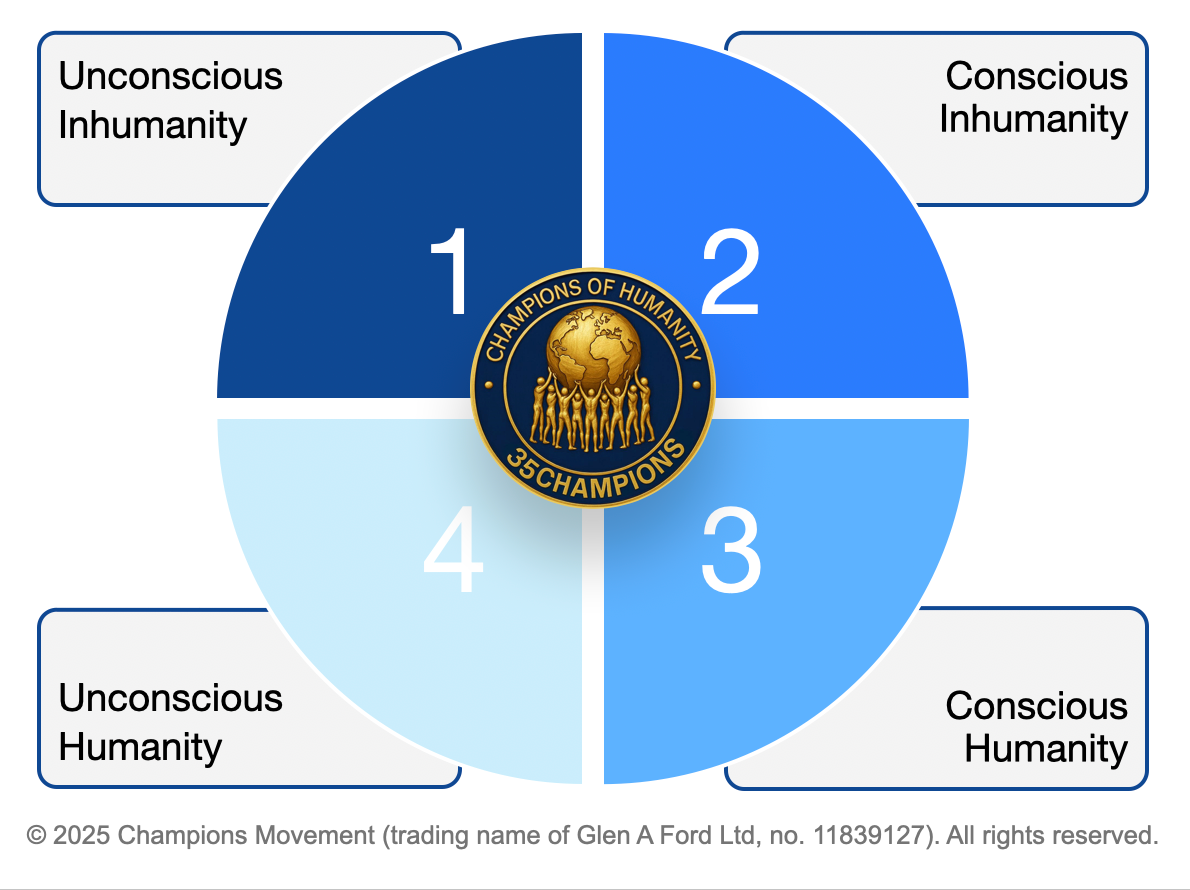
One of the core concepts within Champions is the Four Stages of Humanity.
It begins with the belief that humanity exists within us but must be activated and strengthened.
Like a muscle, our humanity becomes stronger when used and exercised, and weaker when neglected.
The challenge is that we are not always aware of the impact we're having.
What do we mean by humanity?
We mean our full human capabilities: the qualities that enable us to understand and act constructively.
We define this around three core areas:
- Empathy: the capacity to see, feel and understand others, to place ourselves in their 'shoes'. It's a level of understanding that goes beyond head knowledge.
- Enterprise: the imagination, initiative and drive to create positive change.
- Moral standards: our integrity, values and principles.
In short, it is not simply about being kind, nice or humane.
It is about unlocking our humanity and the humanity of others.
It is being the best versions of ourselves, and enabling others to be the best versions of themselves.
What is inhumanity?
By inhumanity, we mean behaviour that diminishes, disregards or harms the humanity of ourselves or others.
This includes being cruel, unfeeling, lacking in compassion or understanding.
It also includes rudeness and undermining the humanity of others, stripping away their human dignity.
If humanity means being the best versions of ourselves, then inhumanity is of course being the worst versions of ourselves.
This maybe for short periods. It might be without awarness (unconscious inhumanity) or deliberate (conscious inhumanity).
Typically, conscious inhumanity is associated with justification. We justify our behaviour in our own eyes, either before or after.
This also includes when we 'switch off' our humanity. Many people say they are acting like 'robots', going through the motions, without feeling or regard.
It may be their way of coping. They may not regard this as 'inhumanity', but it is certainly not acting with humanity and can have similar effects.
What are the four stages?
This is a simple but powerful framework that explores how awareness shapes our behaviour.
It is inspired by the Four Stages of Competence, originally developed by Martin M. Broadwell in 1969.
The Four Stages of Humanity framework describes a journey.
- It begins when we negatively affect others without recognising our impact.
- We then become aware.
- We consciously choose to centre our leadership on humanity.
- Through repetition, those choices become embedded in our habits and identity.
As someone said recently in one of our programs: "It's how I choose to show up each day."
And therein lies the key to the framework: choice.
We choose who we want to become.
How is this used?
It is used in both our Champions Spark and Champions Activate programs.
This isn't about labelling people as good or bad, nor is it about achieving perfection.
Every one of us moves between these stages throughout our lives, even our days.
The stages describe how we may behave in a particular moment or area of life. They do not define our worth or permanently categorise us.
We may act from different stages in different relationships, situations and even within the same day.
Stress, pressure, fear and circumstance can all influence how we show up.
The purpose of the model is to help us pause, reflect and become more aware of our impact. To be more aware of the ripples we are creating, positive or negative.
Because when we become aware of our choices, we gain the ability to make better ones.
At Champions, we believe that humanity is a performance multiplier.
When our leadership is centered on what makes us human then people and teams are more likely to build trust. This strengthens relationships, enabling performance, even under pressure.
The more intentionally we choose humanity, the greater our ability to build trust, strengthen relationships, inspire others and create lasting positive change.
The journey starts with one simple question:
How am I showing up today?
Stage 1 - Unconscious Inhumanity
"I don't know what I don't know."
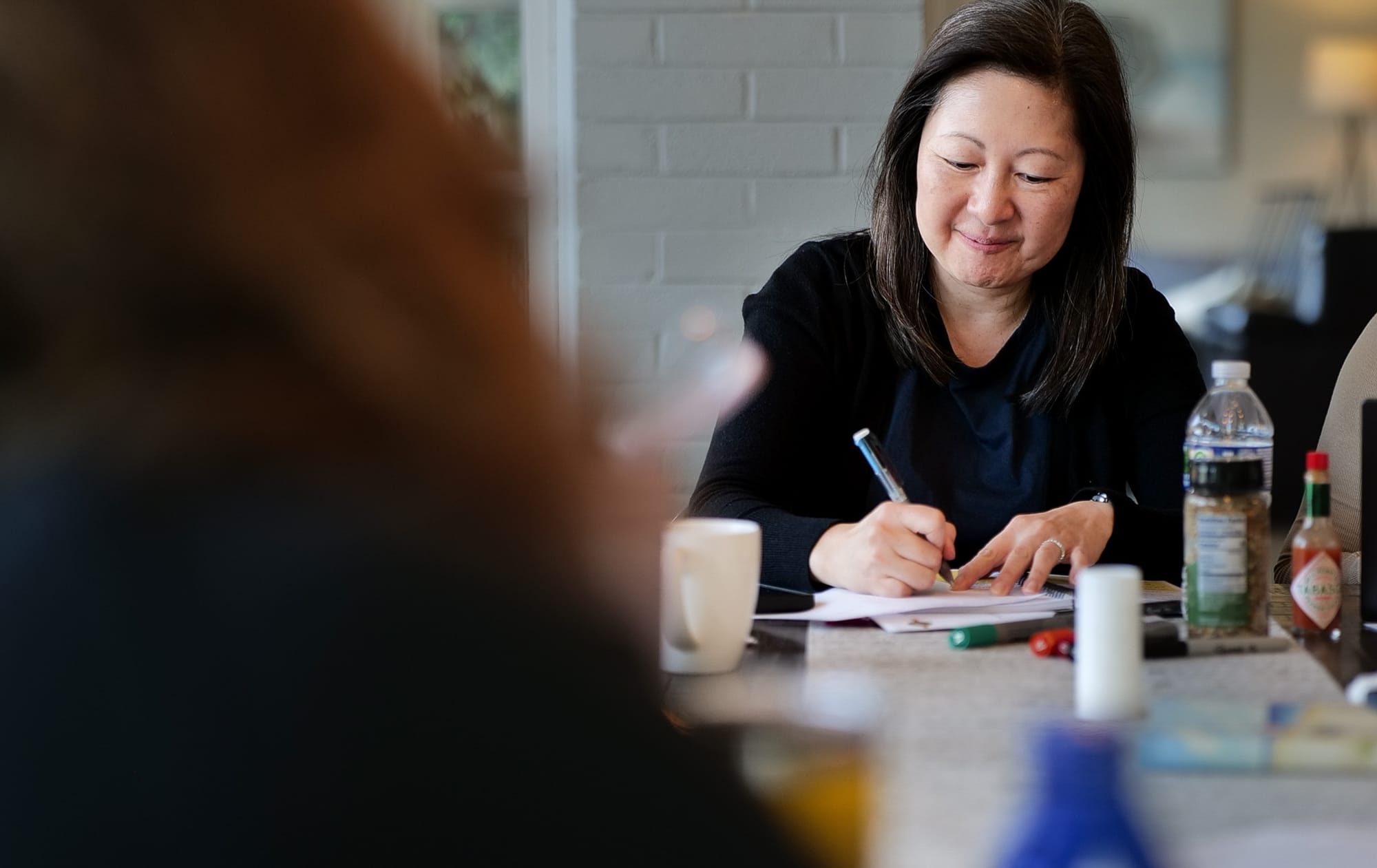
We behave in ways that negatively affect others, but we're often unaware of the impact.
Inhumanity describes the negative impact of a behaviour, not the identity or worth of the person.
There is not always a deliberate intention to cause harm. We simply haven't recognised it.
This is where prompts are important. They may come through experience or from others around us. They may be major, or more subtle.
What it might look like
- Interrupting people without realising you dominate conversations.
- Speaking bluntly and believing you're "just being honest."
- Failing to include quieter voices because you don't notice they're being excluded.
- Making assumptions about someone based on their age, background or role.
- Ignoring someone's wellbeing because you're focused on getting the job done.
- Giving feedback that feels harsh because you don't recognise how it's received.
- Walking past someone who's struggling because you simply don't notice.
Typical mindset
"That's just how I am."
"I didn't realise that upset them."
"I wasn't trying to offend anyone."
Stage 2 - Conscious Inhumanity
"I know... but I haven't changed."
This is where we have become aware of the impact of our behaviour, or we've recognised it ourselves, but we continue behaving in the same way.
Conscious inhumanity does not always mean deliberate cruelty. It may mean that we recognise our negative impact but have not yet developed—or chosen to use—the courage, discipline or skills required to change.
Sometimes change feels uncomfortable.
Sometimes our ego gets in the way.
Sometimes we justify our behaviour.
Awareness alone doesn't create change. Choice does.
What it might look like
- Continuing to interrupt after colleagues have mentioned it.
- Knowing someone feels excluded but making no effort to involve them.
- Choosing sarcasm because "people need to toughen up."
- Sending emails you know will create anxiety because it's quicker.
- Avoiding difficult conversations even though you know it's affecting the team.
- Prioritising winning over understanding.
- Continuing behaviours that damage trust because they've always worked before.
Typical mindset
"That's their problem."
"This is just how business works."
"If they can't cope, that's on them."
"I know... but..."
Stage 3 - Conscious Humanity
"I intentionally choose humanity."
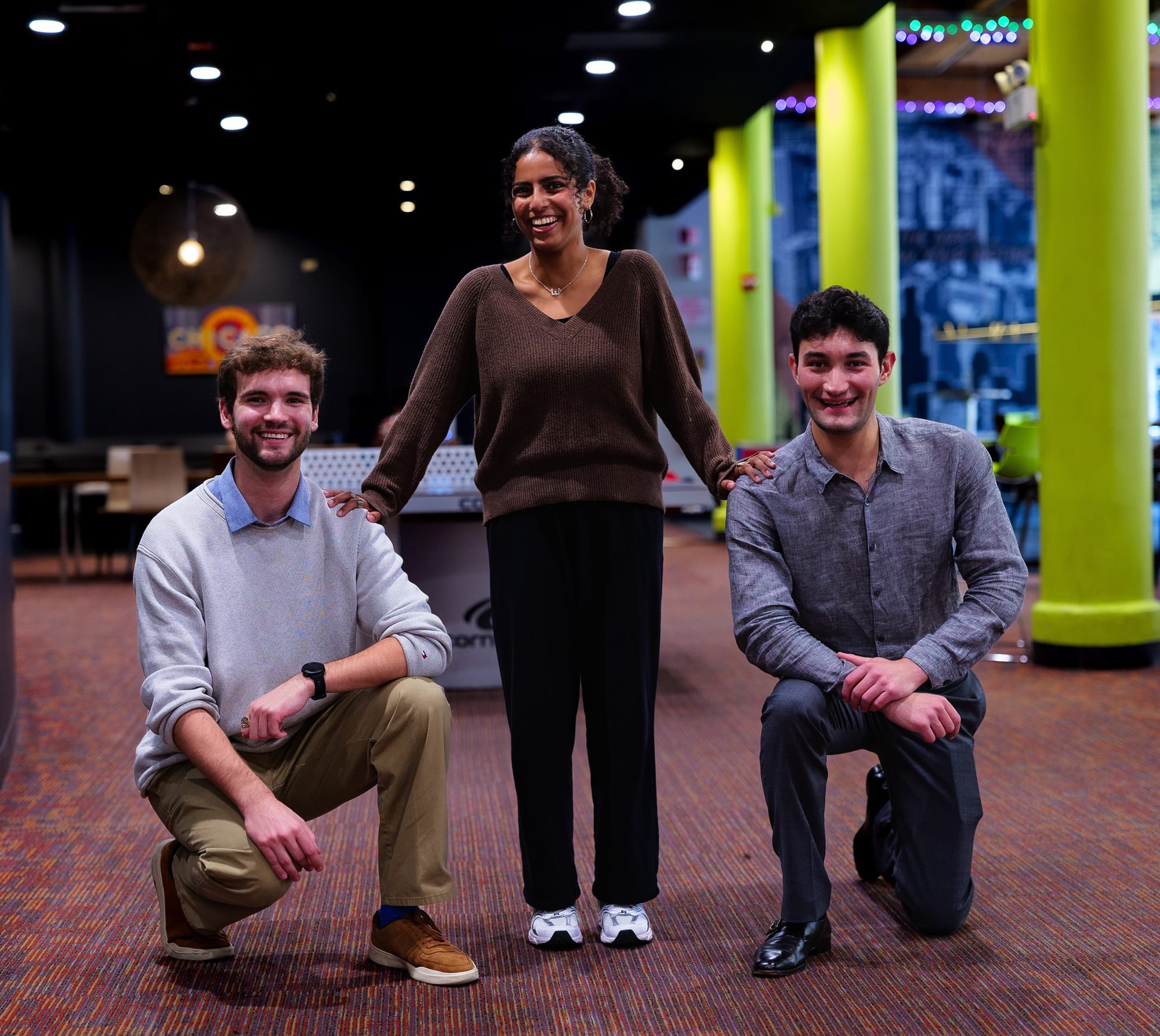
This is when awareness becomes action — and action creates change.
We begin making intentional choices that create a positive impact on those around us.
Humanity becomes something we practise every day.
What it might look like
- Pausing before responding when you're frustrated.
- Inviting quieter people into discussions.
- Asking questions instead of making assumptions.
- Giving feedback with empathy and clarity.
- Owning mistakes and apologising sincerely.
- Checking in on someone's wellbeing.
- Challenging inappropriate behaviour respectfully.
- Choosing curiosity before judgement.
Typical mindset
"How might they be experiencing this?"
"Let me understand before I respond."
"What choice would create the greatest positive impact?"
Stage 4 - Unconscious Humanity
"Humanity has become part of who I am."
After repeated intentional choices, humanity becomes instinctive.
Compassion.
Respect.
Curiosity.
Kindness.
Integrity.
These behaviours increasingly become instinctive. They require less deliberate effort because they have become part of our habits and identity.
What it might look like
- People naturally feel safe around you.
- You instinctively notice when someone is struggling.
- Listening comes before speaking.
- You encourage others without thinking about it.
- Difficult conversations remain compassionate.
- You consistently recognise the contributions of others.
- You naturally create belonging wherever you go.
- Others experience you as kind, trustworthy and authentic.
Typical mindset
The response increasingly feels natural because these behaviours have become habitual.
Reflection and conscious choice remain important, becoming part of the regular routine, especially under pressure or in unfamiliar situations.
In these moments, people do not simply speak about humanity. They live it—and others experience the difference.
Reflection
Take a moment to reflect:
- Which stage best describes how you show up most often?
- When have you experienced each of these stages in your own life?
- What helps you move towards conscious humanity?
- What situations pull you back into unconscious or conscious inhumanity?
- What is one choice you can make today that creates a more positive ripple for someone else?
At Champions, we don't believe people permanently belong in one stage.
We all move between them.
The goal isn't perfection.
The goal is awareness.
Because awareness creates choice.
And choice creates humanity.
What people say
Below are quotes from people who have been through Champions:
"How was I showing up? This is what Steve asks me all the time, 'How are you showing up here?' … what I've learned is my speed gives people pressure … I can be overwhelming to people — so now, I get that."
"Leadership is not defined by titles … it means presence, it means communication, it means treating others with empathy and patience, and basically, how we show up every day."
"Conscious Humanity challenged me to slow down, truly see the people around me, and be intentional about the way I show up."
"The stages of humanity for me … are understanding where each person is emotionally and their behaviors. This has allowed me to respond with empathy and clarity … whether someone needs support, structure or guidance, I've learned to meet them where they are."
"It began with how we show up to each other."
Enjoyed this story? Become a Champion, either as a free member, or pay it forward and help fund the next generation of young Champions.
Copyright
The Champions Four Stages of Humanity framework is a concept developed by Champions. © 2026 Champions - All Rights Reserved. Champions is a trading style of Glen A Ford Ltd, a private limited company registered in the UK, no. 11839127