Putting Care Back Into Health
Why an antidote to burnout in healthcare is the most human thing we have — and how one Chicago clinic is showing the way.
Chicago
It was March 2025. I was in Chicago having lunch with a longtime friend and colleague.
I had just started Champions with my colleague Steve Kelly.
This was after some twenty-plus years of volunteer and service leadership with the Kigali Genocide Memorial in Rwanda and internationally.
It was during this time that I began to see that humanity is not just key to preventing terrible things, such as breaking cycles of hatred and violence.
It is also a performance multiplier, the foundation that creates thriving teams, families, organizations and communities.
"The caring sector does not seem very caring," I said during the lunch.
A month later I was back in Chicago. This time I was meeting Dr Sheila Bhagavan.
It was 7:30am and Sheila and I were having a very brief catch-up in the Starbucks at the Illinois Medical District.
Sheila starts work at 8am, so it had to be brief.
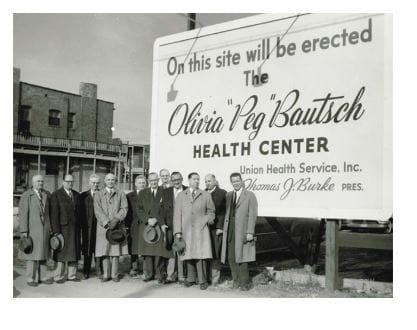
In July the prior year, 2024, she had become the Medical Director at Union Health Service, Inc.
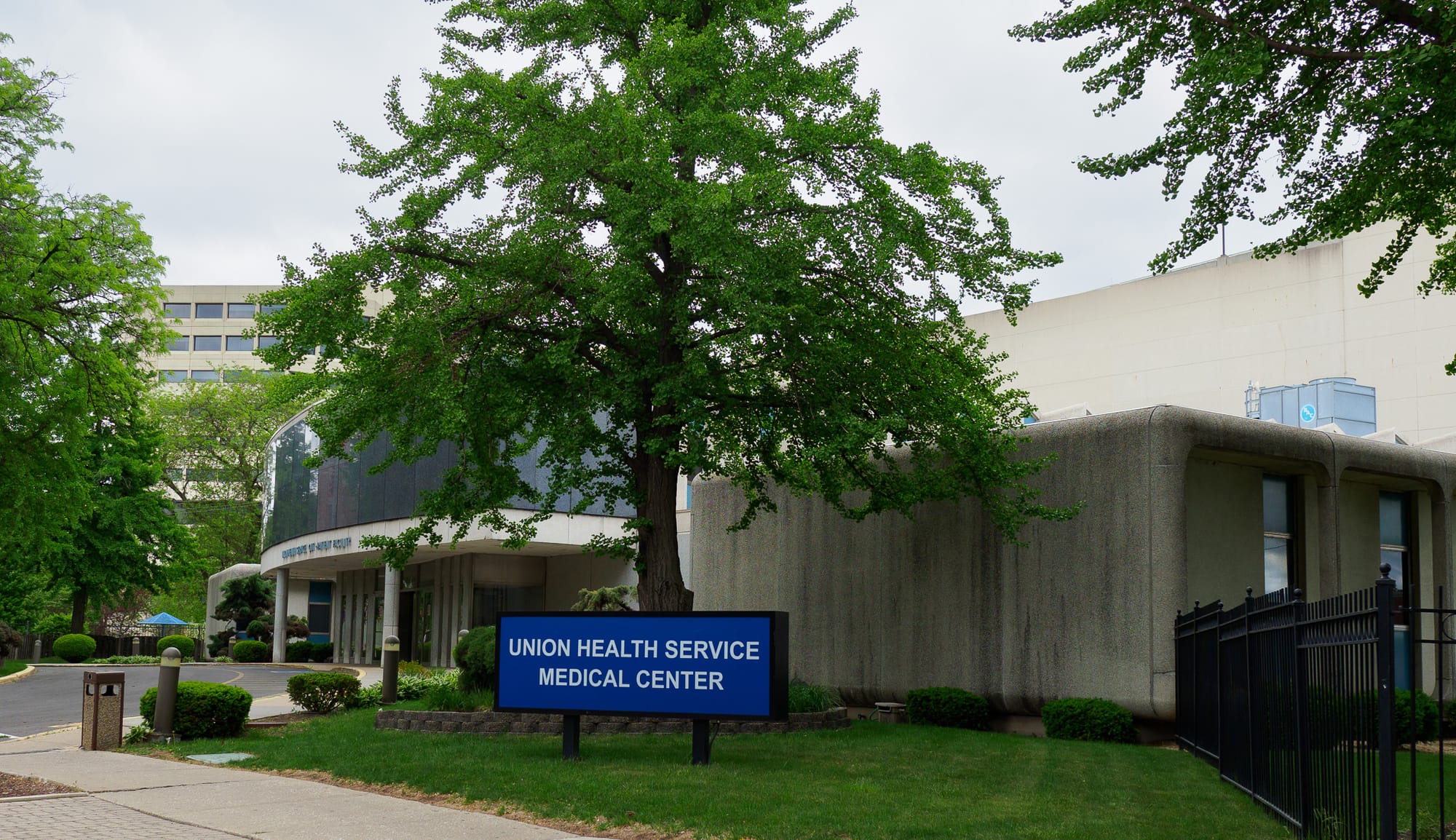
This is a non-profit, union-backed outpatient clinic in Chicago, providing health services for around 40,000 members, the city's janitors.
She shared the challenges her teams were facing. She asked if I had any suggestions.
Within a month, I was back in Chicago, this time presenting to Sheila and her Executive Team colleagues.
Joining Sheila were: Marsha Lui, Executive Director, Caroline Vullmahn, Chief Finance Officer and Director of Operations, and Belinda Farreley, Director Health Services.
Sheila called me later that day to say they wanted to go ahead.
So Steve, my colleague, and I started the following month. I was back in Chicago, a city that would soon become home away from home.
Healthcare without care is not healthy for anyone
There is a strange truth at the heart of modern healthcare.
The people who chose their careers to care for others are too often the ones running on empty.
We have staff with extraordinary skill, dedication and remarkable technology.
Yet burnout has become one of healthcare’s defining challenges. It quietly drains away warmth, connection and the sense of purpose.
And it is not a rare affliction.
The U.S. Surgeon General has warned that health-worker burnout has reached "crisis levels," with national surveys finding that roughly half of doctors and nurses report its symptoms. Nurses are highest of all, at around 56%.
The human toll runs deeper still.
Healthcare is one of the few fields where the people who care for us are themselves at heightened risk of dying by suicide.
A large U.S. study that followed some 1.8 million workers found that nurses face roughly a 64% higher risk of suicide than workers outside healthcare, and healthcare support staff are higher still.
Female physicians, too, carry a significantly elevated risk, around a quarter higher than the general population.
These are not statistics about personal weakness. They are the clearest possible signal that conditions have become unsustainable.
Restoring their humanity is not a nicety, but a matter of wellbeing, and sometimes of life itself.
The impact extends beyond staff and patients.
Burnout creates a dysfunctional system that benefits no one. It damages financial sustainability and organisational performance, as well as human wellbeing.

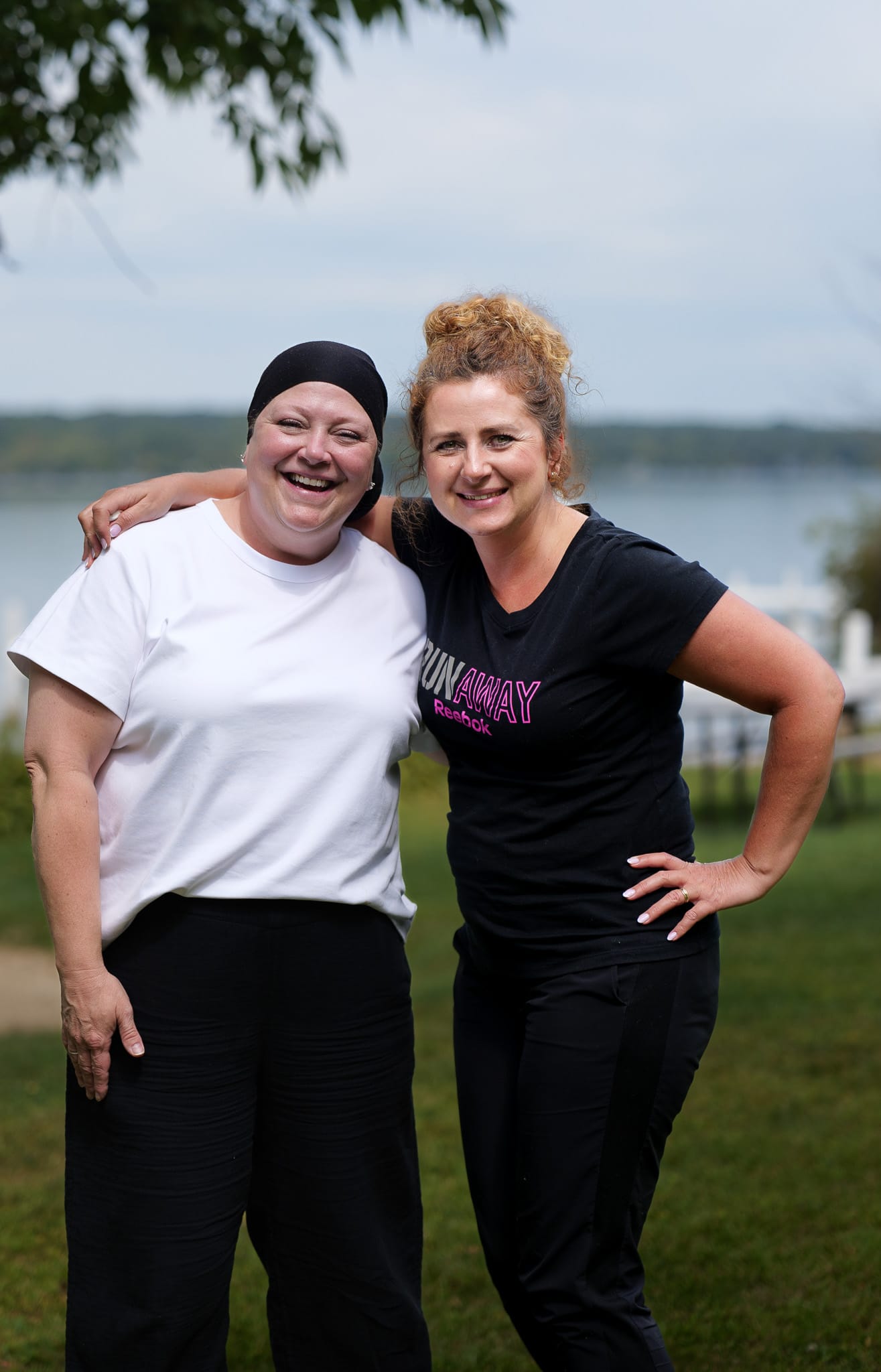
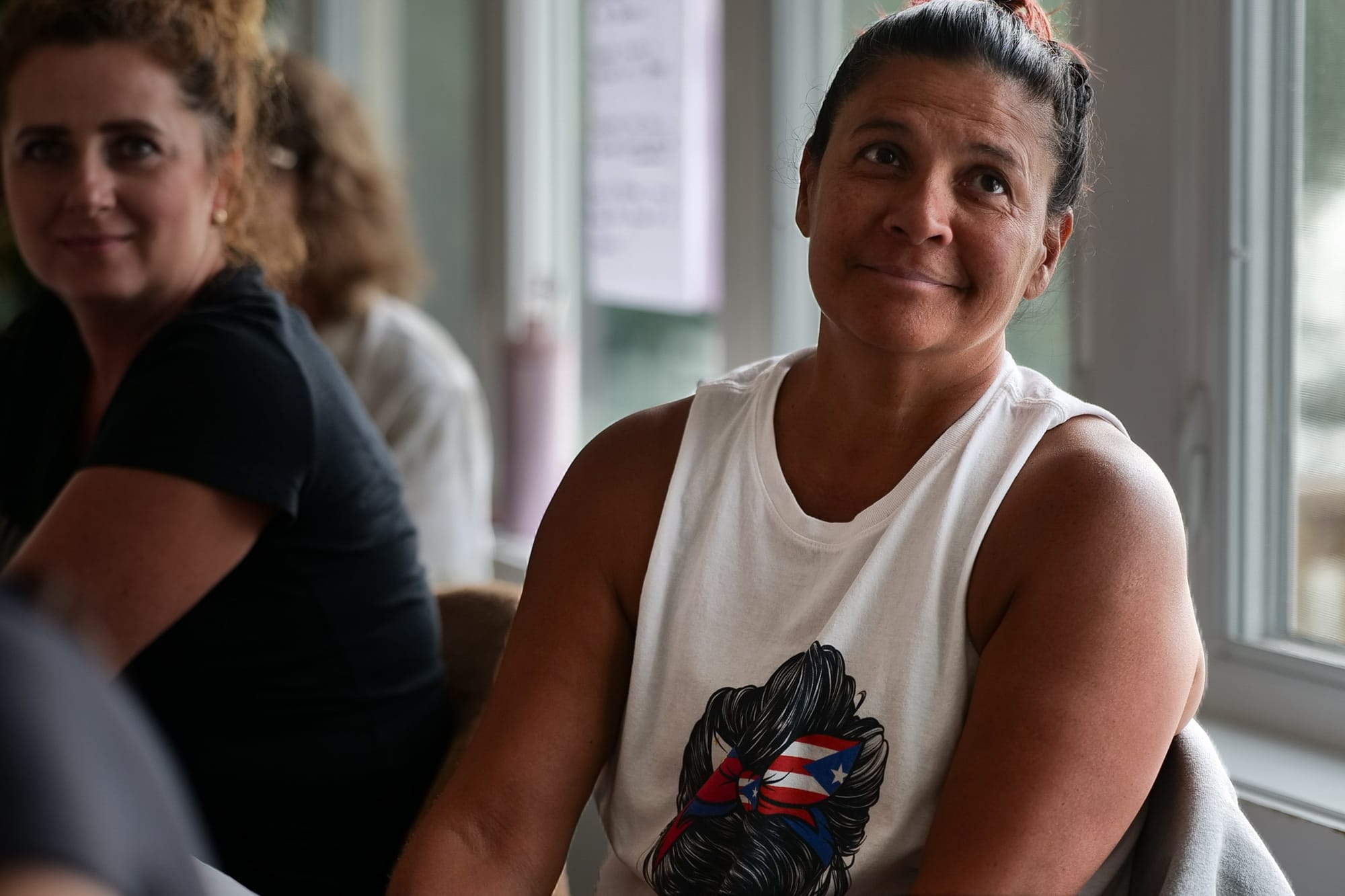
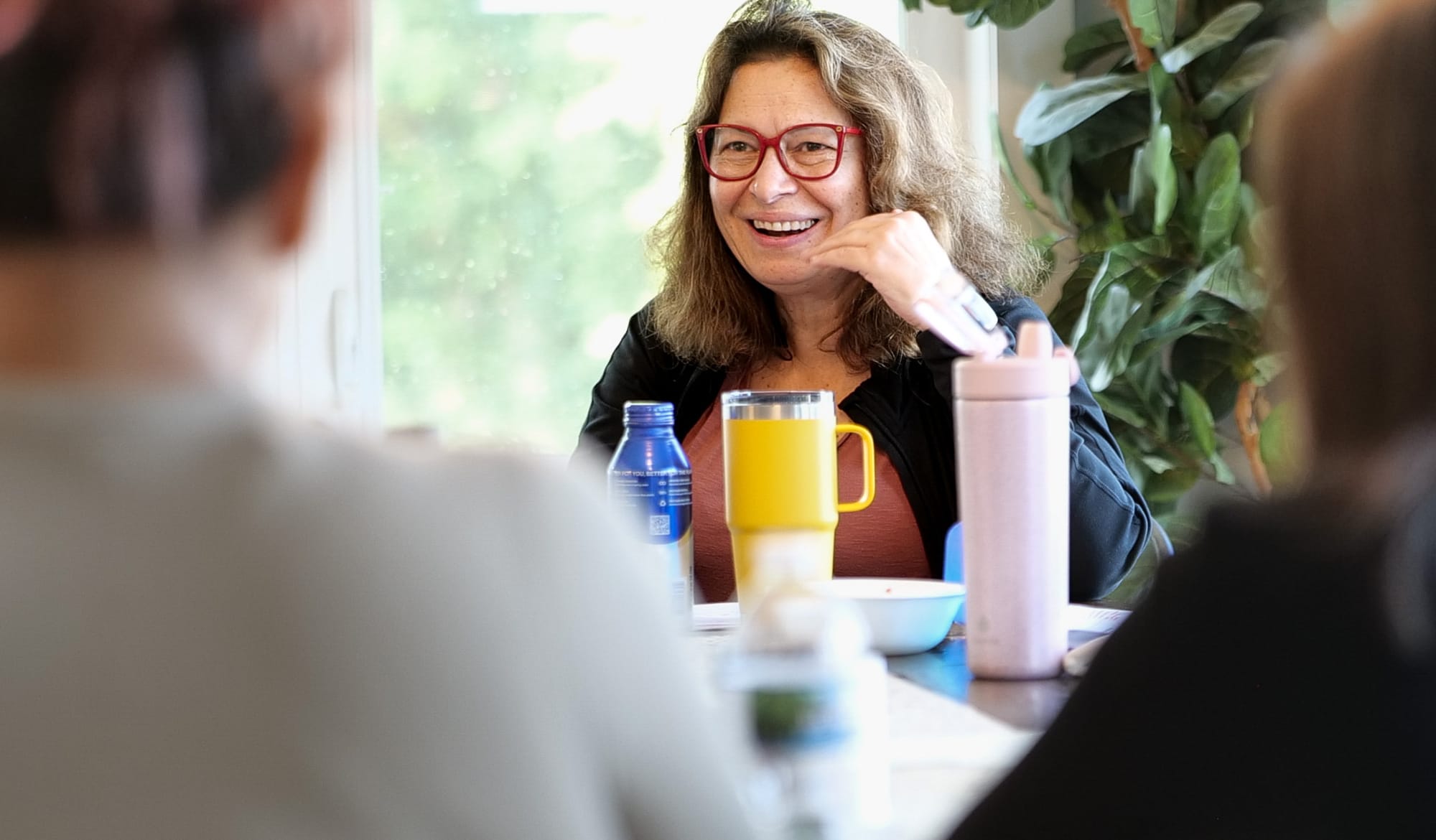
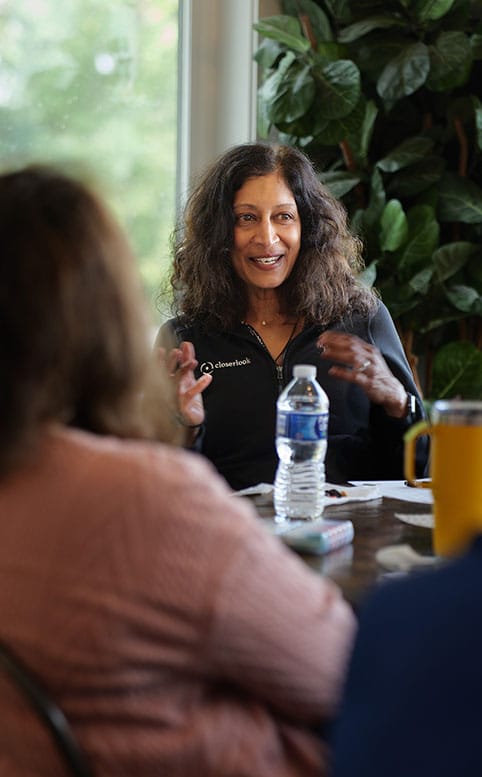
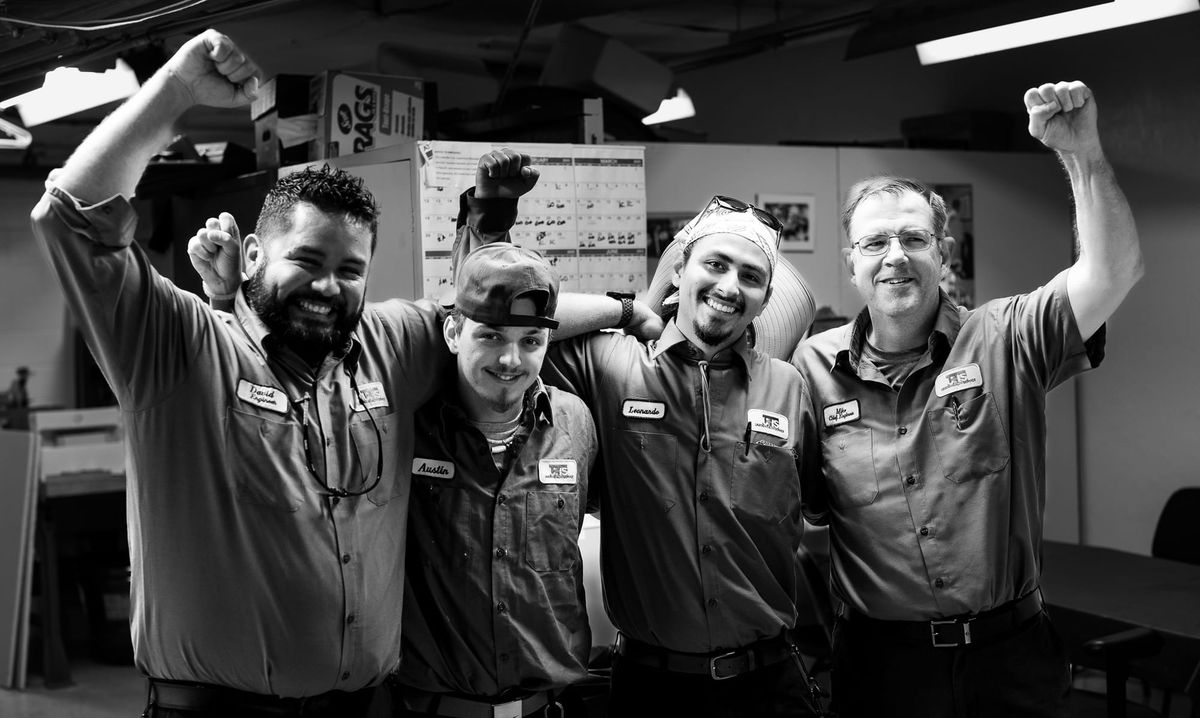
Some of the team at Union Health Service
The vision: humanity at the center
Champions begins from a simple conviction.
In a profession built on caring for people, the humanity of the caregivers is not a nice-to-have. It is the foundation everything else stands on.
Somewhere in the machinery of modern healthcare — the targets, the throughput, the "business of the day" — it is easy for the 'human' to get crowded out.
We go task-to-task-to-task all day long, and humanity quietly slips out of view.
Karah Fogg, a Director of Medical Management at Union Health Service, and a trained nurse, put it beautifully.
Healthcare, she reminded me, is "the serving-people business."
The patients are why we're there. But so are our colleagues — they are people we serve too.
When we hold onto that, everything changes in a good way.
The Champions vision is to center leadership on what makes us human: to help healthcare teams reactivate the empathy, connection and resilience that drew them to the work in the first place.
Not as a distraction from performance — but the very thing that makes great healthcare possible. Humanity truly is a performance multiplier.
Why humanity is an antidote to burnout
Here is the hopeful part and the reason for this series.
The antidote to burnout is not something we import from outside. It is something we reactivate from within.
The Champions program did not begin in a corporate training room.
It grew out of my work in post-genocide Rwanda. I volunteered as part of the team led by the Smith family in England, alongside Rwandans, to help build the Kigali Genocide Memorial.
This included working alongside young survivors. They had lost almost everyone they knew. They, somehow, found the strength to rebuild their lives, their community, and their nation.
The circumstances of modern healthcare could hardly be more different.
But what I witnessed in Rwanda revealed something universal. Even after humanity has been profoundly tested, the human capacity for connection, resilience and creation can be reawakened.
That is the conviction at the heart of Champions: that humanity is the most powerful performance engine an organization has.
When people learn to regulate their own stress, they draw close instead of pulling away. To be curious, instead of quick to judge, enables trust to grow. This in turn enables collaboration, and the quality of care grows alongside.
Champions builds this change from the inside out.
We all know the theory, how we should behave. But do we have the capability, the humanity to do so?
A key mechanism is what we call the ripple effect — the idea that a committed few can shift the culture of the whole.
It is a low-cost, high-leverage way to reignite the human core of a healthcare team.
How we treat each other is clinical
If that sounds soft, the evidence says otherwise.
How human beings treat one another turns out to be one of the hardest-edged clinical variables there is.
The clinician-led movement Civility Saves Lives, started by Dr Chris Turner in the UK, has gathered the research. It is sobering.
Christine Porath's studies found that a person on the receiving end of rudeness suffers up to a 61% drop in cognitive ability. Even bystanders who merely witness the rudeness lose around 20%.
Teams exposed to incivility become roughly 50% less willing to help one another.
In healthcare, that plays out in patients' bodies.
A landmark 2015 study tested medical teams in neonatal intensive-care simulations.
One mildly rude comment reduced diagnostic and procedural performance by around 20%. Information-sharing and help-seeking fell by as much as 50%. One remark made a skilled team worse at saving a life.
The reverse is the opportunity.
When people feel respected, safe and connected, teams get measurably better. There is sharper thinking, freer communication and fewer errors.
That is precisely why humanity is not a "soft skill" bolted on at the edges.
It is a clinical performance lever hiding in plain sight.
Reactivate it, and both burnout and patient care move in the right direction at once.
The proof: a Chicago clinic finds its warmth again
Union Health Service is a 70-year-old organization, serving its members across six sites with a team of around 250 staff.
Like so many healthcare organizations navigating years of mounting pressure, it had seen morale dip and the warmth between people wear thin.
These are the familiar fingerprints of burnout that so many in the sector will recognize.
What UHS did next is the reason I'm writing this series.
Its leaders chose to invest in their people's humanity, and the Champions program began in July 2025.
Within sixteen weeks, the change was undeniable.
In an independent case study, every member of staff interviewed reported greater warmth and empathy: 90% saw better collaboration, and 70% noticed calmer, more positive patient interactions.
A supervisor described what the change meant for her personally.
"We stopped being robots."
"We gained our humanity back — and it feels good."
A frontline supervisor, noticed it in the simplest currency there is — the willingness to connect.
"We smile more," she said. "Now I feel like I can talk to this person."
Another leader saw the same thing rippling through the building:
"I actually see more smiles on people's faces… people saying hello to others, as opposed to just walking down the halls."
And another said, "Champions has completely changed the trajectory of UHS, in the best possible way… and the ripple effects are going to be never-ending."
She put the whole thesis into a single line I keep coming back to:
In healthcare, humanity isn't decoration. It's fundamental.
Putting care back into health
That is what this series is about: putting the care back into healthcare.
Over the coming posts, I'll share how it happened. How being human became an antidote to burnout.
How humanity turned out to be a performance multiplier, not a distraction from performance.
And how even the most experienced, been-there-done-that leaders came to say they had never experienced anything quite like Champions.
Because in a profession built on care, restoring the humanity of caregivers may be the most important work we can do.
Become a Champion
The UHS story shows that burnout is not the end of the story.
Our humanity can be depleted, tested, even hidden for a while — but it is never lost. It remains the most powerful force we have.
When healthcare workers are seen, supported and reconnected to their purpose, care returns — for staff and patients alike.
If this stirs something in you, don't let it stay a feeling.
- Join the 35Champions site as a free member, and follow the movement as it grows.
- Pay it forward as a paid member, helping others become Humanity Champions in their own workplaces and communities.
- Most of all, choose a pathway of humanity — put care back at the center of the work you do, one human choice at a time.
Join as a member, read and share Stories of Humanity, and help fund the next generation of Champions.
I'd love to hear your reflections below.
Glen
Enjoyed this story? Become a Champion, either as a free member, or pay it forward and help fund the next generation of young Champions.
Footnotes (sources)
- U.S. Surgeon General's Advisory, Addressing Health Worker Burnout (2022), which cites the National Academy of Medicine's finding that burnout had reached "crisis levels." Recent prevalence figures (including nurses at ~56%) from Burnout Trends Among US Health Care Workers, National Institutes of Health. ↩
- Olfson et al., Suicide Risks of Health Care Workers in the US, JAMA (2023) — a cohort of ~1.84 million workers (2008–2019) found adjusted suicide risk elevated for registered nurses (hazard ratio 1.64) and healthcare support workers (hazard ratio 1.81). ↩
- Zimmermann et al., Suicide rates among physicians compared with the general population, gender-stratified systematic review and meta-analysis (2024); see also Harvard Gazette summary — women physicians face roughly a 24% elevated risk relative to the general population. ↩
- Porath & Pearson, research on workplace incivility (Harvard Business Review / Civility at Work studies, 2013–2016), as compiled by Civility Saves Lives. ↩
- Riskin, Erez et al., "The Impact of Rudeness on Medical Team Performance," Pediatrics (2015) — neonatal intensive-care simulation study, as compiled by Civility Saves Lives. ↩