Being Human: A Case Study in Healthcare
How a Chicago clinic reignited its people
This is a second post looking at the Champions program at Union Health Service, a long-established outpatient clinic in Chicago.
The starting point
Union Health Service is a non-profit clinic formed in 1955. It provides healthcare for Chicago's janitors through their union.
For over 70 years, it has been a mission-driven organization serving people very much in need — around 40,000 members across six sites, with roughly 250 staff.
Like many established healthcare organizations weathering years of sector-wide pressure, UHS had felt the familiar weight of fatigue and low morale settle over its teams.
The people are skilled and dedicated. But, the warmth between them had worn thin. The daily grind leaving many running on empty.
In mid-2025, its leaders decided to invest in their people's humanity — and that decision started an important change.
What being human actually changed
The Champions program began in late July 2025, after a diagnostic phase.
The approach worked from the inside out: emotional regulation, then trust, then collaboration, then performance.
People were given practical tools they could use in the moment — grounding, pausing, reframing — and a shared language to go with them: "turn the dial down," "slow yourself before you respond," "the ripple effect."
It sounds almost too simple. But watch what it did.
Within sixteen weeks, an independent case study — with staff interviews and a pulse survey conducted through October 2025 — found:
- 100% of interviewed staff reported greater warmth, empathy and connection in daily interactions.
- 100% described increased emotional awareness and self-regulation.
- 90% reported improved collaboration and less territorial behavior.
- ~85% reported reduced emotional reactivity — "I stop before snapping."
- 70% saw positive changes in patient interactions: calmer tone, more patience, fewer tense exchanges.
Same team, same organization, same context.
What shifted was the humanity amongst the team, within the organization.
The evidence was in the small moments
Statistics tell you that something changed. The small human moments tell you what changed.
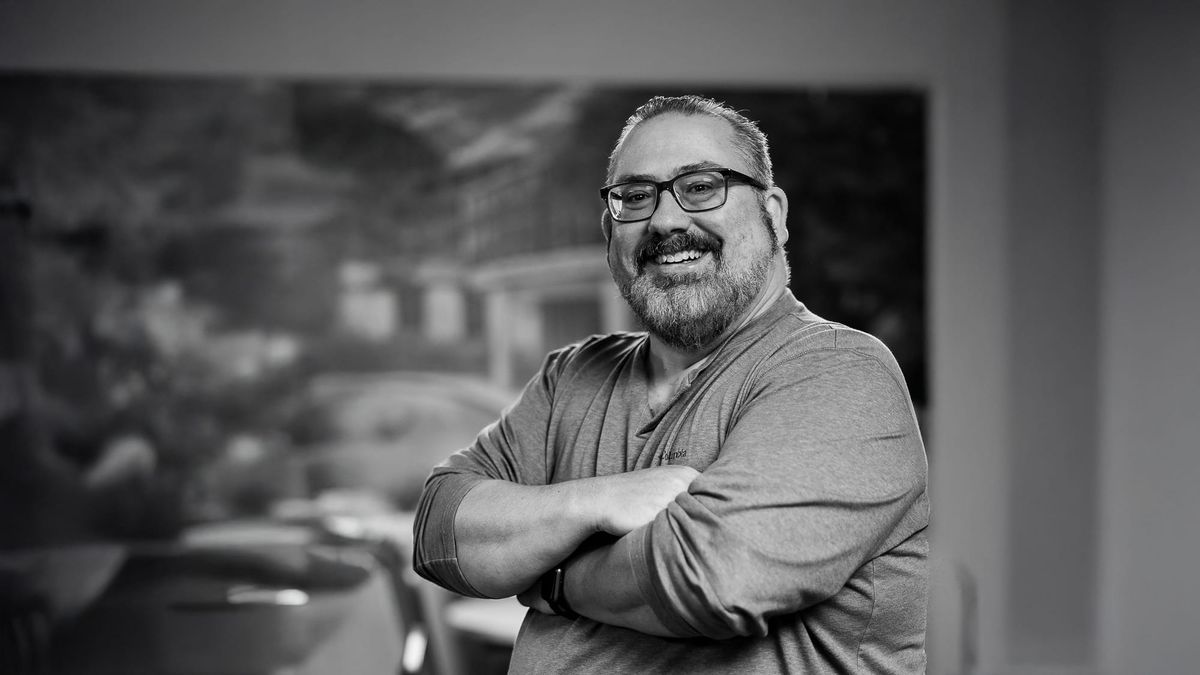
Take Richard Sablich, who oversees medical management and pictured at the top of this post.
He came into the program, in his own words, "hesitant, but hopeful." What reached him was a simple tool — understanding the Circle of Control. This is one of the tools included in the program.
Richard said, "This one slight change has put me in a better place, both mentally and physically."
One supervisor freely admits she began as a skeptic. She soon came to love the program. When she asked her team what was different about her, they said she was less stressed, smiled more, and was more accessible.
People were seeing more warmth in the hallways. A lighter tone. "Culture is made of a thousand micro-moments," one said — and those micro-moments were coming back.
Another said that her daughter had told her, "This has been a good journey for you, Mom."
The change wasn't just professional, it was something she now carried home in her nervous system, feeling "happier, more grounded, less stressed."
And in the case study interviews, the line that says it all came from that one supervisor who reported everything was "normal" — then laughed, because a calm, warm day had become the new normal.
Why this matters
Here is what I take from the UHS case study.
The independent findings pointed to reduced factors for burnout, strengthened resilience, and reignited engagement — leading to improved patient care.
There was less staff isolation. More peer support. Healthier emotional regulation.
This included supervisors following up with each other. Or, people catching themselves before escalating. This included outside of work. They were taking the calm approach home to their families.
The same people, choosing to be human with each other again. And this was transforming into better patient care and better performance.
Being human, it turns out, is not the thing that gets sacrificed when the pressure is on.
It is the antidote to the very burnout that pressure creates.
Become a Champion
The UHS story shows that burnout is not a life sentence for an organization.
Depletion can be reversed — not by asking exhausted people to care harder, but by restoring the connection that let them care in the first place.
When people feel seen, supported and reconnected to their purpose, resilience returns, and so does the quality of care.
If this story stirs something in you, don't let it stay a feeling.
- Join the 35Champions site as a free member, and follow the movement as it grows.
- Pay it forward as a paid member, helping others become Humanity Champions in their own workplaces and communities.
- Most of all, choose a pathway of humanity — and make the small, human choices that carry outward to everyone around you.
Join as a member, read and share Stories of Humanity, and help fund the next generation of Champions.
I'd love to hear your reflections below.
Glen
Enjoyed this story? Become a Champion, either as a free member, or pay it forward and help fund the next generation of young Champions.