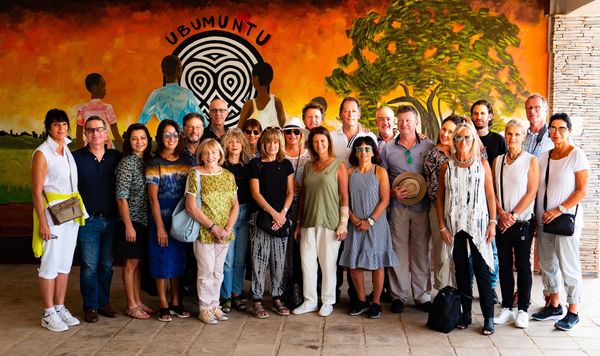
Key Themes: James Oglethorpe through a Champions lens
What the whole narrative arc teaches us about centering leadership on what makes us human.
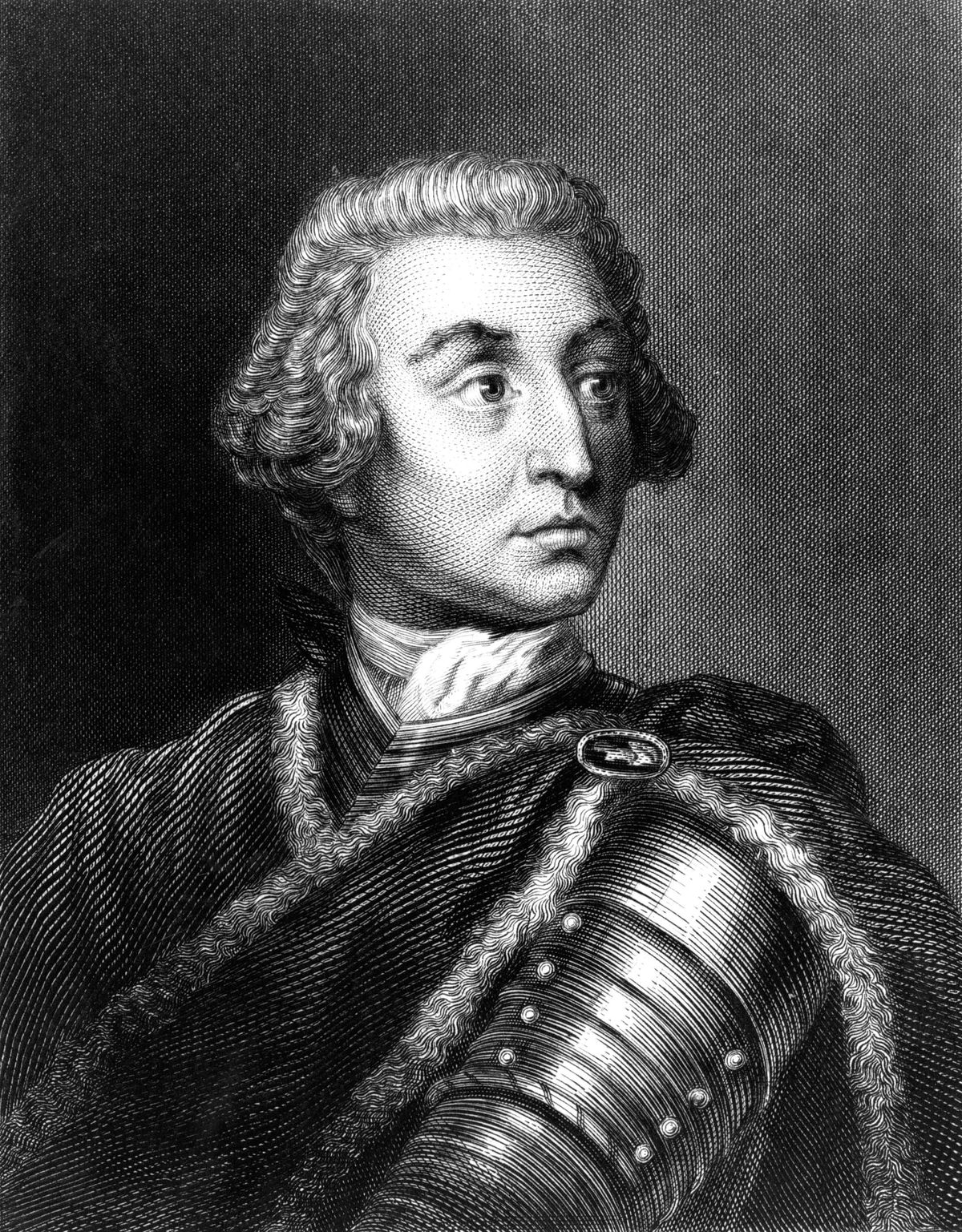
Across these narratives, one message keeps coming through.
Below is a podcast of the main points.
Whether Oglethorpe is reforming prisons, founding a colony, welcoming refugees, designing a city, marrying, or mentoring abolitionists, the same handful of truths surface again and again.
Read together, they amount to a portrait of what leadership looks like when it is centred on humanity, on what makes us human — and why that kind of leadership is not soft, but the opposite, strong, very strong.
Oglethorpe demonstrates that humanity is a performance multiplier.
As Michael Thurmond commented with a message for us all:
If you can look in the mirror, see your faults, the things that need to be improved, if you can change yourself, you ultimately can change the world, and you may in fact change the course of history, which is what Oglethorpe was able to do.
The themes fall naturally along the Champions Pathway: the choices we make, the connections we build, and what we then create.
The foundation: humanity is chosen, not inherited
The single most hopeful theme is that Oglethorpe was not born a saint.
He was a Deputy Governor of the Royal African Company, that sold enslaved Black Africans and sent them on the Middle Passage.
He was also a hot-tempered young man imprisoned on a charge of murder, his future hanging by a thread.
The humanity he became famous for was not a birthright.
It was built — deliberately, through choices he made, the connections he formed and what he created.
This matters enormously for leadership.
It means human-centred leadership is not a personality type reserved for the naturally saintly.
It is a capability any of us can develop, wherever we happen to start.
Our humanity, as the series puts it, is not where we start, but who we choose to become.
For leaders today: your past does not disqualify you. The core can be built.
Choice
Proximity is the master tool
More than any other single practice, Oglethorpe led by drawing close.
He went down into the prison cell, went aboard the refugee ship, sat with the dying friend, broke bread with the Jewish families, stood beside Tomochichi as an equal, and fought at his friend's side in Prussia.
Proximity was how he activated and strengthened his own empathy — and how he dissolved prejudice, in himself and others.
The caricature of the Jew, or the debtor, or the "savage," could not survive contact with the real human being. Prejudice rarely survives proximity.
For leaders today: get close to the people your decisions affect. Distance breeds abstraction; proximity breeds humanity.
Redemption and the second chance
Having transformed his own life, Oglethorpe spent it extending that same possibility to others — and then built it into the structures of the world.
His prison reform enshrined in English law the radical idea that a person ruined by debt could wipe the slate clean and begin again.
That principle of the second chance now runs through the law of nations, from individual debtors to modern corporate bankruptcy.
Human-centred leadership assumes people can change, and creates the conditions for them to do so.
For leaders today: build second chances into your systems. Believe in redemption, and design for it.
Conviction that will pay a price
Oglethorpe's humanity had standards he would not trade.
When the nation turned against the Jews he had defended, he refused to recant — and lost the parliamentary seat he had held for over three decades.
He sacrificed comfort, rank and career, again and again, rather than betray what he believed.
This is the density at the centre of moral weight: values held whatever the cost. Humanity without conviction is only sentiment.
For leaders today: decide in advance what you will not trade. Standards only count when they cost you something.
Humility, and the grace to be championed
For a man of privilege, humility had to be learned — through jail, through failure, through the death of his dream in Georgia, through his friend Keith dying in his arms.
Crucially, he also learned what it is to be championed himself: when his own life hung in the balance, it was the Duke of Argyll who saved him.
Great leaders are not only givers of help; they know how to receive it.
Humility keeps the core soft and teachable, and prepares a leader for their greatest work — which, for Oglethorpe, came only after he had been humbled and set aside.
For leaders today: let yourself be mentored and rescued. Humility is not weakness; it is the soil the rest grows in.
Connection
It all begins with friendship
Strip everything else away and Oglethorpe's life reduces to this: he learned how to be a good friend.
Being a friend — to Castell, to Keith, to Tomochichi, to Elizabeth — was the seedbed of nearly everything world-changing that followed.
The most human of relationships turned out to be the most powerful of forces.
For leaders today: friendship is not a distraction from the work. Very often, it is the work.
Hospitality: the simplest transformative act
The thread running through both Oglethorpe's public life and his marriage to Elizabeth was hospitality — the making of room for the other.
He welcomed refugees, debtors, Jews, Salzburgers and the persecuted to a place at the table of the world; Elizabeth watched over the quietest guest in the room as diligently as if her fortune depended on it. To welcome another person is humanity in its simplest and most transformative form.
For leaders today: culture is hospitality at scale. Who feels genuinely welcome tells you what you truly value.
The best connections are often unsought — and need bridge-builders
Some of the most consequential relationships in Oglethorpe's life arrived unplanned: the Moravians on the storm-tossed ship, Dr Nunes on the refugee vessel, the Duke of Argyll appearing as a guardian angel.
And the connections that mattered depended on bridge-builders — none more so than Mary Musgrove, without whom the alliance with the Creek, and perhaps Georgia itself, would not have held.
Human-centred leaders stay open to the unexpected relationship, and honour the connectors who make understanding across difference possible.
For leaders today: leave room for the unplanned encounter, and cherish your bridge-builders. They are rarely on the org chart.
The overlooked co-architects
Two of the most decisive figures in the whole story — Elizabeth Oglethorpe and Mary Musgrove — were women history nearly wrote out.
Elizabeth held the estate, the strategy and the legacy together, and funded abolition after James's death; Mary made the entire Creek alliance possible.
The narratives insist on naming them as principal authors, not footnotes.
For leaders today: the most important contributors are often the least credited. Look for them, and name them.
Creation
Humanity is a performance multiplier
This is the central Champions thesis, proved repeatedly.
Extending dignity was not charity that weakened Oglethorpe's position — it strengthened it, and paid dividends.
The Jewish refugees he welcomed saved the colony from an epidemic. The Native alliance he built saved it from Spanish invasion.
Treat people as fully human and systems become stronger, not weaker.
For leaders today: humanity is not a trade-off against performance. It is a driver of it.
Moral gravity and the flywheel
A life anchored in the humanity of others develops a kind of weight — a moral gravity — that quietly bends the world around it.
In Oglethorpe's later years this became a flywheel: the Wesleys, the Moravians, the Jewish and Salzburger refugees, the Creek alliance, his marriage, and finally the abolition movement.
The effect grew far bigger than the man, self-propagating from one life to the next, and simply could not be stopped.
For leaders today: your influence compounds. Build moral mass, and it will do work you never see.
Defeat for Champions is often a doorway
Human-centred leadership makes formidable enemies, and Oglethorpe suffered real defeats — the collapse of Georgia's founding ideals, the repeal of the Jew Act, the loss of his seat.
Yet the pathways he opened outlived the setbacks and produced unintended, world-changing outcomes.
Whilst his Georgia experiment did not last, it created lasting and widespread change. It was by no means a failure.
For leaders today: judge the work on a longer timescale than the immediate scoreboard. Seeds germinate on their own schedule.
Passing the baton across generations
Oglethorpe's greatest, quietest creation was mentoring the generation that came after him — Granville Sharp and the abolitionists — planting what he would never live to harvest.
That same relay continues today: from the Enlightenment salons, to Marina Smith, to my work in Rwanda, to Dydine, to the reader — you.
Legacy is chosen over ego.
For leaders today: your final task is not to win, but to hand the torch on well.
Policy, design and humanity are one continuum
From debt-relief law, to the planned squares of Savannah, to the ideals behind abolition and the Declaration of Independence, Oglethorpe kept translating the same conviction into ever-larger structures.
Human-centred leadership does not stop at good intentions; it builds durable things — laws, cities, institutions — that hold human dignity in place long after the founder is gone.
And it pairs empathy with enterprise: the resourcefulness to find a pathway through where others see a wall.
For leaders today: humanity must be made structural. Turn what you feel into what endures.
The synthesis
Put together, these themes describe a single, coherent way of leading.
It begins with a choice to see and draw close to the overlooked. It deepens through friendship, hospitality and connection across difference.
And it creates — laws, cities, movements, families — structures that carry human dignity forward through time.
Empathy tells you what is right; enterprise makes it real; conviction holds it in place; and humility keeps it honest.
The result is moral gravity: a life with enough weight to bend the arc of history, not by force, but by an unshakeable commitment to the humanity of the person in front of you.
That is the whole of the Champions wager — that centring leadership on what makes us human is not the soft option, but the most powerful and enduring form of leadership there is.
And that it is available to anyone, wherever they start, who is willing to walk the pathway.
Become a Champion
Oglethorpe's story shows that humanity is not a soft alternative to performance.
It is a performance multiplier.
When people are seen, protected and trusted, systems become stronger, not weaker.
If this story stirs something in you, don't let it stay a feeling.
Do what Oglethorpe did — turn it into a choice, a connection and then create the future you want to see, become that future!
- Join the 35Champions site as a free member, and follow the movement as it grows.
- Pay it forward as a paid member, helping young people join the Champions program and become Humanity Champions in their own communities.
- Most of all, choose a pathway of humanity — center your leadership on what makes us human.
Enjoyed this story? Become a Champion, either as a free member, or pay it forward and help fund the next generation of young Champions.
Join as a member, read and share Stories of Humanity, and help fund the next generation of young Champions.
I'd love to hear your reflections below.
Glen