Disarming 300 years of hatred
This is a story about a mother, a son, and the power of human stories to change the future.
Podcast
For those that just want to access the podcast (Ai generated).
Prologue - Painting the Context
This is one of the most remarkable stories I have ever come across. Moreover, this has not been told, from what I can see.
And this story provides a powerful answer to the key issues we face in our world today.
This journey of discovery started when I came across George Whitefield, a gifted man who inspired thousands through his words and oratory skills.
He was an 18th century preacher who ignited the First Great Awakening, a mass movement in America.
The Gotcha
I quickly discovered there was a 'gotcha' in this otherwise remarkable story. And the gotcha is a particularly painful one.
He successfully lobbied for the introduction of slavery into Georgia in 1751. Yes, you read this correctly: the introduction of slavery, not abolition.
This single act condemned the lives of millions of people and their descendants, as slavery was embraced in this previous oasis of humanity.
Royal Charter of Georgia
It's worth giving some context.
The Royal Charter of Georgia had been granted in 1732 to General James Oglethorpe on a founding ethos of 'Not for Ourselves, but for Others'.
It was a vision of philanthropy, social reform and human equality. There was a total ban on slavery. Yes, a total ban and this was 1732.
He also started the settlement at Savannah, now a city in Georgia. And it was also a sanctuary for the oppressed.
You see, in London in 1729, Oglethorpe had seen the suffering and early death of his friend, Robert Castell.
Castell was a highly talented, well-respected English architect and author. He was deeply passionate about his craft and wrote a beautifully illustrated book on classical landscape architecture.
Like many 'creatives', he became consumed by his intellectual work, neglecting his business affairs. For those creatives reading this, does this sound familiar?
For Castell, this proved fatal. He fell heavily into debt, was put in the notorious Fleet debtors' prison. With no money left, a corrupt warden, Thomas Bambridge, intentionally threw Castell into a heavily overcrowded room packed with prisoners dying of smallpox.
Castell quickly caught the disease and died in agony, leaving a wife and small children.
When James Oglethorpe learned that his brilliant friend had essentially been murdered by systemic greed, his grief quickly turned into righteous anger.
Hence, the founding charter of Georgia, which James secured a few years later in 1732, to be a refuge for those like Robert Castell and others, a place that enabled a second chance.
The first Jewish immigrants to Georgia
Before we get back to Whitefield and slavery, there is a lovely post-script on James Oglethorpe that speaks to his values, and his legacy.
The story of the first Jewish immigrants to Georgia is one of the most remarkable, human-centered moments in early American history.
It perfectly demonstrates Oglethorpe’s core values of compassion, pragmatism, and a fierce willingness to defy bureaucratic prejudice to protect human lives.
On July 11, 1733, a ship unexpectedly dropped anchor off the coast of Savannah.
This was just a year after the charter had been granted, with Oglethorpe and 114 British colonists now in Savannah.
On board were 42 Jewish passengers—primarily Sephardic Jews of Spanish and Portuguese descent who had fled religious persecution under the Inquisition, alongside a few German-Jewish families.
They had sailed from London, hoping to build a new life of freedom in the New World.
Back in London, Oglethorpe’s fellow trustees had explicitly decided they did not want Jewish people settling in the new colony.
They sent word ordering him to turn any Jewish immigrants away.
Faced with a direct command from his superiors in London on one side, and a ship full of hopeful human beings on the other, Oglethorpe looked at the immediate human reality before him.
Included was Dr. Samuel Nunes Ribiero (Dr. Nunes), a highly skilled physician who had once been a doctor to the King of Portugal before fleeing religious persecution.
Instead of turning the ship away, Oglethorpe instantly welcomed them into the settlement.
He also immediately put Dr. Nunes to work.
The colonists had been suffering from a yellow fever epidemic in the hot and humid climate. The only medical worker had died in the outbreak, along with a quarter of the original settlement.
When the Trustees in London caught wind of the situation and sent an angry order to revoke their stay, Oglethorpe flatly refused.
He consulted legal experts in Charleston to find loopholes in the charter, proving that he could legally let them stay.
Going a massive step further, as an act of immense gratitude and justice, Oglethorpe formally granted plots of land to Jewish families so they could permanently establish roots.
These families went on to found Congregation Mickve Israel in 1733, which survives today as the third-oldest Jewish congregation in the United States.
1751
Back to Whitefield, Georgia and the introduction of slavery. The odds were stacked against James Oglethorpe, the founder.
The economic model of the Western World was based on slavery. Neighbouring South Carolina, based on this model, undermined Georgia's anti-slavery framework.
Its role was both an economic engine and a psychological weapon, providing a constant, seductive contrast that ultimately broke the resolve of Georgia's settlers.
And so, by 1751, slavery had been introduced into Georgia, and by 1752 it became a Royal Province, discarding its founding ethos and with Oglethorpe no longer involved.
Whitefield had lobbied for slavery to be introduced because he needed the labour to establish an orphanage, which first opened in 1740. But it was struggling economically. Slavery would solve this. It did, but with the obvious consequence.
It would be wrong to lay the entire blame at Whitefield's feet. But still, how could a man who dedicated himself to humanity be so blind?
The Outliers
Not everyone accepted this.
One such person was Anthony Benezet. He was an outlier, different from his siblings and different from those around him.
Over time, others joined his cause. Together, they disarmed 300 years of hatred.
Stories that Change the World
When leadership is centered on what makes us human
This is a story about a mother, a son, and the power of human stories to change history.
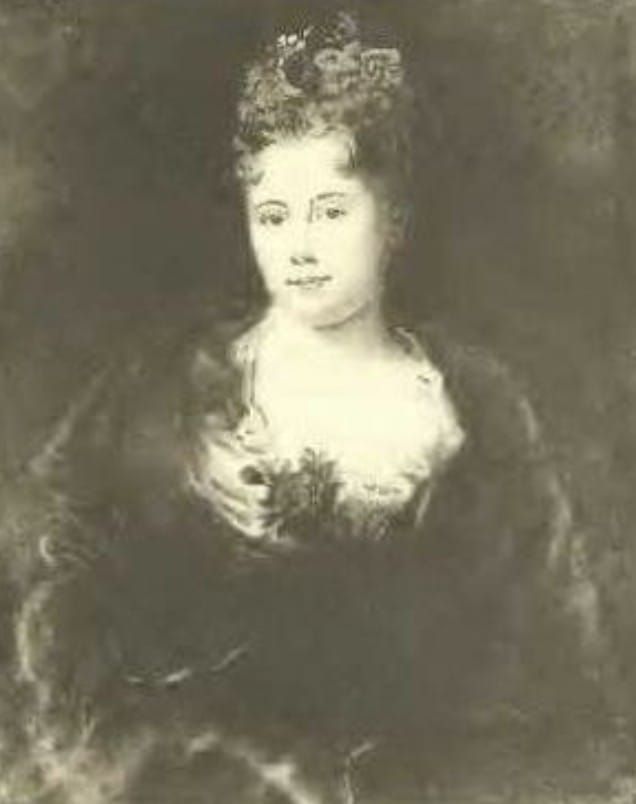
It begins with Judith, a sixteen-year-old Huguenot girl married in one of the great churches of Paris.
It moves through exile, motherhood, faith, moral education and her son, Anthony, her wider family and friends, who would become part of this ‘enterprise for humanity’.
Their lives, and the ripples they created, transformed the modern world, including the one we live in today.
A Story for All
This is a story that speaks to sons, daughters, fathers, mothers and us all.
It speaks to how we can achieve much despite the odds when we are centered on what makes us human.
This also speaks to the role of women as educators of the heart and how, when instilled in young men and women, this becomes a powerful force.
A 16-year-old girl, Judith
I’ll start the story with young Judith.
A quick note, this is an historical story, dating back some 300 years. But this is a story that has relevance for our world today.
In 1709, she was married in Saint-Eustache, one of the great churches of Paris, beside the city’s historic market district of Les Halles.
The church still stands today, vast and beautiful, widely noted for its scale, and its blend of Gothic, Renaissance and classical architecture.
She was sixteen, a young age to be married.
Judith was from a well-established, linen-merchant family. Her family was part of the French Huguenots, Protestants, living in what was Catholic France.
She would become the mother of Anthony Benezet, who became the ‘father of the abolition movement’ on both sides of the Atlantic, and more besides.
It would also disarm 300 years of institutionalised hatred. More on that later.
Anthony, who was a friend of the better-known Benjamin Franklin, is a rather unknown figure today, but was not in his time and is a voice that should be better known.
Becoming Refugees
Judith’s mother, also Judith, was from the Lieurard family.
The Lieurards are associated with a courageous culture, especially among its women.
They were marked by literacy, moral independence, religious conscience and the willingness to abandon wealth, status and security for their beliefs.
Education was not simply a matter of skills and employment, it was also about humanity, moral courage, what it means to be human.
Being willing to leave it all behind was a nice theory. Soon it would be tested.
Just some six years after the wedding, in 1715, Judith, a still-young, 22-year-old mother, fled France from persecution.
It was the middle of winter. This was no planned escape. This was sudden and dangerous.
She was with her husband, Jean, two small children, and heavily pregnant.
They had lost everything, but escaped with their lives, and their humanity.
Anthony would later document what happened to some of his relatives who remained:
- The Executed Uncle: One of his uncles was captured and hung.
- The Imprisoned Aunt: One of his aunts was locked away in a Catholic convent to coerce her into a forced conversion.
- The Dying Cousins: Two of his cousins were condemned to hard labor and died as slaves aboard royal galley ships.
- The Burned effigy of his Father: a symbolic public execution accompanied by the total seizure of the family's assets.
As mentioned, they were Huguenots, Protestants. At that time, this was forbidden in Catholic France.
Many Huguenots maintained their faith in secret, whilst outwardly conforming. For whatever reason, things changed for the family.
They became refugees, eventually settling in London, where many French Protestants had also settled.
Enter stage left – the Quakers: we all have ‘Inner Light’
It was here they were introduced to the Religious Society of Friends, the Quakers, still a relatively new movement.
Young Anthony grew up in this environment.
He was a refugee, but surrounded by a loving family and community, and had access to moral education.
One event that speaks volumes is when Judith asked Anthony, then aged fourteen, to look for books on moral philosophy, including those from the Scottish Enlightenment.
The impact on her young son was immense. This was clearly more than a shopping errand.
This also marks the time when Anthony became a Quaker, aged 14.
It’s worth drawing out two important points.
Firstly, young Anthony was allowed by his family to develop his own moral views, beliefs and identity.
Secondly, the Quaker ideology was founded on the belief that every person has an ‘inner light’.
The combination was clearly a powerful influence.
Disarming 300 years of hatred
So how exactly did this disarm 300 years of hatred?
First, we need to define this hatred.
In 1452, Pope Nicholas V issued Dum Diversas, authorising the Portuguese crown to subdue non-Christian peoples and reduce them to “perpetual slavery.”
Alongside later decrees, it helped create a religious and legal architecture for conquest, colonisation and enslavement, later known as the Doctrine of Discovery.
Over time, this fused with distorted biblical interpretations, including the Curse of Ham and the Mark of Cain, to support the racial myth that Black Africans were naturally inferior or divinely suited to servitude.
In short, Black Africans, and many other native populations, were regarded as less human than others, and, in particular, less human than White Europeans.
This gave religious, and hence moral, and legal justification to the notion that some people are more human than others and could be treated as such.
It was, in effect, public policy: embedded not only in belief, but in law, custom, finance, business and everyday life.
This was adopted across the Catholic and Protestant religions, integrated into law, customs, culture, education, finance, business: across the modern world as it was at this time, remaining for hundreds of years.
In particular, it gave justification for the enslavement of Africans and their brutal treatment.
Anthony’s work was clearly supported by a family ‘enterprise’, joined by many others.
Enterprise, Compassion and Character
Back to London.
Anthony was growing up as a refugee.
When Anthony was 18, in 1731, the family left London for America.
They crossed the Atlantic to Philadelphia, William Penn’s Quaker-founded city in Pennsylvania — a place imagined as a ‘holy experiment’, where freedom of conscience offered persecuted families like theirs the chance to rebuild without surrendering their faith.
It was from here that Anthony became the man, the person who would inspire a generation to turn against 300 years of hatred ideology that had seeped into every part of life.
It would be convenient to consider this a brilliant strategy, that Anthony was some mastermind, or Superman.
The reality is that this was leadership centered on humanity, founded on the values his mother had taught him and he had embraced.
That centering, or North Star, led to a series of choices, connections and actions that created a whole new future, one we live in today.
How?
I’ve separated this into three components, although they are interlinked:
Love of humanity: they saw the human behind the skin, each person as unique and human.
For example, in 1754, Anthony founded the first public secondary school for girls in North America, located in Philadelphia.
His love for others was demonstrated when he spent two years teaching one of the students, a deaf girl who also did not speak.
He developed a specialised curriculum, integrating this young girl into the school.
This was the birth of the inclusive classroom in America.
It was also Anthony’s love for humanity in action, walking the talk.
Enterprise: including critical thinking, creativity and resilience.
Despite being a refugee, and now a settler in early America, Anthony was part of a wider network, an enterprise of family and friends on both sides of the Atlantic.
His father and brothers had become merchants in Philadelphia.
His cousins, on his mothers’ side, had become part of high society in Britain and Europe, connected in government and the printing business.
Anthony, not cut out for the thrust of merchant life, had become a teacher and gave most of his money away.
But it is difficult to think this was not a joint endeavour in some capacity.
Character: by character, I mean moral values, someone who is ‘of good character’, honest, sincere, trustworthy.
Benezet was regarded as having humble integrity, moral clarity and practical compassion.
In 1773, Dr. Benjamin Rush, a signer of the Declaration of Independence, wrote:
“Anthony Benezet stood alone a few years ago in opposing Negro slavery in Philadelphia… now three-fourths of the province cry out against it...”
They were human
Behind the world-changing history of the Benezet family lies a raw, comforting reality.
They were entirely human.
Anthony and his wife suffered the terrible loss of their two infant children. Mary died at 11 months, and Anthony Jr lived for just six days.
The double tragedy left his wife, Joyce, completely broken. She suffered from severe, chronic depression and ill health for decades.
She was frequently bedridden and overcome with crushing sadness.
Anthony served as her primary, daily caregiver. Friends noted his infinite patience, but his letters reveal the crushing strain.
In moments of exhaustion, Anthony referred to himself as a "poor, puny creature."
Before the movement took off, he felt entirely, utterly alone.
He must have felt the heavy weight of that isolation. But, Anthony had grown up as a refugee. He had seen his parents cope with similar.
It was during his loneliest years that Anthony dedicated his resources to the French Acadian refugees.
These were the 454 desperate people from Canada that the British had heartlessly dumped in Philadelphia in late 1755. Today, their descendants are the Cajun people of Louisiana.
You can see how the humanity of the Benezets shaped their choices and their actions.
Their leadership and their lives were centered on what made them human. It had become their identity, who they were.
Their humanity, not their circumstances, drove their behaviours.
A Short Account of that Part of Africa
Benezet published this book, A Short Account of that Part of Africa, in 1762, followed by his more significant publication, Some Historical Account of Guinea, in 1771.
The titles of these books belie their world-changing effect.
The books gathered eyewitness accounts, travel narratives and moral argument to show that West African societies were not savage or naturally inferior, as slave-trading ideology claimed.
Benezet’s evidence was devastating because it was specific and human.
He showed African people as parents and children, farmers and traders, worshippers and neighbours, people capable of benevolence, duty, grief, justice, hospitality, industry and moral reflection.
For example, the book states:
A French Jesuit, Father Tachard, wrote that “The Hottentots have more honesty, love, and liberality for one another, than are almost anywhere seen amongst Christians.”
Benezet showed African life as rich in conversation, imagination and intelligence.
The same account described “great humanity and sociableness,” and spoke of African “fables, dialogues, and witty stories” used to entertain one another.
Other passages showed care, duty and community.
Benezet quoted one account saying they were “eminently distinguished by many virtues, as their mutual benevolence, friendship, and hospitality,” adding: “Is his countryman in want? he relieves him to the utmost of his power.”
He did not merely assert that Black humanity was equal to White humanity; he documented it in the ordinary signs of human life that slavery had tried to erase.
Its power lay in replacing a 300-year mythology of racial inferiority with documented stories of African humanity.
Benjamin Franklin became an eager supporter and correspondent of Benezet.
Later, as president of the Pennsylvania anti-slavery society, Franklin appealed for emancipation and education for African Americans.
Choice, Connection and Creation
There are a few critical elements in this story that illustrate the Champions Pathway of Choice, Connection and Creation.
Inspirés de la Vaunage
Judith and her family had become connected to the ideas from this community, which was in the Vaunage valley region of southern France (around the village of Congénies).
They had beliefs that were very similar to the Quakers: inner light within each person, simple lives and pacifism.
It seems this was a key part of the choices they made.
Republic of Letters
This was a network that connected scientists, philosophers, and writers across Europe and the Americas during the 17th and 18th centuries.
Judith's wider family played a key role in this movement, giving Anthony access to a highly influential and a wide network to distribute his work.
This was a powerful combination of choice, Anthony's life, and connection, the family and wider network of the Republic of Letters.
It enabled the creation of a new future that was not completely based on 300 years of institutional hatred that had become normalised into every part of life.
This also coincided with the birth of America, feeding into its founding values.
America 250
Five years after Benezet published his 1771 book, the Declaration of Independence was adopted in Philadelphia, with Franklin among its signers.
The Declaration proclaimed that:
“All men are created equal” and possess “unalienable Rights,” including “Life, Liberty and the pursuit of Happiness.”
There is no need to claim that Benezet shaped those words directly.
He was already a recognised moral presence in the same city: a teacher, Quaker reformer, anti-slavery writer and friend of Franklin.
His schools, writings and lived example had been challenging Philadelphia’s conscience for decades.
John Wesley, founder of the Methodist movement, received a copy of Benezet’s book, writing in 1772,
“Liberty is the right of every human creature, as soon as he breathes the vital air”.
So what does this mean for me, for you?
This is a powerful story of what Champions is all about: what it means to lead, centered on what makes us human, on our humanity.
We can see the ripple effect, within immediate circles, like Wesley, Franklin, and many others.
We can also see ripples beyond Anthony’s line of sight.
You can see the Champions Pathway of Choice, Connection and Creation throughout:
Choices: they did not allow their flight from France to create bitterness, but adapted to create a new future.
Connection: they cultivated key relationships, within their family and beyond, enabling a reach that Anthony could not have achieved on his own.
Creation: the new futures they helped create are staggering, including disarming 300 years of formalised hatred.
Most of all, Benezet established the principle of Black humanity, even universal humanity, through documented human stories, stories of humanity.
These were not just words.
He taught Black children and adults in evening classes at his own home from around 1750.
He then helped establish the Negro School at Philadelphia in 1770, one of the earliest dedicated schools for Black students in colonial America and the first of its kind in Philadelphia.
Benezet’s evidence walked out of his classroom.
Absalom Jones, Richard Allen and James Forten, three Black leaders of faith, enterprise and abolition in America, were among those he taught.
Moreover, these stories transformed hearts and minds to ignite others to do likewise, to create their own stories of humanity, like Franklin, Sharp, Wesley and more besides.
Closing thoughts
Returning to Judith, there is a lovely post-script to her story.
Her will, revealed after her death in 1765, included a provision for Canadian French refugees, Catholics.
These were Acadians, French-speaking Catholics expelled from Canada by the British, stripped of property and left destitute in places like Philadelphia.
The significance is powerful.
Judith was a Protestant Huguenot whose own family had suffered under Catholic France, yet her compassion crossed that boundary.
They were vulnerable strangers in need.
That is what mattered, they were human, as was she, clearly.
In honour of his mother’s wishes, Anthony spent years feeding, housing and legally defending Acadian refugees in Philadelphia, with Judith’s legacy helping fund and bless that work.
What story will you create?
Our journey started with a sixteen-year-old girl and then a fourteen-year-old boy.
Their choices and connections created futures they hoped for, and to which they dedicated their lives.
Judith formed Anthony’s humanity.
Anthony wrote about the humanity of Africans.
He taught Black children and adults in his spare time and created a school for them. He knew them.
Those stories travelled through classrooms, books, friendships and movements — helping to transform America, Britain and beyond.
The combined achievement is monumental, when you sit back and consider the weight of 300 years of institutionalised dehumanisation of a whole population and all their descendants.
As Pope Nicholas V said in 1452, such peoples were condemned to be in perpetual slavery.
Shocking, it was truly shocking.
When you think of the key people involved in disarming this, yes there were several, but this was no army in the traditional sense.
Humanity truly was a performance multiplier.
Not sentimentality. Not weakness. Humanity became the force that made courage, evidence, trust and action possible.
Of course, this was not the end, as we know, but it was a very significant step.
Their stories inspired others to carry the same torch, including me.
So what story will you create? Will it be a Champion’s Story of Humanity?
I look forward to sharing your story!
Why is Champions so relevant today?
The Republic of Letters does not exist any more.
It did not vanish. It was systematically swallowed by the emergence of the modern nation-state.
It was formalized into academia, with professional, paid staff.
Moral substance driven by individuals and families was replaced by institutions.
But institutions do not have morals.
We forgot that a movement of individuals and families can defeat hatred, no matter how deep-rooted.
Individuals and families are especially effective when united by a shared understanding of humanity, grounded in love and personal dedication.
It is the power of ones, the power of twos, and the power of "3.5%".
This is the vision for Champions: a movement inspired by stories of humanity, creating new stories.
Stories centered on what it means to be human.
To inspire more 14-year-old boys and 16-year-old girls.
And provide a network of "letters". A network for you and me to create new futures and stories.
Stories that may be told in 300 years.
Enjoyed this story? Become a Champion, either as a free member, or pay it forward and help fund the next generation of young Champions.
Below is an Ai generated video podcast.
Ai video podcast: Anthony Benezet
Please note: every effort has been made to ensure historical accuracy. Say if you notice anything that is incorrect.