Champions Pathway — James Oglethorpe's Champions Story
How one man changed himself — and, in doing so, helped change the world. A look through the lens of the Champions Pathway.
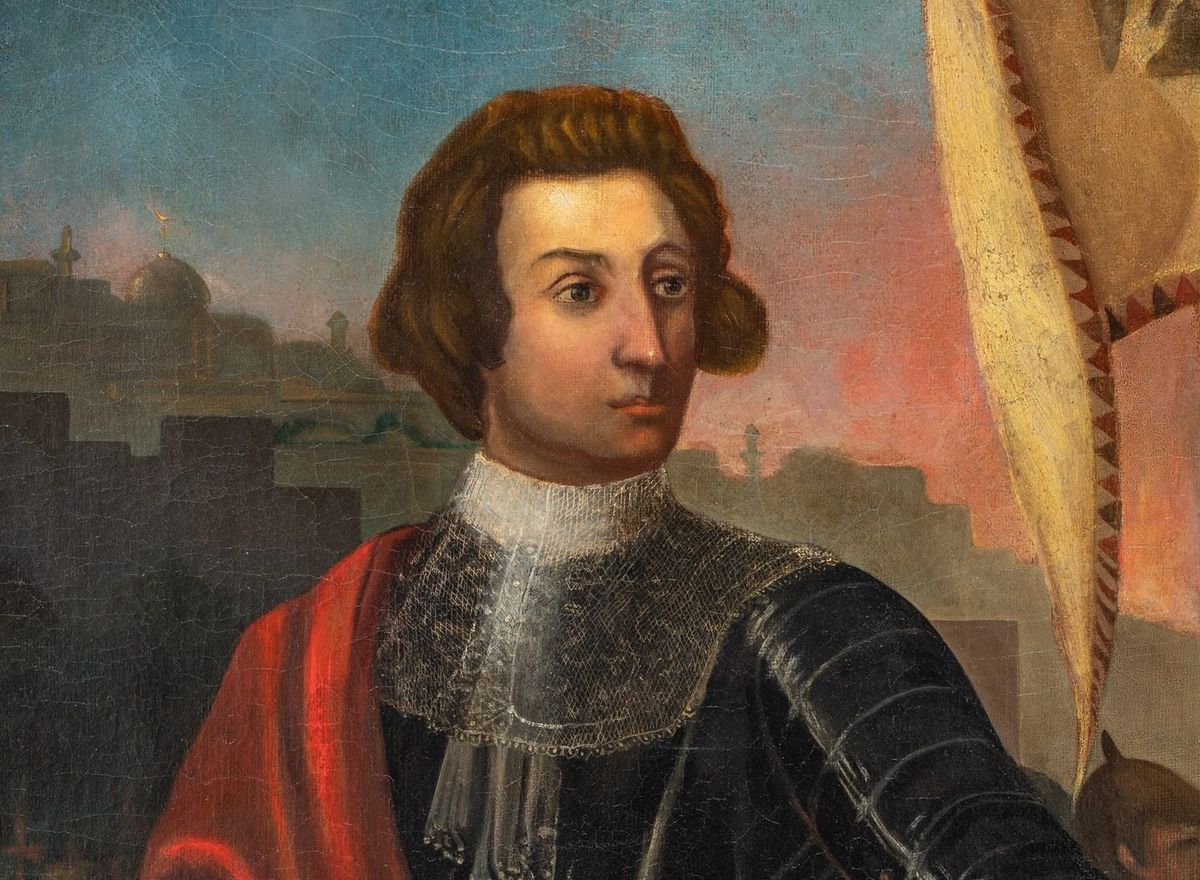
In my last post I ended on a quote from historian Michael Thurmond. It is worth beginning here with the very same words:
If you can look in the mirror, see your faults, the things that need to be improved, if you can change yourself, you ultimately can change the world, and you may in fact change the course of history, which is what Oglethorpe was able to do.
That is the whole story in a single sentence.
But how? How does a man look into that mirror, change what he sees, and go on to bend the very arc of history?
In this post I want to use the lens of the Champions Pathway to understand exactly that.
How did Oglethorpe change himself? And how did he then use that change to help change the world?
The Champions Pathway runs through three processes: Choice, Connection and Creation.
Choice is where humanity begins. Connection is where humanity deepens. Creation is where humanity becomes visible in the world.
Not as a single, straight line.
More like ever-deepening levels of human capability — each strengthening the last, building his inner core, his moral mass, and with it, his moral gravity.
Let me walk you through it.
The starting canvas
None of us starts life with a blank sheet.
The canvas of our lives is already being painted long before we can hold a brush — our genes, family, circumstances, the time and place we are born into.
Oglethorpe was no different. He was born into privilege, into empire, into the assumptions of his age.
He was also born on the wrong side of the political line.
He was a Jacobite — which, in early 18th-century Britain, meant a potential traitor.
His mother and sisters were actively involved in the struggle as spies, eventually living in France. They were, in all likelihood, part of the Atterbury Plot — a planned coup d'état that was leaked to the British government in the spring of 1722 — and they numbered among the most active, notorious, and deeply embedded Jacobite agents in Europe.
In 1722, at the height of this, James was twenty-five, living in Britain, surrounded by suspicion.
But at some point, for all of us, the brush is placed in our own hands.
We cannot choose what has been painted so far. But we can choose what comes next.
That is the moment the pathway becomes our pathway.
Humanity is not where we start, but who we choose to become
1 Choice
Every turn of Oglethorpe's pathway began with a choice.
The most important came in the wake of a trial for his life.
In May 1722, aged twenty-five, he stood in the dock at the Old Bailey on a charge of murder, with the hangman's noose a real possibility.
And this was no ordinary trial: it fell just after the British government had been warned of a Jacobite plot, and — innocent or not — Oglethorpe swinging on the gallows would have been a convenient way to remove a potential threat.
Remarkably, he was acquitted. But it was a wake-up call.
When he walked out of jail in early October 1722, he had a choice to make. We cannot know his thinking, but we can see the results.
He could have followed in his family line, continued with his sisters and mother, joining them in France, or like his sister before, becoming an undercover spy.
He did neither. He chose his own pathway.
He began to take up the cause of the oppressed.
It started with sailors — men press-ganged, against their will, into a life in the British Navy.
He befriended Robert Castell, the brilliant architect dreaming of a better world through his urban designs. And when Castell was thrown into prison and lay dying of smallpox — the victim of corrupt wardens and a system that fed off human misery — Oglethorpe chose to walk down into that cell to be with him.
The list goes on.
None of these were forced upon him. Each was a decision, a choice taken at real cost, to act from his humanity rather than his comfort.
That is not a single heroic moment, but a habit, chosen again and again until it became who he was.
Proximity
If Choice was the engine, proximity was his favourite tool.
Time and again, Oglethorpe chose to get close.
To be there, in the thick of it, rather than a safe and distant observer.
He visited the prisons himself, and felt first-hand the conditions that had killed his friend.
Later, when in the newly formed Georgia, on the banks of the Savannah river, he broke bread with Jewish refugee families, built friendship face to face with the Native peoples, sat among the Salzburg Protestant refugees he had welcomed.
He went, in his sixties and under a false name, right into the heart of a European war — simply to stand beside a friend.
Proximity was how he activated his humanity, and how he strengthened it.
You cannot hold a person at arm's length and truly see them. Oglethorpe never tried to.
2 Connection
Here is something surprising about the pathway: the connections that matter most are often not the ones we go looking for.
Some of the most important people in Oglethorpe's life arrived unplanned, unbidden — and changed everything.
Take the Duke of Argyll. When Oglethorpe's own life hung in the balance, on that murder charge, it was Argyll who stepped in to save him — his Champions Angel, his guardian angel. Not a connection Oglethorpe engineered, but one that made all the rest possible.
Or the Wesley brothers and the Moravians. Their meeting on that Georgia-bound voyage was completely unintended. Yet from it came the spark of a global movement — the Methodist movement.
But the greatest example is Dr Nunes and the Jewish refugees.
They arrived unexpected, uninvited — and at the most critical possible moment, as fever swept the young colony. Dr Nunes' skill and care saved it.
And yet their arrival was not really chance at all.
They had been drawn to Georgia by its status, by the promise written into its founding charter: Not for self, but for others.
Their Jewish supporters in London had wanted to fund the new colony directly; in the end, they funded the refugees to sail instead, on a ship called the William & Sarah.
Even the name tells the story: Sarah, unmistakably Jewish; William, unmistakably British. Two peoples, one voyage.
The connection Oglethorpe did not seek turned out to be the one that saved everything.
3 Creation
If one process defines Oglethorpe above all others, it is Creation.
He was, quite simply, a man of action.
A man who made things happen. He was knocked down again and again, yet found the strength to get up and make more happen still.
Look at what he created, and enabled, across a single life: a reform of England's prisons; the principle of the second chance; a whole colony founded on Not for self, but for others; a haven for the persecuted; a lasting peace with the Native peoples; the mentoring of the movement that would end the slave trade itself; and, it seems, a critical role in the birth of the America we know today.
It is, frankly, a staggering body of work.
Creation is the pathway's fruit.
Choice turns inward, Connection turns outward — and Creation turns them both into something real, something that outlasts you.
And this is not a singular, linear process.
It is an ever-deepening, ever-strengthening one — each creation feeding back into the next choice and the next connection, leading to the next creation.
Humility
For a man of such immense privilege, humility did not come easily. It had to be learned. Often, the hard way.
His five months in jail, on a charge of murder, aged just 25, must have been a sharp and sudden shock. His life and his future were not in his own hands and he had five months in an 18th century jail to reflect.
He learned, too, what it means to have a Champion of your own: to depend on the actions of another, when the Duke of Argyll stepped in to save him.
He learned grace — choosing to be gentle with a young, arrogant Charles Wesley when he could so easily have hardened his heart.
He learned the limits of his own power. Georgia's slavery ban was overturned; Britain turned against him. Some things, he discovered, are simply not ours to secure, however hard we work for them.
And then, in Prussia, came the hardest lesson of all — his childhood friend James Keith, dying in his arms.
Whatever pride remained in him surely fell away in that moment.
And it was this stripped-back, humbled man — no longer proud, no longer grasping for his own success — who went on to his final, quietest and in many ways greatest creation of all: becoming a mentor to the British abolition movement.
Humility did not diminish him. It strengthened him, prepared him.
Look in the mirror
So here is the invitation.
The Champions Pathway is not a museum piece. It is not Oglethorpe's alone. It is available to every one of us, right where we stand.
Look in the mirror, as Thurmond says. See your faults honestly. And then — this is the whole of it — choose to change.
Make the choice. Get close. Build the connections, even the ones you never expected. And create — make it happen.
Do that, and you begin to change yourself.
Change yourself, and you begin to change the world around you.
And who knows — like Oglethorpe, you may even help change the course of history.
There is no monopoly on being human.
Become a Champion
Oglethorpe's story shows that humanity is not a soft alternative to performance.
It is a performance multiplier.
When people are seen, protected and trusted, systems become stronger, not weaker.
If this story stirs something in you, don't let it stay a feeling.
Do what Oglethorpe did — turn it into a choice, a connection and then create the future you want to see, become that future!
- Join the 35Champions site as a free member, and follow the movement as it grows.
- Pay it forward as a paid member, helping young people join the Champions program and become Humanity Champions in their own communities.
- Most of all, choose a pathway of humanity — center your leadership on what makes us human.
Enjoyed this story? Become a Champion, either as a free member, or pay it forward and help fund the next generation of young Champions?
Join as a member, read and share Stories of Humanity, and help fund the next generation of young Champions.
I'd love to hear your reflections below.
Glen