Celebrating America 250: An Untold Story of Humanity
As America turns 250, this is an untold story of humanity — a truly remarkable story of James Oglethorpe, the founder of Georgia, and much more besides.
This post accompanies our latest podcast, How James Oglethorpe Led with Radical Humanity.
Press play below and read along — or read on for why this 300-year-old story is like a letter written directly for our own moment in time.
Some stories you stumble across and simply cannot put down. This is one of them.
As America marks its 250th year, I want to introduce you to a man almost no one remembers.
He never signed the Declaration, and yet had a hand in nearly everything we now think of as America: the promise of opportunity, freedom and the famous pursuit of happiness, founded on the premise that all people are created equal.
He was a true champion, a Champion of Humanity.
His name was James Oglethorpe. And his life is one of the most powerful stories I have ever come across.
The United States Declaration of Independence is anchored by five core ideals: equality for all; we possess unalienable rights; government and institutions exist to serve people, to benefit their lives, not the other way around; people have the right to alter or abolish government; and the right to life, liberty, and the pursuit of happiness.
They draw from the Enlightenment philosophy, establishing the basis for America, free from British rule.
Oglethorpe was born in 1696, as the Enlightenment period started, and lived to see America's independence and beyond, meeting John Adams a few weeks before Oglethorpe passed in 1785.
His life mirrors the same struggles, the same ideals. It is a remarkable life that bent the arc of history through the 'moral gravity' that his life created.
Just like Einstein's General Theory of Relativity helps us understand the concept of Spacetime, which is 'bent' by the mass of planets and stars in space.
Oglethorpe was a star amongst stars, he was a 'Champions Catalyst' that created more Champions, who would themselves also bend the arc of history.
Yet it speaks of something much closer to home. The importance of friendship. Everything he did was born from this, being a friend, a good friend. It also speaks of the concept of proximity.
Let me tell you why.
Eight words
When Oglethorpe died, his widow Elizabeth, his soulmate of more than forty years, had to choose how to sum up his life.
He had been a General, a Member of Parliament, the founder of Georgia.
Instead, she chose eight words:
He was the friend of the Oppressed Negro.
First, let us unpack those eight words.
"He was the friend".
Elizabeth could have engraved those four words, because first and foremost he was a friend. He learnt what it means to be a friend.
"He was the friend of the Oppressed."
Long before he took up the cause of enslaved Africans, he was a friend of the oppressed, whether press-ganged sailors, debtors, Native peoples, Jews or refugee Protestants.
And, as you will see below, he was indeed "the friend of the Oppressed Negro".
For two centuries those words were all but forgotten, until 1997.
Georgia historian Michael Thurmond, himself the great-grandson of an enslaved man, stood before that tomb in 1997 and could not believe his eyes.
How could this be said of someone so connected with the British Empire? Thurmond spent the next twenty-seven years trying to understand, leading to his remarkable 2024 biography, James Oglethorpe, Father of Georgia.
I have researched his story, through the lens of Champions, through my own lens of spending over two decades working alongside genocide survivors and perpetrators in Rwanda, learning and seeing what it means to be human.
So how human was James Oglethorpe?
My key takeaway is that he started his journey by learning how to be a good friend. Learning, and enjoying, what friendship means.
Being a friend, a good friend, is what makes us human.
And this is what made Oglethorpe an incredible human, a true Champion of Humanity, more so, a Champions Catalyst.
To be frank, this is a 'choke on your cornflakes' story.
Read it, absorb the detail and let me know your thoughts.
As a young man, he was no saint
Oglethorpe did not begin as the friend of the oppressed. He began on the other side.
He had been a deputy governor of the Royal African Company, the crown-backed engine of the British slave trade.
Then, enslaved human beings were to him what they were to almost every other person in Europe and beyond: numbers on a ledger, profit and loss, property.
It's worth pausing here for a moment to take this in. For nearly 300 years this had been the accepted norm. Yet, it was one big terrible, utterly terrible lie.
Black Africans were regarded as sub-human, to be enslaved. Enshrined into Catholic doctrine — the Doctrine of Discovery since 1452 — and later Protestant justifications.
What changed him was a single human story.
In 1732, a letter reached his desk. Written a year earlier in elegant Arabic by Ayuba Suleiman Diallo, a West African scholar who had been ambushed, sold, and shipped to a Maryland plantation. Somehow he had managed to write home, begging to be freed.
The entire monstrous logic of slavery rested on that lie: that the people it consumed were less than human.
And here, in Oglethorpe's own hands, was living proof that the lie was a lie.
He chose to see it. He bought Diallo's freedom, sold every share he held, and walked out of the slave-trading company for good.
This is the most hopeful thing about him.
He was not a faultless hero. He was a man who looked into the hardest mirror there is, saw his own hand in a great wrong, and chose — at real cost — to become someone better.
That is not innocence. It is something rarer, and greater: redemption, which leads to transformation.
And it sits at the heart of what we mean in Champions:
humanity is not where we start, but who we choose to become
And the timing was somewhat helpful, as it leads us to the formation of Georgia.
Oglethorpe received this letter sometime during the summer of 1732. The new Royal Charter for Georgia was granted in the June of that year, with no mention of slavery, for or against.
By 1735 slavery was banned in Georgia. The Trustees had secured through legislation: “An Act for rendering the colony of Georgia more defensible by prohibiting the importation and use of black slaves.”
Wow! Yes, wow!
Not for self, but for others
Once you begin to trace what this one man set in motion, it is hard to believe it all belongs to a single life.
It began, in fact, with sailors — ordinary men seized off the streets and press-ganged into a life at sea against their will.
Oglethorpe saw the injustice of it, and he acted.
This was his Champions Pathway in its earliest form — Choice, Connection and Creation — the first stirrings of the human core, the moral gravity, he would spend the rest of his life developing.
It was only a start. But an important one.
The untimely, tragic death of a close friend would soon spark far more.
This led to his reform of the prisons — the debtors' prisons, where a single debt could destroy you and your entire family forever. And this was "forever" as in ever and ever, passing to your family and their descendants. The debt was never removed. It had to be repaid.
His friend, the architect Robert Castell, suffered exactly this fate. This gifted, brilliant man was left to die in a cell riddled with smallpox because he could not pay a printer's bill. His wife and children were soon to suffer a similar fate, as the debt now passed to them.
It opened Oglethorpe's eyes to the injustice, and to the greed the whole system allowed, and its inevitable consequences — a greed and inhumanity he would later recognise in the enslavement of Black Africans.
He acted.
He chose proximity as his weapon, something he would use time and again
This is where proximity is used so effectively. Visiting the prisons himself, he experienced first-hand the conditions that had befallen his friend.
He forced open a parliamentary inquiry into the gaols, exposed the corruption festering inside them, and saw some ten thousand people freed from their cells almost at once.
Then he went further.
He helped write into English law a radical principle: that a person ruined by debt could wipe the slate clean and begin again: the second chance.
It is now woven so deeply into the fabric of ordinary life, the world over, that we forget it ever had to be won.
This alone would have been the work of a lifetime. In his, it is barely a footnote.
Because then he founded a colony. Georgia — built on the principle he carved into its very heart:
Not for self, but for others
Alone among the colonies, it banned slavery outright. For its time, that was astonishing.
It did not last; the ban survived barely twenty years. But twenty years was enough.
In that short window two young priests, the brothers John and Charles Wesley, came to Georgia, and what they found there helped spark the worldwide Methodist movement — which would go on to play a major part in tearing slavery down, and much good besides.
This was no mere encounter.
It transformed the Wesley brothers — their whole understanding of what it means to be human, and to live alongside the humanity of others.
They were not yet the Wesleys we know today.
They arrived arrogant, self-righteous, naive young men, full of their own intellectual self-indulgence.
Oglethorpe's vision, and the moral gravity he had built into Georgia, broke them clean open, as if in two.
But he also handed them a lifeline: the Moravians — more on them another time. In doing so, Oglethorpe had triggered the Champions Pathway in these remarkable brothers, whose lives would go on to transform the world.
When Charles later wrote his great hymns — "And Can It Be" and "Hark! The Herald Angels Sing" — he was writing from his own lived experience, aided in no small part by Oglethorpe.
Oglethorpe's humanity kept widening the circle.
Against the rampant antisemitism of the age, in 1733 he welcomed a ship of Jewish refugees into Savannah — a community that endures to this day as the third oldest in America.
More still, he built a true and lasting peace with the Native peoples, a friendship of equals that would prove vital to Georgia's survival. That is a whole new story, for another time — one that reaches all the way to the founding of the American Girl Scouts in 1912 by Juliette Gordon Low, a future resident of Oglethorpe's Savannah.
Back to 1733, those Jewish refugees soon saved his colony in return. When a deadly outbreak of yellow fever swept the settlement, it was one of their own — the brilliant Dr Nunes (or Nunez), a renowned Portuguese doctor — whose skill and care saved the colony.
Oglethorpe noted in his diary that every person under Nunes' care lived.
It sparked in him a deep and lasting gratitude. Not only did he let the community flourish in Savannah; back in Britain, years later, he would help bring forward the so-called Jew Act, to grant full citizenship to British Jews.
It's worth noting that only a century before, Jews had been allowed back into Britain at all — readmitted in 1656, after an exclusion that began in 1290 and lasted almost four hundred years.
Oglethorpe was ahead of his time: amid the antisemitism still gripping Britain, the act was voted down. It is the mark of the man that he was willing to stand for the oppressed again — willing, once again, to be their friend.
Back to Georgia, and survive it did.
In 1742, Oglethorpe held back a Spanish invasion from the south — aided by those very same Native allies — and in doing so helped secure the future of the America we know today.
Then comes the moment that may be the greatest of them all, though we can never be certain.
Humanity as a performance multiplier
This is probably one of the greatest examples of this principle.
What seemed to start as an act founded in a deep friendship, ended, in what I can see, as world-changing impact, directly shaping the future of the modern world we know today.
That is a bold claim and it maybe overstated. But it certainly could be true. Either way, it demonstrates the power of humanity and that power to be a performance multiplier.
It was now the 1750s.
Oglethorpe was approaching sixty, an old man by the standards of the age.
His dream in Georgia had seemingly failed. His defence of the Jews had cost him his parliamentary seat, one he had held for thirty years.
He had been dragged through two malicious court martials, acquitted by both, yet stripped of his military rank all the same — the establishment's prejudice against his suspected Jacobite sympathies outweighing the verdicts.
By all accounts he was a failure.
An idealist, eaten by the very system he had tried to transform. Finished.
And yet his moral gravity was such that it simply could not be extinguished.
What came next reads as if from a Hollywood script.
It was around 1756 that Oglethorpe slipped into Europe under a false name to fight in the Prussian war. He went to the side of James Keith — a fellow soldier and Scot he had befriended in France decades before, now a Field Marshal to Frederick the Great.
Again, proximity. Being there, in the thick of it, not a distant observer.
And there came a critical five minutes in which Keith died in Oglethorpe's arms, buying the time for Frederick himself to escape.
It was a moment that helped shape the whole course of the war — and set in motion a chain of consequences that ran, domino by domino, all the way to the American Revolution, and to the Declaration of Independence in 1776.
His time in Europe refined the man further still — his humanity deepened, helped by the wisdom that comes with age.
And in his final years, out of favour and all but forgotten, he did perhaps his quietest and most important work of all.
He became a mentor to a new generation gathering in London, and passed to them the torch he had carried his whole life.
Around him gathered a remarkable circle:
the Wesleys, now old men themselves — transformed, and leaders of the growing global Methodist movement;
Olaudah Equiano, the brilliant Black Briton who, years before, had walked the streets of the very Savannah Oglethorpe had established; and,
John Newton, the reformed slave-ship master who penned the world-famous hymn Amazing Grace.
Just six months after Oglethorpe's death, a young MP named William Wilberforce took up that baton and went on to finish the work.
And Elizabeth, in honour of the man she loved, left her fortune to fund Granville Sharp, who fought at Wilberforce's side.
Oglethorpe is remembered as the father of Georgia.
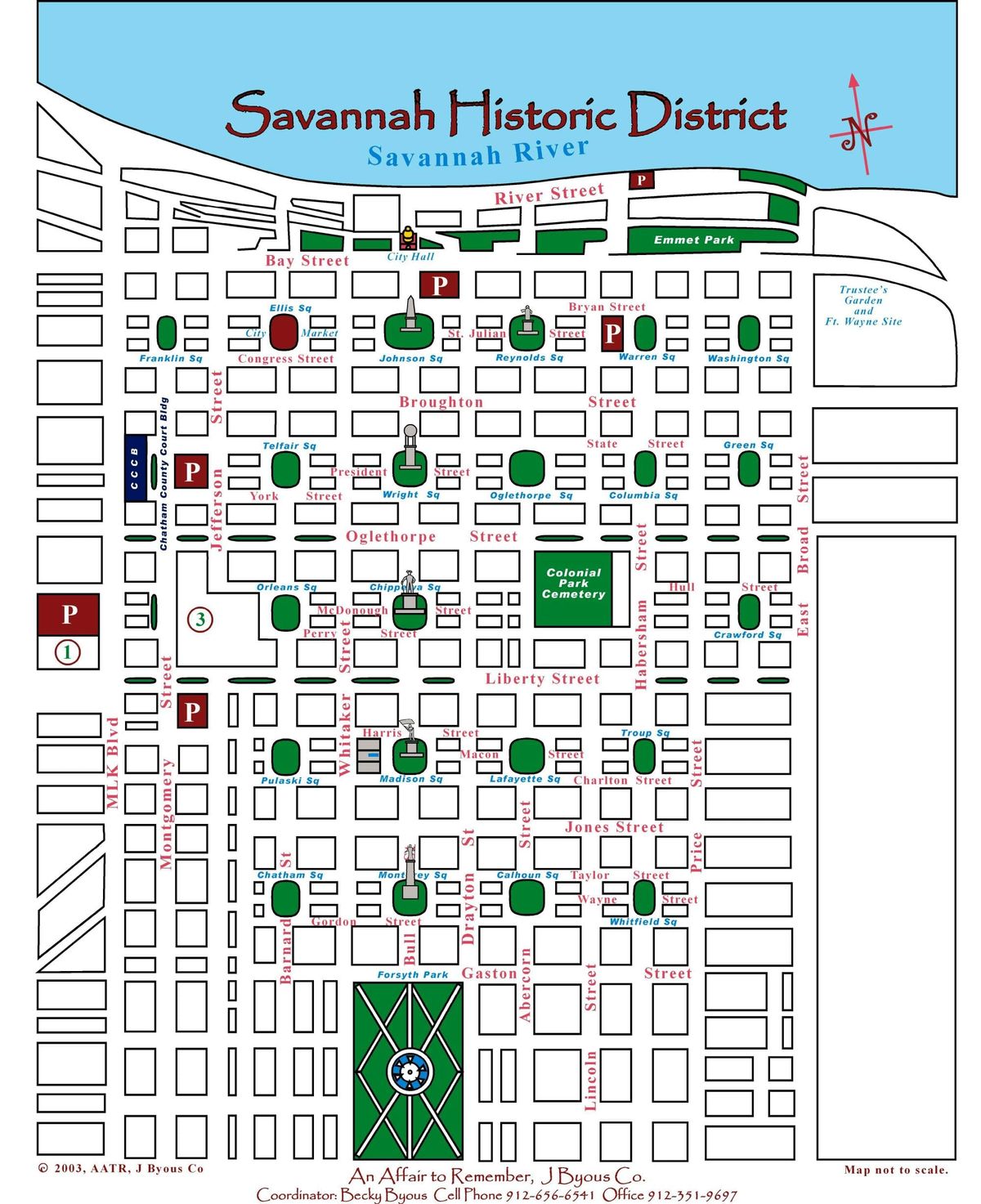
And anyone who has walked the streets of Savannah, and admired the elegant design of the old city, knows him too.
For it was that friendship with Robert Castell — the friend who suffered and died in the debtors' prison — that first stirred the humanity in Oglethorpe we still see today.
It was through this friendship that Oglethorpe's humanity was called forward, brought to the fore, activated and put to effective use.
It was also an important proving ground for Oglethorpe for what was to come.
He took Castell's designs and shaped from them the Savannah so admired now.
But it was more than architecture.
He proved that a vision built on 'Not for self, but for others' creates a moral gravity, a performance multiplier, that cannot be stopped.
His life, shaped around that one principle, changed the face of the world we live in today.
Moral gravity — and the 3.5%
So how does one out-of-favour man do all this?
Not by force. By something the podcast calls, beautifully, moral gravity.
A person truly anchored in the humanity of others develops a kind of weight. A gravity. It quietly bends the world around them, drawing others into a new orbit, until the very course of history begins to curve.
Oglethorpe never charged at history head-on. His humanity simply carried such gravity that the world around him could not help but bend, in time, toward justice.
He was not born with this.
He needed to develop it, through what we call the Champions Pathway — of Choice, Connection and Creation.
For Oglethorpe, it seems the trigger came when he spent five months in jail, then aged 25, on the charge of murder.
Yes, murder — with a trial at the famous Old Bailey in London. He was acquitted.
But it was surely a wake-up call, a call that he would keep answering each day for the rest of his life.
This is why his story fills me with hope.
And why it feels so urgent now. It echoes what researchers call the 3.5% rule — the finding that it takes only a small, committed minority to tip an entire system.
You do not need a majority to change the world.
You need pure intent, the right connections, and the courage to act from your humanity where you stand.
That, in the end, is the whole wager of Champions.
The torch, today
And here is the part that moves me most: the same baton is still being passed, hand to hand, right now.
I have had the privilege of knowing many Champions, including survivors of the 1994 genocide against the Tutsi in Rwanda, who experienced the very worst of what happens when humanity is lost.
And yet, like Oglethorpe confronting the inhumanity of his day, they chose not to reflect that darkness back into the world.
They chose their humanity — like Dydine, today a Champions ambassador, spending her life calling that same humanity forward in others.
Their message distils everything these three hundred years have been trying to say:
Our humanity is never truly lost, only buried — and the work of every generation is to activate it, strengthen it, and call it forward again.
What it asks of us
That is the real invitation of America's 250th year, and of this whole story.
Not merely to celebrate, but to remember that a nation's highest ideals were never the work of faultless heroes.
They were the work of ordinary people who chose their humanity where they stood.
And the future is never fixed. Anyone — anyone at all — can choose to become the person who helps bend it toward justice.
There is no monopoly on being human.
I'll close this story by ending on a quote from Michael Thurmond:
If you can look in the mirror, see your faults, the things that need to be improved, if you can change yourself, you ultimately can change the world, and you may in fact change the course of history, which is what Oglethorpe was able to do.
More on this in the next post.
Become a Champion
Oglethorpe’s story shows that humanity is not a soft alternative to performance.
It is a performance multiplier.
When people are seen, protected and trusted, systems become stronger, not weaker.
If this story stirs something in you, don't let it stay a feeling.
Do what Oglethorpe did — turn it into a choice, a connection and then create the future you want to see, become that future!
- Join the 35Champions site as a free member, and follow the movement as it grows.
- Pay it forward as a paid member, helping young people join the Champions program and become Humanity Champions in their own communities.
- Most of all, choose a pathway of humanity — center your leadership on what makes us human.
Enjoyed this story? Become a Champion, either as a free member, or pay it forward and help fund the next generation of young Champions.
Listen to the full deep-dive podcast above.
And if you'd like the complete story — the murder trial, the guardian angel who saved Oglethorpe's own life, the five minutes in a dark forest that helped make America possible — you can read more as I unpack this remarkable story in a series of posts this coming week. Stay tuned!
I'd love to hear your reflections below.
Glen
Every effort has been made to ensure historical accuracy; where the record is silent, this telling imagines the likely human moment behind the documented fact. Some connections and consequences are offered as interpretation, not formal historical proof.