A Love Story: James and Elizabeth Oglethorpe
When two people build a life on a shared, unshakeable love of humanity, deep love and respect can become a force that outlives them both.
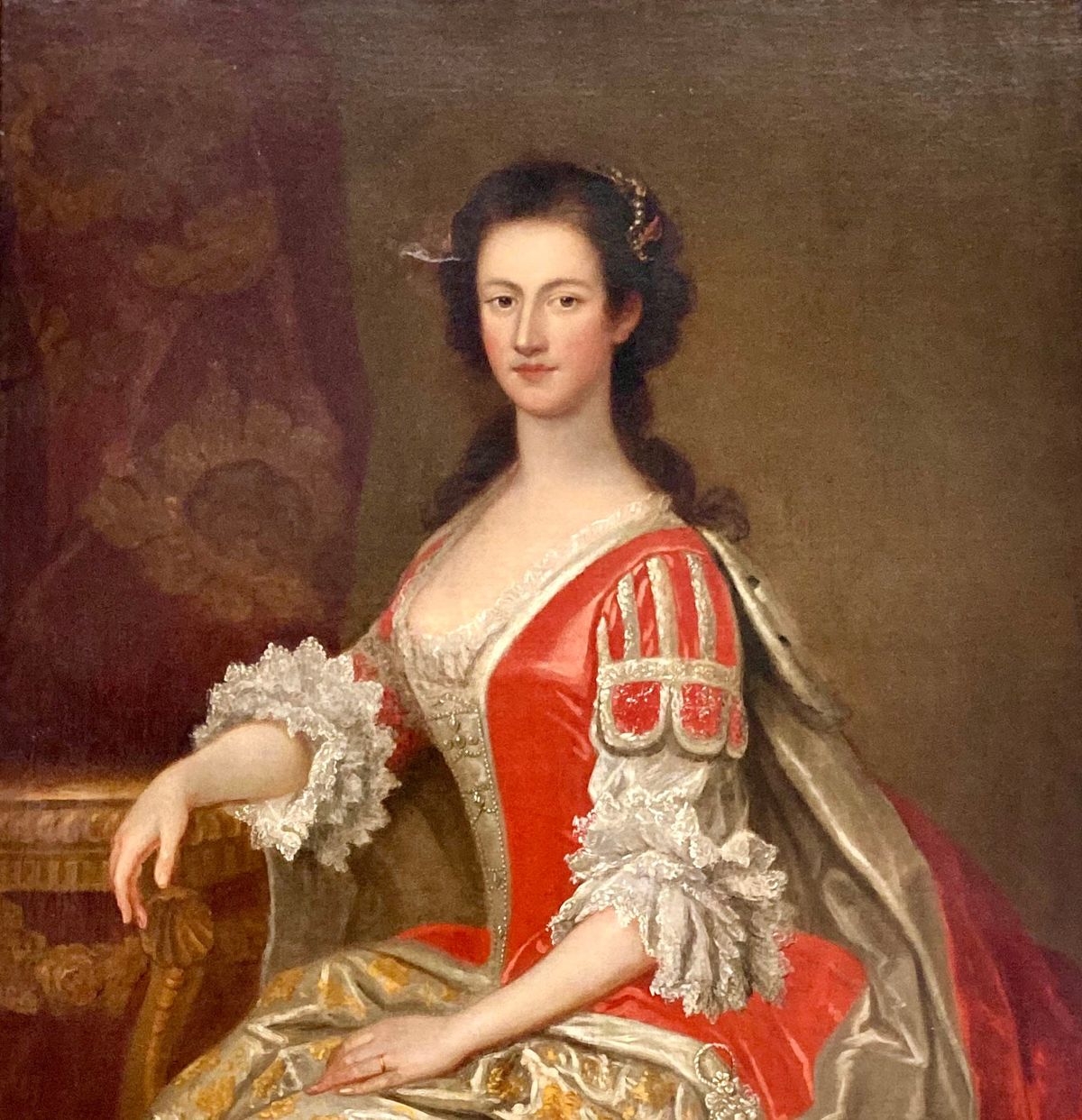
Let me introduce you to someone that I wish I could have met: Elizabeth Oglethorpe.
She arranged for those eight words to be the lasting testament of her husband:
He was the friend of the oppressed Negro
Those were her words. She chose them.
To understand them is to understand Elizabeth. We have to go back, long before she ever met Oglethorpe. We have to begin with Elizabeth herself.
Below is a podcast with the main story arc.
The woman who would not be erased
Elizabeth Wright was no delicate ornament of the drawing room.
She was born in 1710 at Cranham Hall, Essex, England to Sir Nathan Wright and Abigail Trist, his fourth wife.
She was born into privilege, property and position — but she nearly lost them all.
When her inheritance was threatened by a grasping step-family, she did not quietly accept her fate, as so many women of the age were expected to.
She fought. Through the courts, through the years, she fought to claim what was hers.
And in that fight she did not stand alone: it was her mother who seemed to drive the defence, taking up her daughter's cause — and, in the doing, teaching Elizabeth how to stand up for herself, a lesson she would never unlearn.
Her mother did not live to see her daughter's happiness: she died in 1741, only a few years before Elizabeth met Oglethorpe.
By the time she met Oglethorpe in 1744, she was a young, financially independent Lady of Cranham Hall — mistress of her own estate, her own decisions, her own life.
In an age that routinely erased women — folding their names, their money and their wills into their husbands' the moment they married — Elizabeth had done something quietly radical.
She had refused to disappear.
That refusal is the key to everything that followed. Because it meant that when love finally came, she would not settle for being owned.
She would only accept being known.
Two people who understood the same thing
She was thirty-three when James Oglethorpe came into her life.
He was forty-seven — a battle-scarred General, back from a decade of fighting for refugees, debtors and the outcasts of the earth.
On paper, it was the sort of match the 18th century arranged all the time: land, title, lineage.
Most such marriages were little more than cold mergers, the woman signed over like a parcel of ground.
Theirs was different from the very first.
They had, without ever planning it, spent their whole lives learning the same lesson.
James had spent his fighting so that the powerless would not be erased — the prisoner, the refugee, the enslaved.
Elizabeth had spent hers refusing to be erased herself.
Their cores were identical.
They both understood, in their bones, what it costs to insist on the dignity of a human being.
And when two people recognise that in one another, something deeper than attraction takes hold.
It is recognition. The feeling of, at last, being fully seen.
A treaty of equals
They married in September 1744 in King Henry VII's Chapel, Westminster Abbey.
For those that know England, you will know this was not some small wedding.
Westminster Abbey is where Monarchs are crowned, where Royals are wed.
Just think of the occasion.
The wedding was recorded as a dignified and somewhat unusual event for its time, bridging traditional English gentry life with the "New World" of the American colonies.
The most remarkable detail that set the day apart was the presence of a Chickasaw Indian Chief from the Georgia colony.
He had accompanied Oglethorpe to England and attended the couple on their wedding day, a sight that would have been startlingly unique in 1740s London.
General Oglethorpe himself famously described Elizabeth not in flowery romantic terms, but as a woman of magnanimity and prudence.
These were high compliments in the 18th century, praising her generous spirit and her wisdom in managing the Cranham Hall estate.
And by the account that comes down to us, James did something that tells you everything about the man, and about the love beginning between them.
Before she would marry him, Elizabeth required the general — the war hero, the founder of a colony — to sign a prenuptial agreement: a marriage settlement protecting her identity, her wealth and her status.
Yes, a prenup in 1740s Britain!
And he willingly agreed to it, safeguarding Elizabeth's independence — her estate, her autonomy — rather than absorbing it, as the law would otherwise have entitled him to do.
Think of what that meant.
He was not taking a wife as a possession.
He was taking her as a partner. A co-equal. A sovereign soul beside his own.
For a woman who had fought so hard not to be erased, there could have been no greater declaration of love than this:
I see who you are, and I will guard it, I will honour you, respect you for who you are, and who you can become
That is the essence that I read from their story, their union.
And so Cranham Hall filled with something rare for a marriage of that century — not duty, but joy and mutual love.
A vibrant, easy happiness.
After all his betrayals in Georgia, after all the doors that had closed on him, James had finally found a home where he was simply, wholly welcome.
A Garden of Eden
The phrase "Garden of Eden" was famously used by contemporary visitors to describe the landscape surrounding Cranham Hall, reflecting the deliberate retreat from public life that Elizabeth and General James Oglethorpe created.
Visitors to the estate noted that the house and its grounds were designed not for ostentatious grandeur, but a literal and figurative sanctuary, balancing untamed nature with high-effort topiary design.
Rather than filling the gardens with expensive marble statues, the couple relied entirely on the natural architecture of plants, hedges, and trees to shape the landscape.
For 40 years, it served as a peaceful, private enclave where the General could host intellectual friends—like the famous author Samuel Johnson—in a setting that felt entirely removed from the chaos of London.
Elizabeth had become his refuge. And he, hers.
And they created a space that others could find also.
Anchor and fountain
Here is where the Champions lens makes sense of it.
We often say that humanity — treating people as fully human — is a performance multiplier.
That it makes teams, colonies, whole systems stronger. We have watched James prove it his entire life.
But a marriage is not a system.
It is something more intimate. And in a marriage, that same shared humanity does something even more beautiful.
It becomes two things at once.
It becomes an anchor — the deep, unmoving thing that holds you both fast when the storms come. And they did come.
And it becomes a fountain — a source that never runs dry, from which love keeps flowing and renewing itself, year after year, deeper and not shallower with time.
James and Elizabeth did not build their marriage on passion that would fade, or on property that could be lost.
They built it on the one thing that only grows stronger the more you give it away: their love, their unshakeable belief in that same founding spirit of Georgia — Not for self, but for others.
That was the anchor. That was the fountain.
And it would have to hold, because events would soon come their way.
The six years apart
The greatest test came in the 1750s, when war broke out across Europe.
James — old now, cast aside at home, his rank stripped from him — could not sit still in a quiet English garden while his oldest friend fought for his life abroad.
So he made one of his defiant choices.
He crossed the Channel under an ordinary man's name, "John Tebay," to fight anonymously beside his boyhood friend, the Scot, Field Marshal James Keith.
A lesser wife might have called it abandonment.
Elizabeth called it love.
She understood him.
She knew that a heart like his could not be caged; that his restless humanity had to go where it was needed.
So she did not cling, and she did not resent. She did something harder.
She held everything together so that he could go.
For six long years she ran Cranham Hall alone.
She managed the estate and its finances. She kept the household solvent — quietly funding the very journey that had taken her husband away.
And she guarded his secret, shielding his hidden identity from a government that would not have approved.
Her love, in those years, was not a soft sentiment waiting by the window.
It was an active, working thing. A shield. She protected his world so that he could go out and do what only he could do.
That is what an anchor looks like when the storm is at its worst.
The golden age
He came home in 1762 — wounded, and carrying a grief that would never fully leave him.
His childhood friend Keith had died in his arms on the battlefield.
And Elizabeth was there, with a sanctuary already prepared.
What came next was the golden age of their love.
Together they threw open the doors of Cranham Hall and their London home, and turned them into one of the great gathering places of the age.
The finest minds of the Enlightenment came to sit at their table — Dr Samuel Johnson, James Boswell, Oliver Goldsmith, the great actor David Garrick.
And here is the loveliest thing of all. Their love did not fade as they aged. It grew younger.
Well into their seventies and eighties, visitors remarked on it — James with a spring in his step, Elizabeth with a wit as quick and bright as a girl's.
Because their love was fed by something that never grows old: a shared delight in ideas, in beauty, in people, in the sheer aliveness of being human together.
Picture her at one of those dinners.
She is in her later years now, resplendent in a lilac silk gown, its bodice and train of deep violet velvet. Her silvery hair is swept back and falls in great curls, caught by a single flashing diamond comb. She is not a faded widow-in-waiting. She is radiant.
The premier actor of the century, David Garrick, sighs across the table:
I wish I could always take the part of an honest, high-minded man.
Quick as a blade, Elizabeth answers him:
Then we women would never know of what a real bad man is capable. You play the part so well.
The table erupts. And James, watching the woman he loves outshine the wittiest men in England, surely felt his heart lift once again.
Hospitality: the most human thing
But there is a detail from those same evenings that moves me more than any clever line.
While Elizabeth held court with the most brilliant people in London, one eyewitness noticed that her eyes never stopped moving around the room — watching to make sure the quietest, most overlooked guest at the table was being cared for.
She tended to them, it was said, "as diligently as if her entire fortune depended upon it."
That is the whole of it, right there.
Hospitality is the most human of all our attributes.
To welcome another person — to make room, to see them, to ensure they are fed and safe and valued — is humanity in its simplest and most transformative form.
It was the thread that ran through both their lives.
James had spent his whole life practising hospitality on the grandest scale — welcoming refugees to Georgia, the debtor to a second chance, the Jew and the outcast to a place at the table of the world.
Elizabeth practised it on the most intimate scale — the anxious guest in the corner, the neighbour in need.
And together, their home became what every truly human home is: a place of welcome. That is what their salon really was. Not a display of status. A feast of belonging.
After James died, Elizabeth simply carried it on, quietly, alone.
She moved through the villages of Essex paying off the debts of struggling labourers, funding medical care for sick children, keeping poor widows from ruin.
Her obituary recorded it plainly: "Very many and continual were her acts of benevolence."
She had absorbed his life's mission and made it her private, daily devotion.
Because by then, his humanity and hers were no longer two things. They were one.
Eight words
James died in June 1785.
They had been married for more than forty years. Elizabeth was left alone, without children, with a lifetime of love and no one left to give it to.
Her love did not fade. It found one last, magnificent expression.
First, she gave those grief-filled months to designing his monument at Cranham Church — and to choosing, from a life crowded with generals' honours and grand titles, the eight words that would speak for him forever:
He was the friend of the oppressed Negro
Of everything he had been, she chose to immortalise his humanity.
Because she, better than anyone alive, knew that this was his true greatness.
And then, in her own final will — written just months before her own death in 1787 — she made her last move.
She left her fortune, and her estate to a young man named Granville Sharp, the abolitionist James had mentored in his final years.
With a single stroke of the pen, she poured everything she had into the movement that would go on to end the slave trade.
And there is a quiet poetry in that stroke.
Forty years earlier, before she would consent to marry him, this fiercely independent woman had made James sign away his legal claim to her fortune, keeping every penny of it firmly in her own hands.
And now, at the very end, she gave the whole of it freely away — not out of obligation, and not because any law compelled her, but for the opposite reason entirely: because of what he had given her across those forty years.
He had honoured her, given her respect, loved her as a true husband, protected her.
She answered his lifelong gift to her by spending everything she owned on the cause he had held most dear.
Their love, it turned out, did not end at the grave.
She sent it flowing down the years — to Sharp, to Wilberforce, to the freedom of millions who would never know either of their names.
The fountain never ran dry. She simply turned it toward the future, and let it pour.
What a love like this can teach us
We tend to think of humanity — kindness, dignity, welcome — as a soft and private thing.
Lovely, perhaps, but not powerful.
James and Elizabeth prove otherwise.
Their marriage shows that when two people anchor their love not in what they can get from each other, but in a shared reverence for the humanity of everyone around them, that love becomes something almost unstoppable.
An anchor that outlasts every storm.
A fountain that only deepens with the years.
A quiet power that can, in the end, help change the world.
It began with two people who refused to let anyone be erased — including one another.
And it ended with eight words, and a fortune, sent forward in love to set others free.
That is what a life built on humanity can become.
Not only in a colony, or a cause — but at a kitchen table, in a marriage, in the simple daily act of making another person feel welcome, and seen, and loved.
There is no more human thing. And no more powerful one.
Perhaps that is what their love teaches most clearly: love is not possession: it is honour.
James honoured Elizabeth by protecting the independence she had fought for.
Elizabeth honoured James by seeing the deepest truth of his life and carrying it forward.
Together, they made honour visible in hospitality, generosity and welcome.
And encouraged others to do the same.
Become a Champion
Oglethorpe's story shows that humanity is not a soft alternative to performance.
It is a performance multiplier.
When people are seen, protected and trusted, systems become stronger, not weaker.
If this story stirs something in you, don't let it stay a feeling.
Do what Oglethorpe did — turn it into a choice, a connection and then create the future you want to see, become that future!
- Join the 35Champions site as a free member, and follow the movement as it grows.
- Pay it forward as a paid member, helping young people join the Champions program and become Humanity Champions in their own communities.
- Most of all, choose a pathway of humanity — center your leadership on what makes us human.
Enjoyed this story? Become a Champion, either as a free member, or pay it forward and help fund the next generation of young Champions?
Join as a member, read and share Stories of Humanity, and help fund the next generation of young Champions.
I'd love to hear your reflections below.
Glen
Every effort has been made to ensure historical accuracy; where the record is silent, this telling imagines the likely human moment behind the documented fact. Some connections and consequences are offered as interpretation, not formal historical proof.