Unlocking Human Potential: Trust Economy for Young People
What if we could unlock the extraordinary potential of millions of people whose talents, hopes and ambitions are overlooked or undervalued?

To my friends, colleagues and those who don’t know me.
This is a journey through more than thousand years to help unlock the modern-day challenge that we are all facing — a world that increasingly feels broken.
Whether you are a young person, working, or retired, for very many people, the world we live in today feels broken, uncertain and, for many, seemingly without hope.
Or is it?
My mission is to develop an answer that is not founded on charity, but instead gives agency, opportunity, that activates and unlocks the best of humanity.
I am in search for something that enables a self-sustaining and self-scaling movement — with the capability to be global.
And I have no major resources, just myself, my ideas, my connections and my humanity.
No small challenge then!
This post pulls together my own 50-years of learning to understand what it means to be human.
At the very centre of this is the role of small groups of people who change their world and change the world around them.
I am calling them Champions Circles.
They champion their own humanity and the humanity of others.
A heads up, this draws ideas that spans over 1,000 years and across the continents.
This includes three core aspects.
1) The power of small groups — the strength, protection and agency that comes from small groups.
- Such as the hugely successful and ultra-efficient Anglo Saxon social system of Tithings and Hundreds, which started in 10th century England (and continued in some form until 1971, if you can believe that).
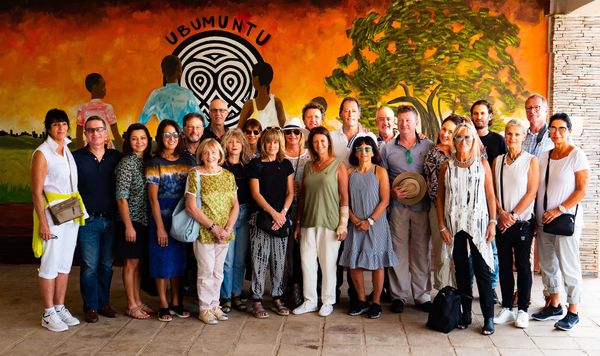
- And in Rwanda — how the community and country is recovering from the effects of the genocide of 1994, including how the hundreds of thousands of orphans organized themselves into ‘families’ of 10 children, nominating one child as ‘dad’ and another as ‘mom’. And much more besides.
2) How trust economies founded on mutual self-interest and common moral standards unlock huge wealth generation.
- The example of the Quakers, who formed trust economies through recognising that everyone has an ‘inner light’, combined with strong moral standards, inadvertently igniting the engine of wealth creation and social reform.
- Alexander Hamilton’s genius idea of the First Bank of the United States in 1792 that fuelled new America — and, importantly, tied wealthy merchants to the success of the new America through bonds.
3) How agency not charity is the golden key.
- This is wonderfully captured by Barrie Watson in his concept of Enablership — building capability and giving agency to others is true and sustainable leadership.
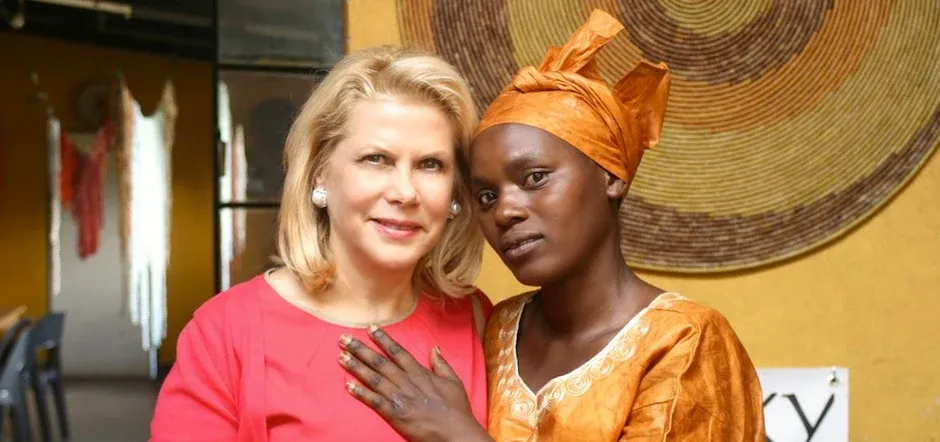
- In Francine LeFrak’s life journey of trade not aid, a hand up not a hand out — there is talent everywhere, but not opportunity.
- And just very recently, when I heard Aaron Burns speak about his time in youth clubs in the UK, the important role of mentors, as he describes so well, “You cannot be what you cannot see”.
So, buckle up, put your seatbelts on. This is going to be one wild ride.
What is the problem, the issue, the challenge that needs to be resolved?
The core concept is that markets value potential, expected returns. That is how shares and bonds work. It is how investment in Ai is being funded.
But what about young people, those who don’t have access to opportunity, but have plenty of talent, potential.
They are valued at zero, a big fat zero.
Therein lies the problem, the issue, the gap, the opportunity.
Around 20% of young people across the world are classed as NEET: Not in Education, Employment or Training.
That amounts to around 257 million young people. But even this figure is an understatement of the need.
There are plenty more young people who feel they have no hope, no future.
Some 20% of US high schoolers seriously considered suicide in the prior 12 months. Yes, 20% — 1 in 5. If you are in the US, you know about this already. You don’t need me to tell you.
The demographic that is now the most isolated, lonely is not only older generations, it is now young people.
Also, social isolation at work is a growing and widespread issue.
So what is the solution?
In one word: Trust.
In two words: Trust Economy.
In three words: Trust Economy Movement based on small groups within a wider network.
This is the vision for the Champions Movement: a trust economy that is champions-led and champions-owned.
Trust is the foundation of efficient systems, whether in sport, health, business, families or communities.
Trust economies are highly efficient, they create wealth, they create sustainable communities, they pass from one generation to the next.
They create their own capital.
They are strong and thriving.
The key to it all is trust. Not blind trust, but a trust that values the humanity of others.
It is a trust that does what is right because it’s the right thing to do.
What holds it together?
Small groups are central. They promote shared understanding, and are connected to wider networks with this same shared understanding.
I especially want to thank my friend Barrie Watson for his thoughts and now recent book, the Art of Enablership.
It flips the conventional notion of leadership on its head.
It is not how can I lead you, but how can I enable you?
To enable is to ‘make able’, to build capability in others.
This is what the Champions Movement is all about. Enabling capability in others, especially for young people.
In a few words
I have used Ai to pull together these ideas for reasons of efficiency, but the ideas and concepts are ones that I have curated.
These fascinating audio and video journeys connect the challenges and opportunities facing young people today rooted in examples that have transformed the world.
They explore how small groups of people can create powerful movements, how trust can open doors that would otherwise remain closed, and how modern technology could enable this on a global scale.
At its heart is a simple idea:
The world changes when people act for the good of others.
The 3.5% Rule
This is about powering the Art of Enablership, unlocking human potential because humanity is the performance multiplier.
The future is not written. We can write it
More Resources
Extra podcasts
Documents
Posts
 Glen Ford
 Glen Ford
 Glen Ford