Francine LeFrak: Talent Is Everywhere. Opportunity Is Not.
I first met Francine in January 2014, the day before she flew to Rwanda. We have remained connected ever since.
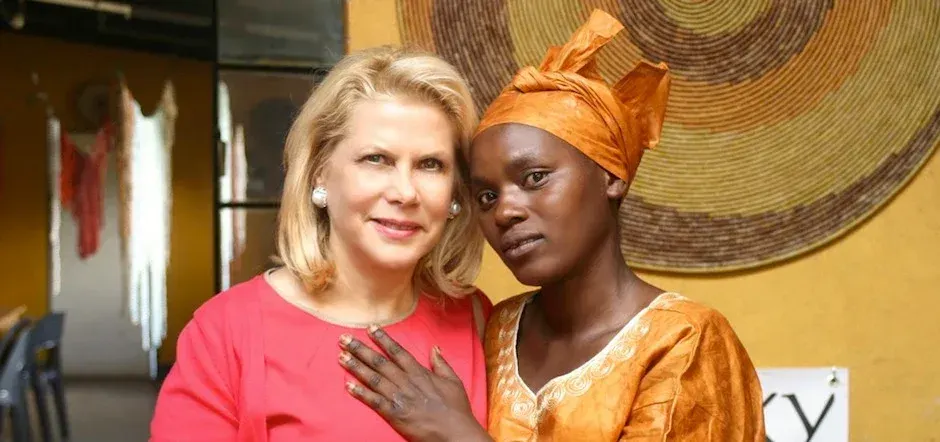
What a Champion of Humanity looks like
And so, the day after I met Francine in January 2014, she left the cold New York winter for the warmth of Kigali, Rwanda.
This was not just the sunshine type of warmth, of which there is lots in Rwanda, but also the human-type of sunshine.
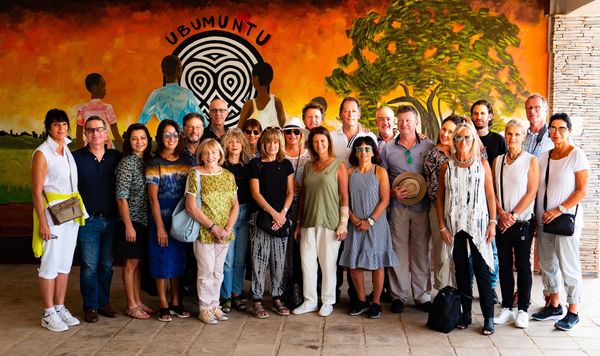
Francine was leading a group of American businesswomen. She had offered to walk them through the Kigali Genocide Memorial herself.
That detail is the whole story. I could end this post here, but I won't.
Francine wasn't going to Rwanda for a gala or to see the mountain gorillas.
She was going because she had been before, many years earlier.
She had sat with women survivors. She had felt their pain and their determination to recover.
Francine wanted to match their talent, their humanity with opportunity.
In 2008, Francine founded Same Sky, a social enterprise to support women survivors based on 'trade not aid'.
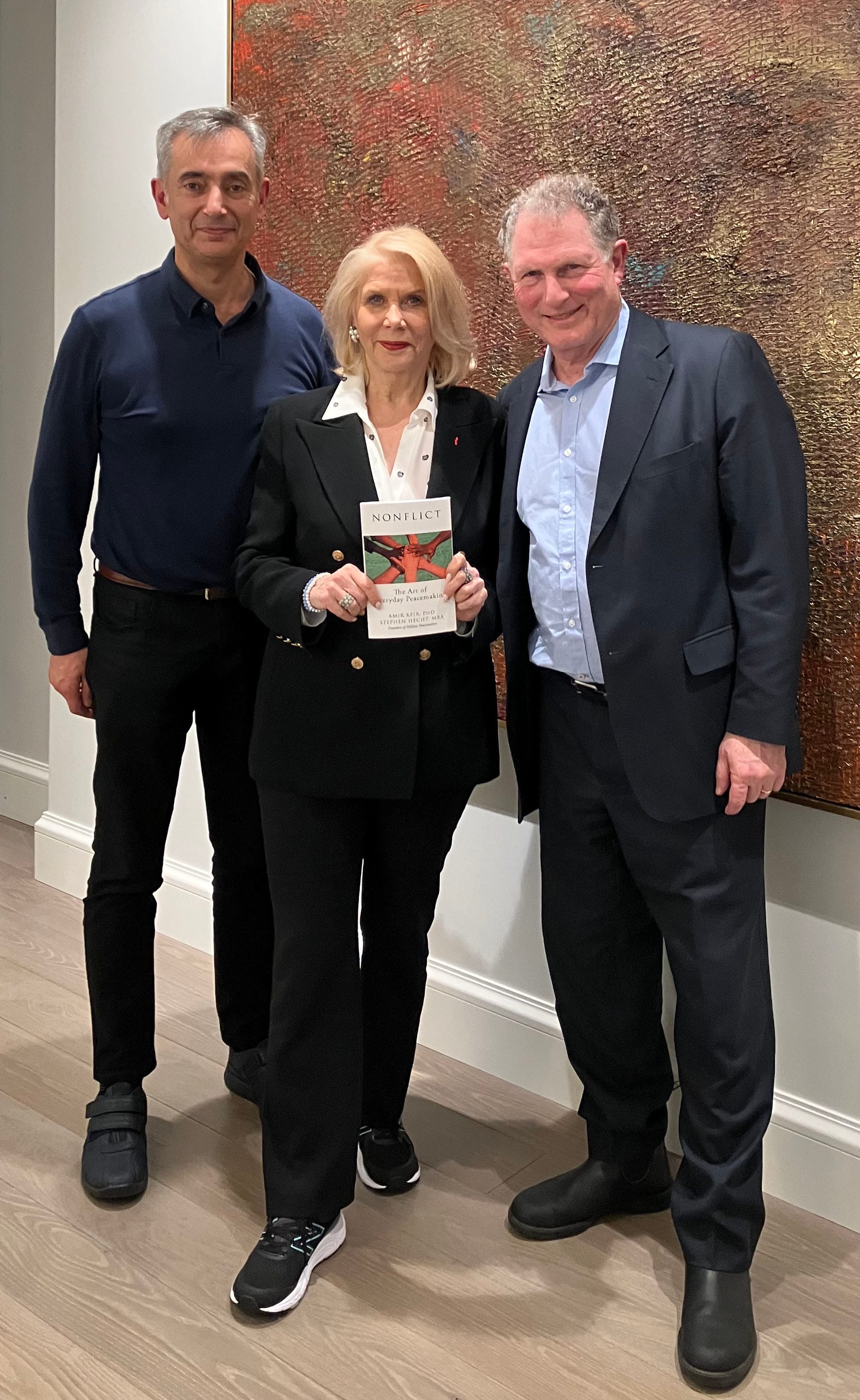
Identity drives behaviour
At the heart of the Champions framework is a simple insight.
Identity drives behaviour, and behaviour determines impact.
Change never begins with techniques. It begins with people deciding how they want to show up, choosing who they want to be—and then making it happen, day in, day out.
Because true, lasting impact starts from within and then grows.
Like with Francine.
The whistle at the front door
Francine has written about a childhood spent listening for a whistle at the front door.
That was her father, Samuel J. LeFrak, coming home.
He was the developer who bought a swampy plot in Queens that everyone called Mary's Dump, and turned it into housing for thousands of families.
His slogan never changed: housing for the masses, not the classes.
Everyone told Francine she was the one most like him: fearless, self-willed, a go-getter.
The family business passed to her brother, because, at the time, the view was that business was for men.
Francine doesn't look back. "I'm not that good at looking back," she told Inside Philanthropy. "My father taught me to keep my eyes on the windshield, my hands on the steering wheel, my foot on the accelerator, and always look forward."
Her mother, Ethel, had studied economics at Barnard, the class of 1941, then set her own career aside to raise her four children. As you'll read later, she went on to accomplish much else besides.
Francine's motto is: Talent is everywhere, but opportunity is not.
You can trace it straight back to a girl who was told she had her father's gifts and her mom's dedication.
Everything Francine does is to honor her beloved parents, for good reason, to be the best version of herself.
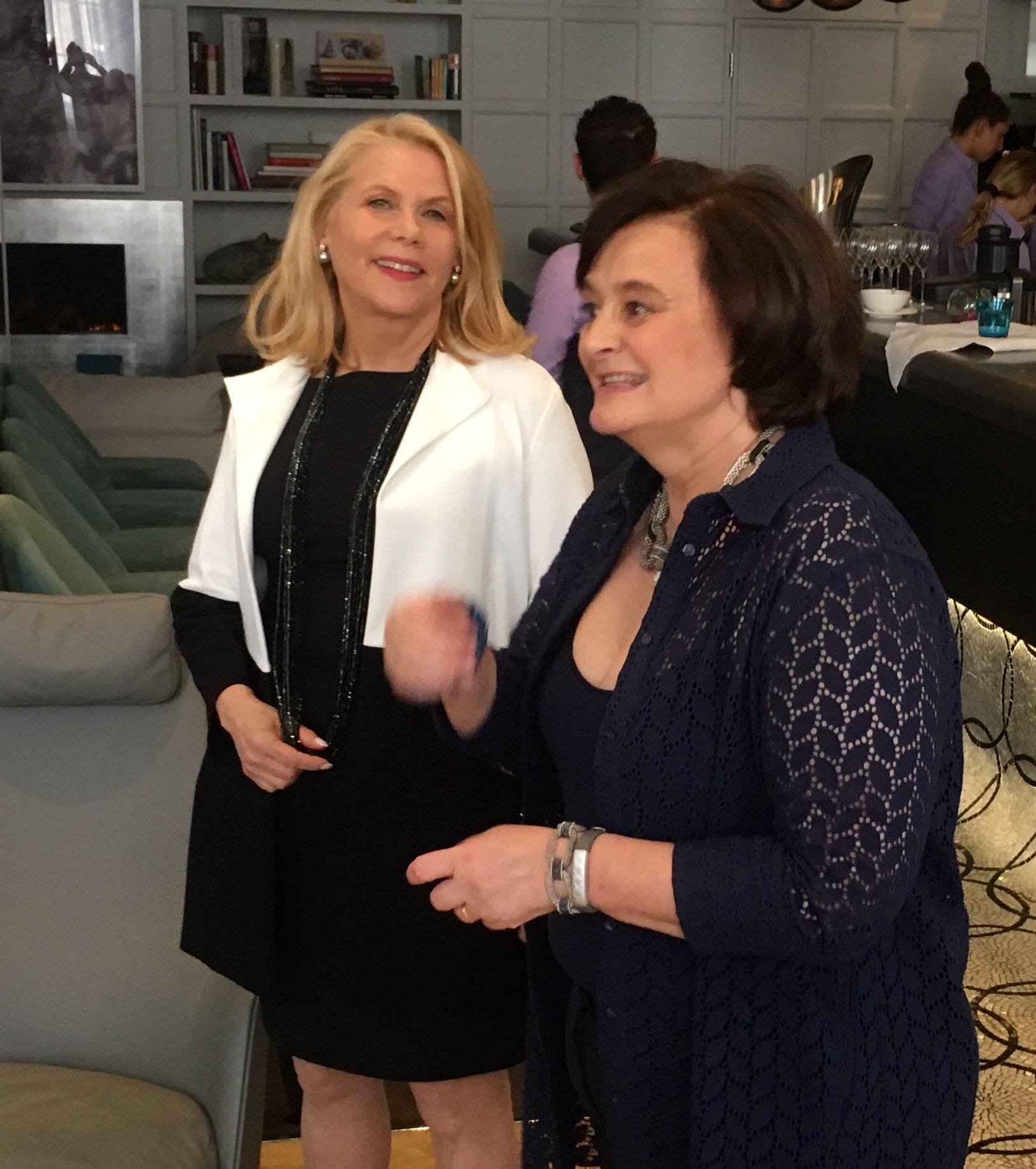
Proximity over prejudice
To understand how Francine has been so effective through the use of proximity, you need to understand her mentors: her dad and her mom.
I have researched many remarkable stories of humanity, new and old. One thing is always true: there is always a source.
Her dad didn't inherit an office. He grew up on the sites — at eight years old he was carrying buckets of water and nails for workmen. His whole career was going to the places everyone else had written off: Mary's Dump in Queens, the Brooklyn swamplands, Battery Park City on ninety feet of water in the Hudson, and finally a 600-acre wasteland of abandoned rail tracks in Jersey City.
He later said, "I gave the people what they wanted, at a price they could afford to pay. I took them out of public housing, out of the ghettos. I was the only builder who put my name to it."
And Francine's mom's signature work, besides raising her children, was Holocaust and genocide education.
Elie Wiesel said of Ethel, "You have done so much for so many people of different faiths that all of us, your friends, rejoice in this very merited recognition."
In October 2009, Ethel received Seton Hill's Saint Elizabeth Ann Seton Woman of Courage Award — given to a woman who "demonstrates in action what she believes in spirit, accomplishes the extraordinary through ordinary work, and encounters adversity with grace."
And so, it is no surprise that Francine sat in Rwanda with women survivors.
Francine has described what she found in numbers that are hard to sit with: a quarter of a million women raped, more than three-quarters of them living with HIV as a result.
She did not write a check and go home.
She got close. And that proximity ignited her own humanity for what came next.
Empathy is not generated at a distance — it arrives when you are close enough that the labels stop working.
What she built out of that closeness was Same Sky. Not aid, but trade.
Women survivors trained as artisans, hand-crocheting glass-beaded jewellery sold into global markets, earning wages that let them feed and school their own children.
She wound down a Hollywood career to do it.
Yes, you heard correct.
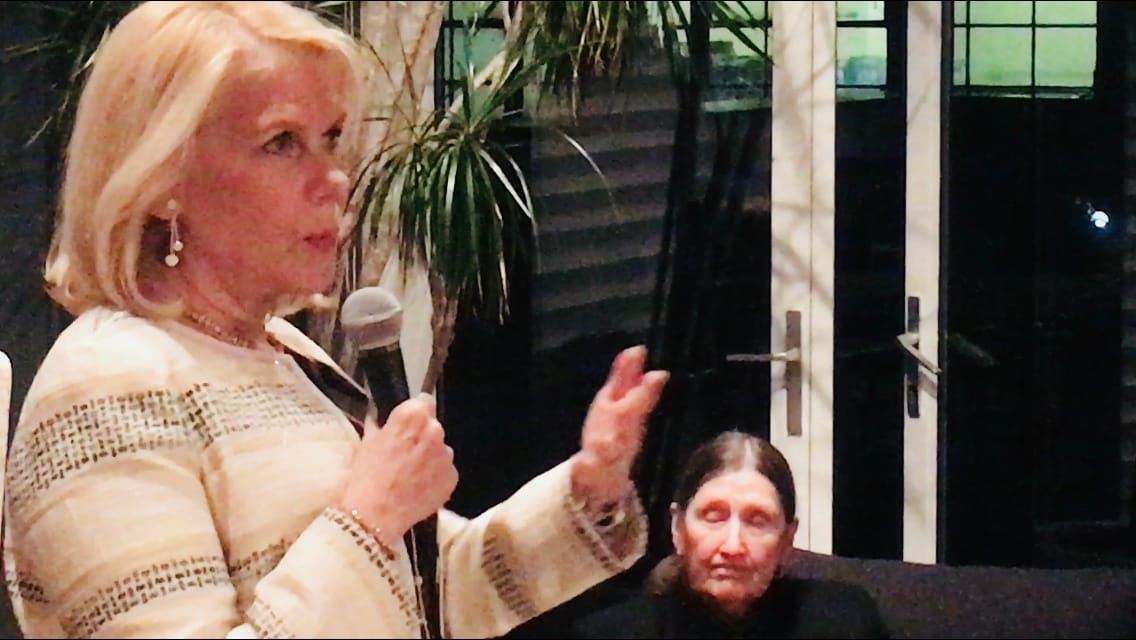
Trusted with the company's reputation
In 2013, Francine brought the model home, to the United States, to a halfway house in Jersey City.
The women there had just been released from Hudson County Jail.
Same Sky America gave them expensive materials. Let them record their own hours. Trusted them with the company's reputation.
That is the Champions thesis in miniature: trust, meaning, connection, agency.
These are the human foundations people need in order to perform under pressure. Not perks: but trust and opportunity.
One line from the program says it better than any framework could.
Above all, the women now trust themselves.
The Power of Proximity—again
To understand Francine's work with former women inmates you need to go back over 30 years from today.
Long before Jersey City, Francine had already spent time inside a women's prison.
In 1991, she produced Prison Stories: Women on the Inside for HBO — three dramatic films set behind the walls of a women's prison, each directed by a woman, following what incarceration does, not just to the inmates but to the children waiting outside.
By then, Francine was already a Tony-winning producer (and then became an Emmy and Peabody-winning producer). Yet, she chose, repeatedly, to point her camera at people that others prefer not to see.
Her work with the prison stories was cited in 2013 when Francine was given France's highest distinction, the Chevalier [Knight] of the Legion of Honour.
Her stated aim as a producer was always the same: to shed light, and to put a human face on issues most people would rather not look at.
Twenty-two years later, she not only put a human face on the problem, she also gave them opportunity and the ability to trust, starting with themselves.
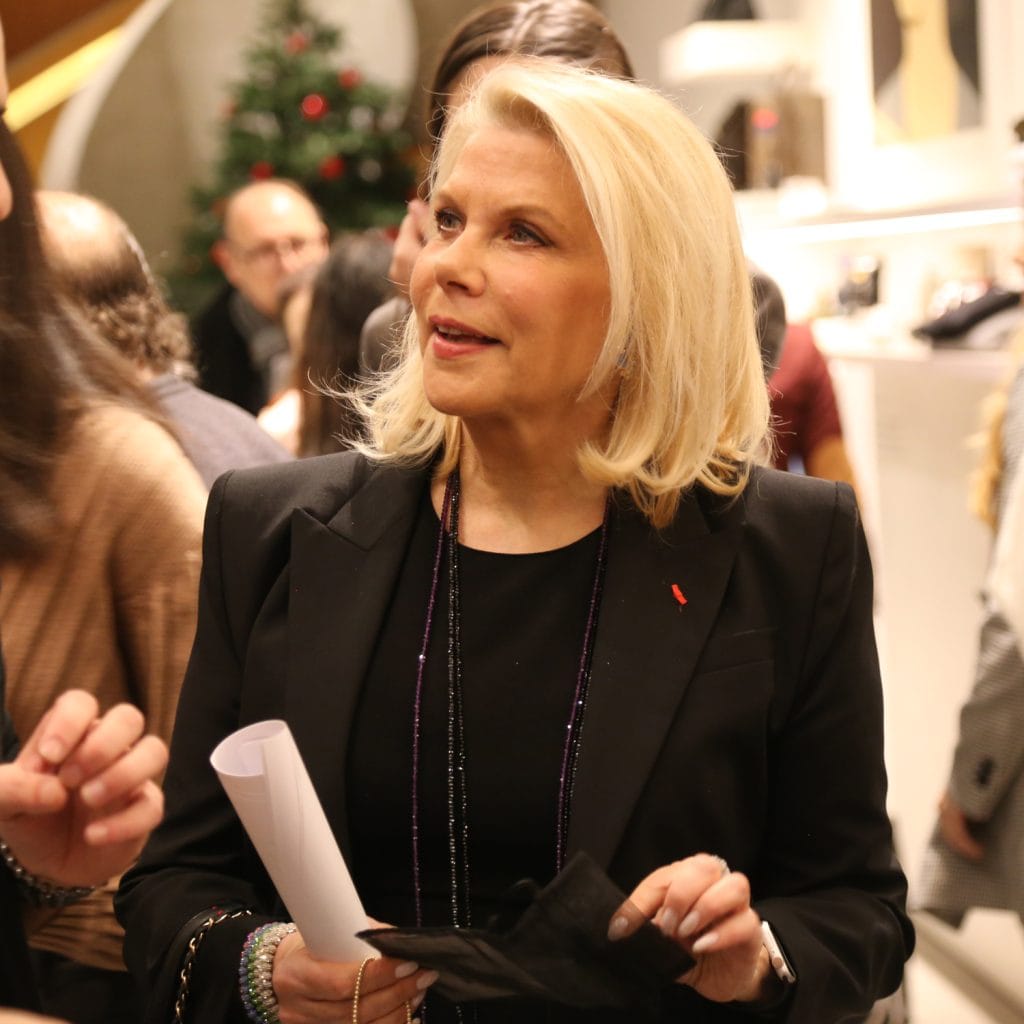
The Ripple Effect
Champions scales through the ripple effect, drawing on the 3.5% rule — individuals and small groups can create widespread transformation.
Francine saw this with Christopher Reeve.
After his accident she joined his cause, helping raise millions for what became the Christopher & Dana Reeve Foundation.
Francine was later awarded their Human Spirit Award.
Francine watched him pull surgeons, neurologists and engineers into one room, because the problem did not respect their boundaries.
Then she passed it on.
The women beading in Jersey City realised they were connected to the women beading in Kigali, and said something remarkable.
Never in our lives did we think we'd be able to help people who have struggled more than us.
People with almost nothing had become philanthropists.
That is a ripple crossing an ocean.
Why she puts her name on it
Francine is unembarrassed about recognition, and she is honest about why.
She points out that women control around 60 per cent of philanthropic dollars, while barely a fraction of that money reaches women's causes.
Then she asks how many buildings on any campus carry a woman's name.
So she wants hers visible — such as on the Francine A. LeFrak Foundation Center for Well-Being, that opened at Barnard in 2025.
Otherwise known as the Francine LeFrak Center, as is typical for Francine, this was done to honor the humanity of others, and in this case her mother, Ethel, who studied at Barnard and was later a trustee.
There is also the LeFrak Wellness Center at the New Jersey Reentry Corporation — a separate facility, serving formerly incarcerated women.
Being a standard-bearer is not vanity. It is the mechanism that encourages other people to do the same.
Commitment, witnessed
The final step of the Champions pathway is public commitment.
Not a private resolution, but a promise made in front of people who will remember it.
In January 2019, Francine and her husband Rick signed the Giving Pledge, committing to give away the majority of their wealth in their lifetimes.
"We have lived our lives championing those who may be overlooked or need a second chance."
That says it all.
Yet, Francine and her husband Rick continue to live their lives in this way.
What a Champion looks like
The world teaches us a hard lesson: hatred is not abstract: it is learned, normalised and acted out by ordinary people.
But so is its opposite.
Healing, empathy and responsibility can be taught, practised and multiplied.
Francine is a living example.
She got close enough to strangers to feel their reality. Then she built things that will outlast her.
That is a Champion, a champion of her own humanity and the humanity of others: or in short, a Champion of Humanity.
This is not someone who only gives, but someone who decides who they want to become — and then acts like it, every day, in private and public, for the good of others.
The giving simply follows, because it is part of the person, who they are, their identity.
Talent, as she says, is everywhere. Opportunity is not.
The Journey Continues...
In March 2026, Francine was back in Kigali, hosted for lunch by President Kagame and the First Lady at Urugwiro Village.
She brought another group of first-time visitors to Rwanda — leaders from education, law, finance, art, technology and philanthropy — to see the memorial sites, the innovation hubs and the entrepreneurs for themselves.
Twelve years after I first met Francine, she was doing exactly the same thing — bringing people to Rwanda who had never been, and taking them to the memorial.
Champions Pathway in Action
You can see so much of the Champions Pathway in action across Francine's life.
In fact, because she was prevented from joining the family business, she had to create her own pathway!
And for Francine, this became a Champions Pathway because that is what she wanted it to become.
At Champions, we encourage people to write the story they want to live; and then live that story.
Francine had to develop her own answer to the question we all face: what do we do with the opportunities, resources, relationships, and values we inherit?
At Champions, we talk about the importance of choice: the power of one, of individuals and the choices we make.
After all, that is the only thing we have most control over: ourselves.
Francine could have chosen so many things, yet she chose to act for the good of others.
She uses proximity to powerful effect: from incarcerated women in the US to women survivors from Rwanda, and more besides.
She came alongside them, sat with them, listened to them, understood them and then became their champion.
Turning vice into virtues: listening to her dad, she did not look back.
She channeled her experience, as a woman, of being denied the opportunity to pursue business to become a champion for other women - to create opportunity for them.
She created opportunity, enabling dignity and self-trust, connecting talent with opportunity: a hand up, not a hand out.
And using the power of two and '3.5', the power of human connection, to create ripples upon ripples of positive change.
Identity determines impact: at Champions, we use the four stages of humanity to illustrate that identity determines our impact.
Unconscious humanity: what we do is simply part of who we are. The conscious choices made over so many instances become unconscious habits.
Francine's story shows that a Champion of Humanity is not defined by fame, wealth, or status, but by what they do with what they have been given: it is who they have become.
By combining enterprise with compassion, opportunity with responsibility, and success with service, Francine demonstrates that the highest form of achievement is using one's gifts to enable others to thrive.
Dearest Francine, thank you.
For twelve years I have watched you do the same thing, over and over, and never once make it about yourself.
You find the women the world has forgotten — and you stand with them.
You gave them dignity where it had been stripped away.
You gave them trust where no one else would risk it.
Enterprise instead of charity.
And opportunity to match the talent that was always there.
And you have taught me:
- Talent does not need to be bestowed. It needs to be recognised.
- Humanity does not need to be manufactured. It needs to be activated.
- Opportunity creates the space for both to become visible.
That is what a Champion of Humanity looks like.
Francine, thank you for being you, for honoring your mom and dad in such a wonderful way, and for being such a great Champion!
Glen
Enjoyed this story? Become a Champion, either as a free member, or pay it forward and help fund the next generation of young Champions.