Fred — building in his own style
Fred's Champions of Humanity journey to date in his own words.

I (Glen) invited Fred to write his own Champions Journey to date. The narrative is written in his own hand.
I first met Fred just under one year ago in Chicago when he joined the first 35Champions youth leadership retreat, held in Chicago. We then held a second retreat in Miami in late January this year. It's been wonderful to see Fred develop as a human being over this time.
Learning that leadership has more than one blueprint
Fred came to Champions before any of the titles.
This was his sophomore year at American University's School of International Service (Washington DC), well before the version of himself he'd grow into later.
At the time, he had just landed a seat on the national board of the Collegiate Institute of Middle Eastern Affairs (CIMEA), brand new to the role and acutely aware of the shoes he was stepping into.
He was simply a student stepping into his first real leadership role, beginning to figure out, in a small and low-stakes way, what it actually meant to be in charge of other people's work when he hadn't yet earned the confidence that usually comes with time in a seat.
It didn't take long for a question to surface that no class had prepared him for.
Why did some of the people he worked with want the assignment in a sentence and wanted to move immediately, while others needed the full context before they would commit to a word? Why did pushing hard on a deadline motivate one teammate and shut another one down?
Fred had been leading the only way he knew how, by leading people the way he himself liked to be led.
It mostly worked. It also mostly didn't, and he could feel the gap without yet having a name for it.
That was the gap Champions stepped into.
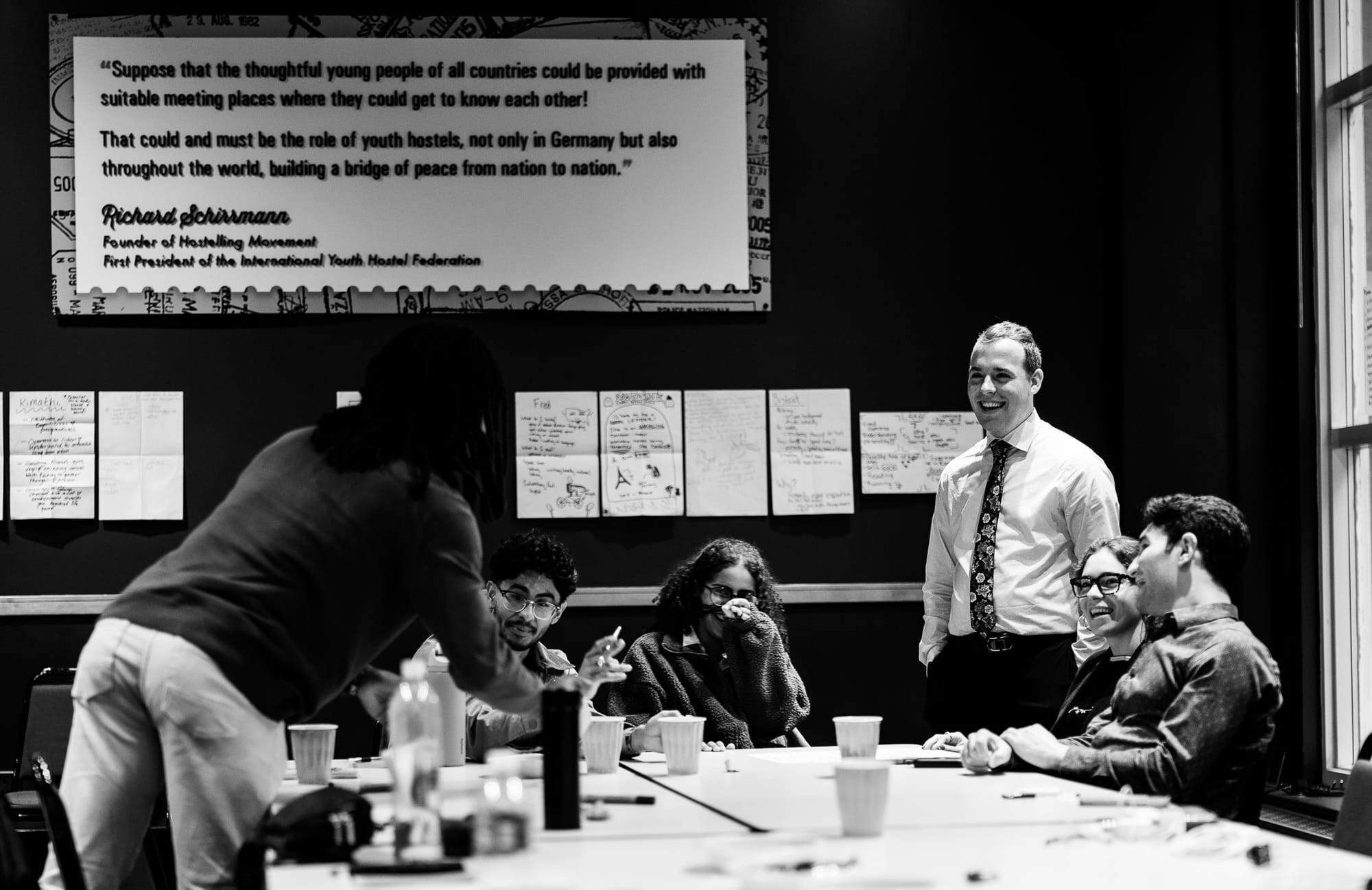
Finding the language
The first thing Champions gave Fred wasn't a new personality. It was a vocabulary.
He had always sensed that people led and worked differently. What he hadn't had was a way to name it, to break it into something he could actually use on a Tuesday afternoon when a deadline was slipping and two teammates needed two different kinds of conversation.
Champions introduced him to a framework of leadership and communication styles, the direct and the deliberate, the driver and the supporter, the person who leads from data and the person who leads from relationship.
For Fred, this landed differently than a personality quiz.
It felt like scaffolding. It gave him a structure to tack his instincts on, so that what used to be a vague read on a person became something he could actually name, plan for, and adjust to.
The second thing followed close behind, and it mattered more. A different style was not a lesser style.
Fred had grown up around a fairly narrow model of what capable leadership looked like: decisive, fast, results-orientated, and comfortable commanding a room.
It was easy, without meaning to, to read anyone who worked differently, more methodically, more quietly, more collaboratively, as somehow less qualified, less committed, or even as a threat.
Champions pushed back on that assumption directly. The teammate who wanted to see the full picture before moving wasn't slowing the group down. He was protecting it from a mistake Fred, moving fast, might have missed. The one who needed to talk a problem through out loud before writing wasn't disorganized. She was doing her clearest thinking the way she was built to do it.
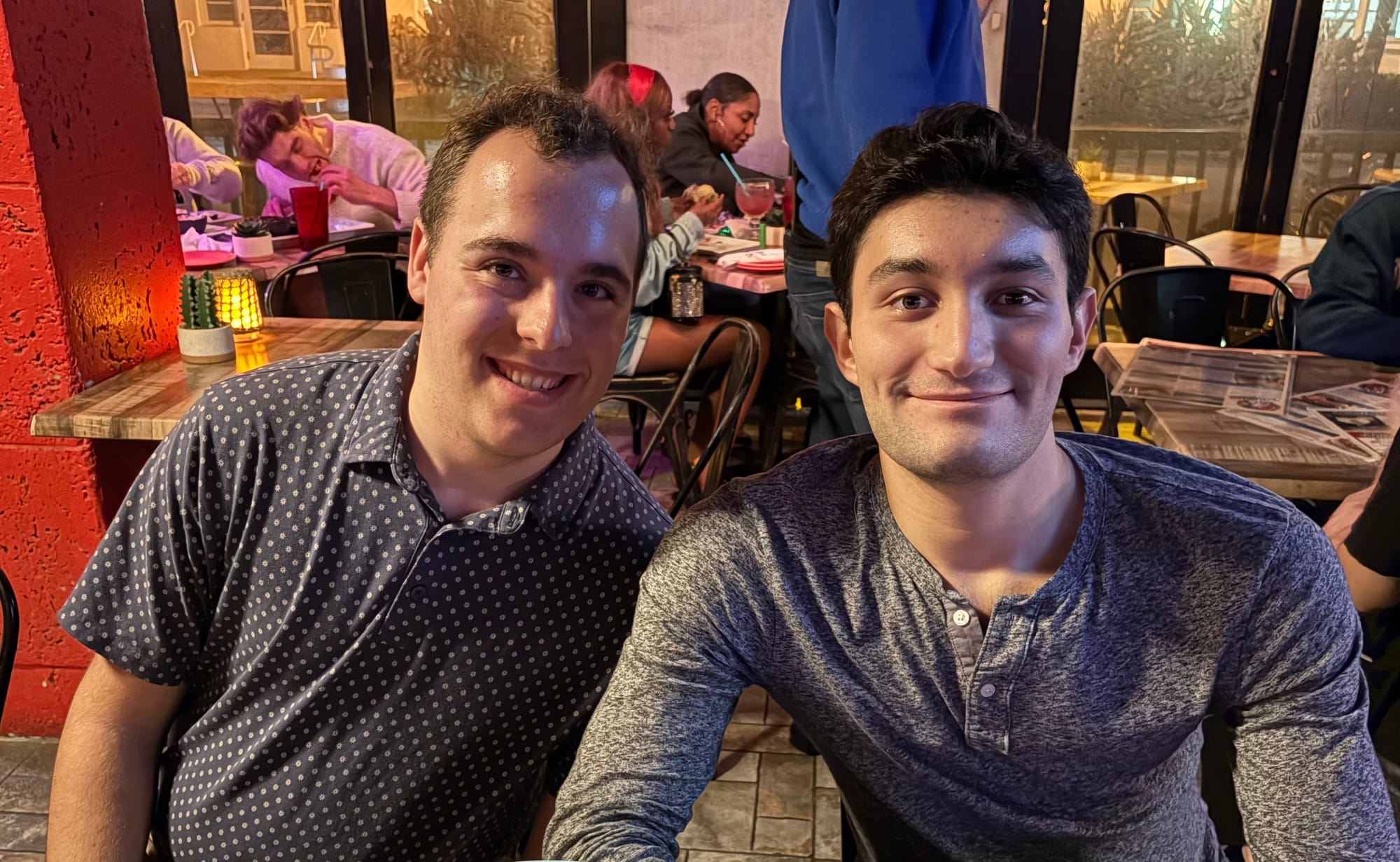
The Builders On The House
Fred found his own way to make sense of it, an image he built himself and still reaches for: a house under construction.
A house needs a foundation, framing, wiring, plumbing, drywall, a roof. No single builder does all of it, and no single trade is more essential than the others. The electrician's work is not a weaker version of the framer's work. It is a different discipline entirely, and the house falls apart without either one.
What matters is not that everyone builds the same way. What matters is that everyone understands which part of the house they are building, and how it needs to connect to the parts the others are building.
Fred started applying that on the national Board for CIMEA almost immediately, still new enough to the seat that he was more careful than confident.
He stopped asking, quietly and unconsciously, why a teammate wasn't building the way he built.
He started asking what part of the house that person was best positioned to build, and what they needed from him to build it well. The direct communicators on his team needed the bottom line first and the reasoning behind it later. The more deliberate ones needed the reasoning first, so the conclusion would actually hold. Neither request meant the person couldn't do the work. It meant Fred needed to hand off the work differently.
The Importance of Trust On The House
Of everything Fred took from the program, one lesson sits underneath all the rest.
One of the instructors, Steve, kept returning to a single point no matter what else the session was covering. Frameworks and styles were useful, Steve would say, but none of it mattered without trust.
Nothing was as important. He called it one of the rarest things a leader can actually build, harder to earn than competence and slower to repair than almost anything else once it breaks.
At the time, Fred absorbed it as one more good point in a weekend full of them.
It didn't fully land until he went back to the board, new to the seat and stepping into shoes that had been filled well by someone else before him.
He didn't have tenure to lean on, or a track record his teammates already trusted. What he had was the chance to build that trust from nothing, and Steve's point stopped being a line from a session and became the thing everything else sat on top of.
The styles told Fred how to hand someone work. Trust was what made them willing to take it from him in the first place. It is, Fred says now, the core of all the leadership he does.
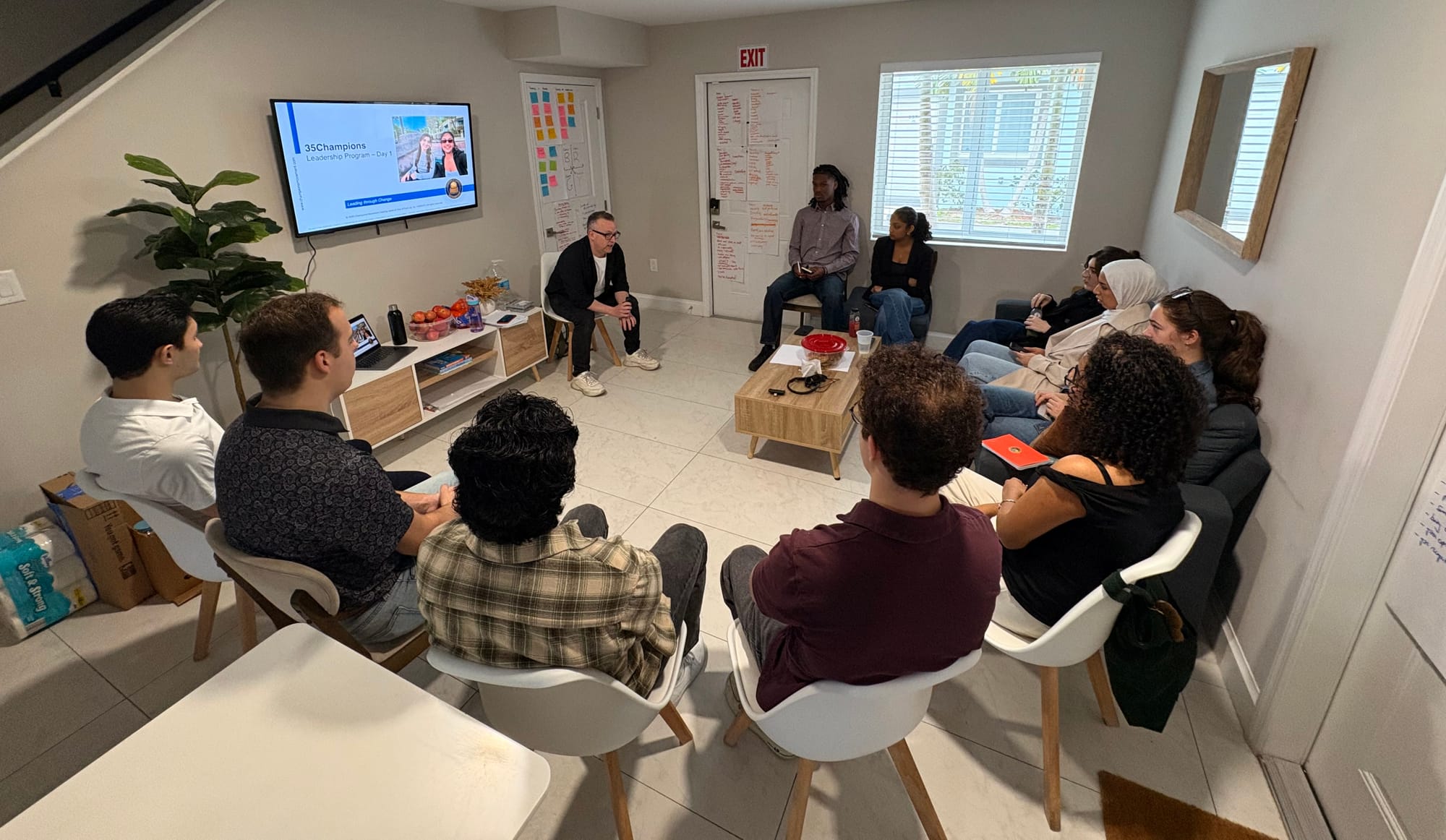
What Changed
The shift showed up first in small things. Assignments that used to get read as ambiguous started landing clearly, because Fred was framing them for the person receiving them, not just for himself. Disagreements that used to feel personal started resolving faster, because he could recognize when a teammate's pushback was a style of thinking out loud rather than a style of confrontation.
It kept paying off well after that sophomore year ended.
Every team Fred has led since, in bigger rooms with higher stakes, has been built out of people who don't all work the way he does. The scaffolding Champions gave him is still the thing he reaches for first. He became less interested in whether a colleague led like he did, and more interested in whether the team, built out of genuinely different builders, was producing something none of them could have built alone.
What Fred's Story Means For Us
Fred's story is a reminder that competence does not have one accent.
It is easy, especially early in a career, to mistake your own style for the standard, and to read anyone who works differently as working less well.
Champions gave Fred the language to catch himself doing that, and the scaffolding to replace it with something more useful: a way of asking what a person needs in order to do their best work, rather than asking why they aren't doing it the way you would.
The house Fred built out of that lesson holds because it refuses to rank the trades.
A team, like a house, needs framing and wiring and plumbing, and the person doing each one is not in competition with the others. They are in partnership with them.
Leadership, in that picture, stops being about getting everyone to build like you and starts being about knowing your crew well enough to hand each person the part of the house they are actually built to raise.
But it's Steve's point that keeps the whole thing standing.
Styles tell a leader how to hand off the work. Trust is what makes people willing to pick it up.
That is what Fred took from Champions: a vocabulary for how people are built differently, a way of thinking about the house he built for himself, and, underneath both, the reminder that none of it works without trust.
About Fred (by Glen)
Fred is a thoughtful, curious and ambitious young man from the Jersey Shore, New Jersey. He is one of triplets, with two sisters, and all three are first-generation college students.
Fred describes himself as having been “very bookish” growing up. He loves history, ideas and exploring big questions about society. He once imagined becoming a teacher, and that interest in education and helping others remains important to him.
What makes Fred particularly interesting is his combination of intellectual curiosity, ambition and genuine openness to personal growth. Through Champions, he has reflected on moving away from always needing to be assertive and in control, towards becoming more relaxed, trusting and understanding of others. In his own words, Champions has made him “more relaxed, and happy… a better leader, a better friend.”
He strikes me as someone who wants not just to succeed, but to become a better human being along the way.
 Glen Ford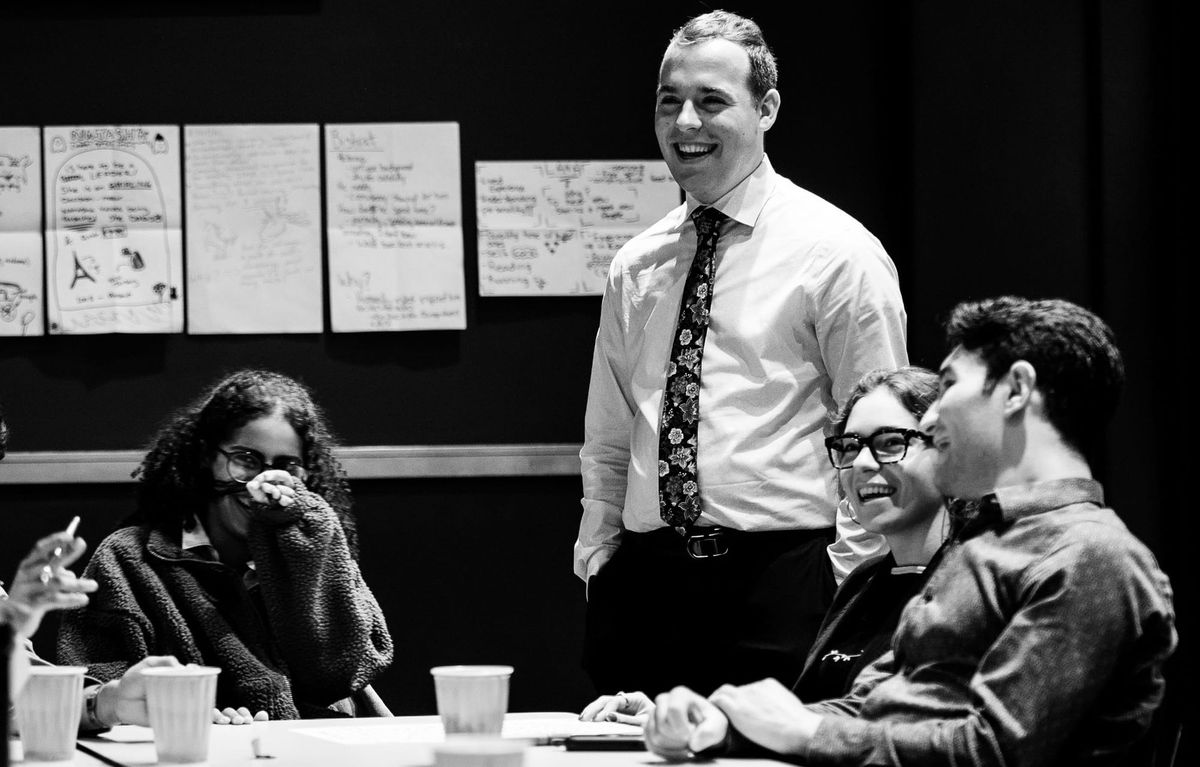
Fred speaking in October 2025 at the end of the Chicago Champions retreat
Summary after the first Champions retreat
Enjoyed this story? Become a Champion, either as a free member, or pay it forward and help fund the next generation of young Champions.