The Ripple Effect
Why Every Choice Matters More Than You Think
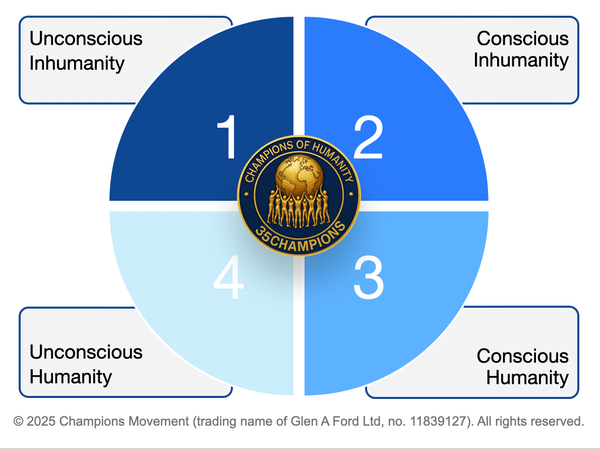
In the previous article, we explored the Four Stages of Humanity and the idea that humanity is not something we either possess or lack, but something we continually choose. Every interaction presents us with an opportunity to respond from a place of fear or compassion, judgement or understanding, self-interest or service. The stage we operate from shapes who we become.
The Ripple Effect builds on that idea by asking a different question.
What happens after we've made that choice?
The answer is simple, yet incredibly powerful. Our choices never stop with us.
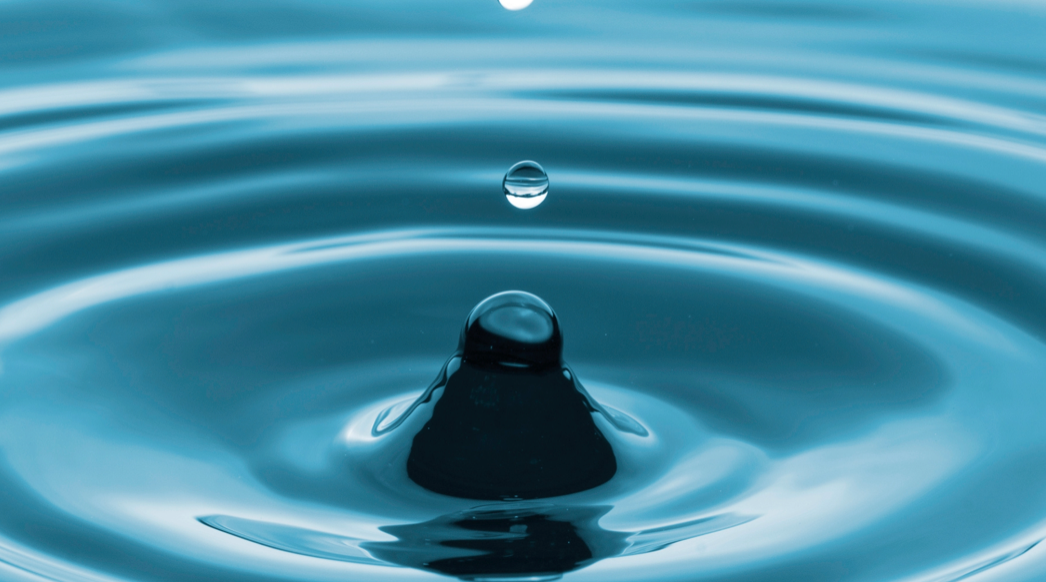
The phrase ripple effect has been used for centuries to describe how a single action creates consequences far beyond its original source. Imagine standing beside a perfectly still lake and dropping a stone into the water. The first ripple appears where the stone lands, but within moments it has become a series of expanding circles travelling far beyond the point of impact. The stone only creates the first movement; everything that follows happens because each ripple gives birth to another.
Human behaviour works in exactly the same way.
Every conversation we have, every decision we make and every way we choose to treat another person creates a ripple. Most of the time, we never see where those ripples end. A kind word may become someone else's confidence. An act of generosity may inspire another act of generosity. Equally, impatience, criticism or indifference can spread just as quickly. The reality is that we are all influencing the people around us, whether we intend to or not.
The science behind the ripple
If the Ripple Effect sounds like common sense, research suggests it is far more measurable than most of us realise.
One of the most compelling bodies of work comes from the Civility Saves Lives movement, which has spent years exploring the impact our behaviour has on the people around us, particularly in high-pressure environments such as healthcare.
What they discovered is remarkable.
Research has shown that when someone experiences rudeness, their cognitive performance can reduce by as much as 61%. Perhaps even more surprising is that people who simply witness that same act of incivility can experience a 20% reduction in cognitive performance, despite not being directly involved. The research also found that people who witness incivility become around 50% less willing to help others. A single moment of disrespect doesn't simply affect one relationship; it quietly changes how an entire team behaves towards one another.
For me, this is one of the clearest demonstrations of the Ripple Effect. We often think our behaviour belongs to us alone, but it doesn't. Every interaction either strengthens or weakens the environment around us. Every conversation leaves a trace. Every choice influences the choices of someone else.
We've seen this repeatedly through our own Champions programmes. A single leader choosing to listen instead of judge changes the tone of a meeting. One person showing vulnerability gives others permission to do the same. A team that begins to challenge each other with respect rather than blame often finds that collaboration, trust and accountability improve far beyond the individuals in the room. Those changes don't happen because of one workshop; they happen because one choice creates a ripple, and that ripple is carried forward by everyone who experiences it.
That's why we believe humanity is more than a personal virtue. It's a performance multiplier. When people consistently choose humanity, the positive ripples extend far beyond the individual, shaping teams, organisations and communities in ways that are often impossible to measure, but impossible to ignore.
When we think about the people who have had the greatest influence on our own lives, this idea becomes much easier to understand. Most of us can remember a teacher who believed in us before we believed in ourselves, a coach who challenged us to achieve more than we thought possible, a manager who took the time to listen, or perhaps a stranger whose kindness arrived at exactly the right moment. Those individuals probably had no idea that years later we would still remember them. They simply acted in a way that reflected who they were, never realising that the ripples from that moment would continue long after they had moved on.
The opposite is also true. Many of us can recall a careless comment that damaged our confidence, a leader who made us feel insignificant or an experience that left us questioning our own worth. The point is not to dwell on those moments, but to recognise how much influence even the smallest interactions can have. Rarely do we remember every detail of what someone said; instead, we remember how they made us feel. Those feelings shape future conversations, future decisions and, ultimately, future behaviours.
This is why humanity matters so much.
It is easy to think of humanity as simply being kind, but it is far more significant than that. Humanity is the starting point for the cultures we create. Every organisation, every family, every friendship and every community is shaped by countless ripples that have accumulated over time. A leader who consistently demonstrates humility gives others permission to do the same. A parent who chooses patience teaches a child how to treat others. A colleague who shows genuine curiosity instead of judgement creates an environment where people feel safe enough to contribute. These moments may appear insignificant in isolation, but together they define the experience of everyone around them.
The Four Stages of Humanity remind us that we always have a choice about how we respond. The Ripple Effect reminds us that every one of those choices carries consequences beyond ourselves. We are constantly teaching others what is normal, acceptable and possible, often without saying a single word. Our behaviour becomes someone else's experience, and that experience influences how they behave towards the next person they meet.
Perhaps this is why changing the world rarely begins with grand gestures. History tends to celebrate extraordinary moments, but those moments are almost always preceded by thousands of ordinary choices made by ordinary people. A conversation that offers hope instead of criticism. A decision to forgive rather than seek revenge. A willingness to include someone who feels excluded. The courage to stand up when remaining silent would be easier. None of these actions appear particularly significant on their own, yet each has the potential to influence people in ways we may never fully understand.
As you finish reading this article, it is worth taking a moment to consider the ripples you are already creating. Every day, without exception, you leave something behind in the lives of the people you meet. You influence the atmosphere in your home, your workplace and your community. You shape how others feel about themselves, about those around them and, ultimately, about the world they live in.
The question, therefore, is not whether you are creating ripples.
You already are.
The real question is whether the ripples you leave behind are making the world just a little better than it was before you arrived.