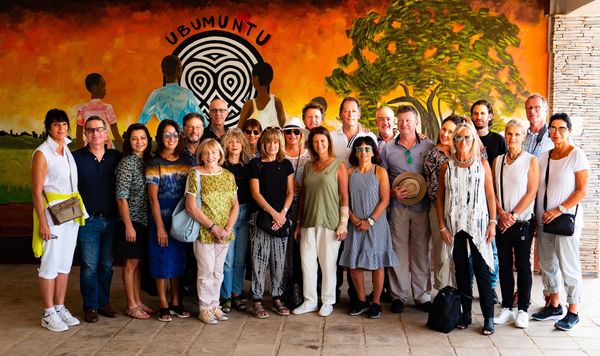
Hiba — finding her voice
Learning to lead with strength and humanity
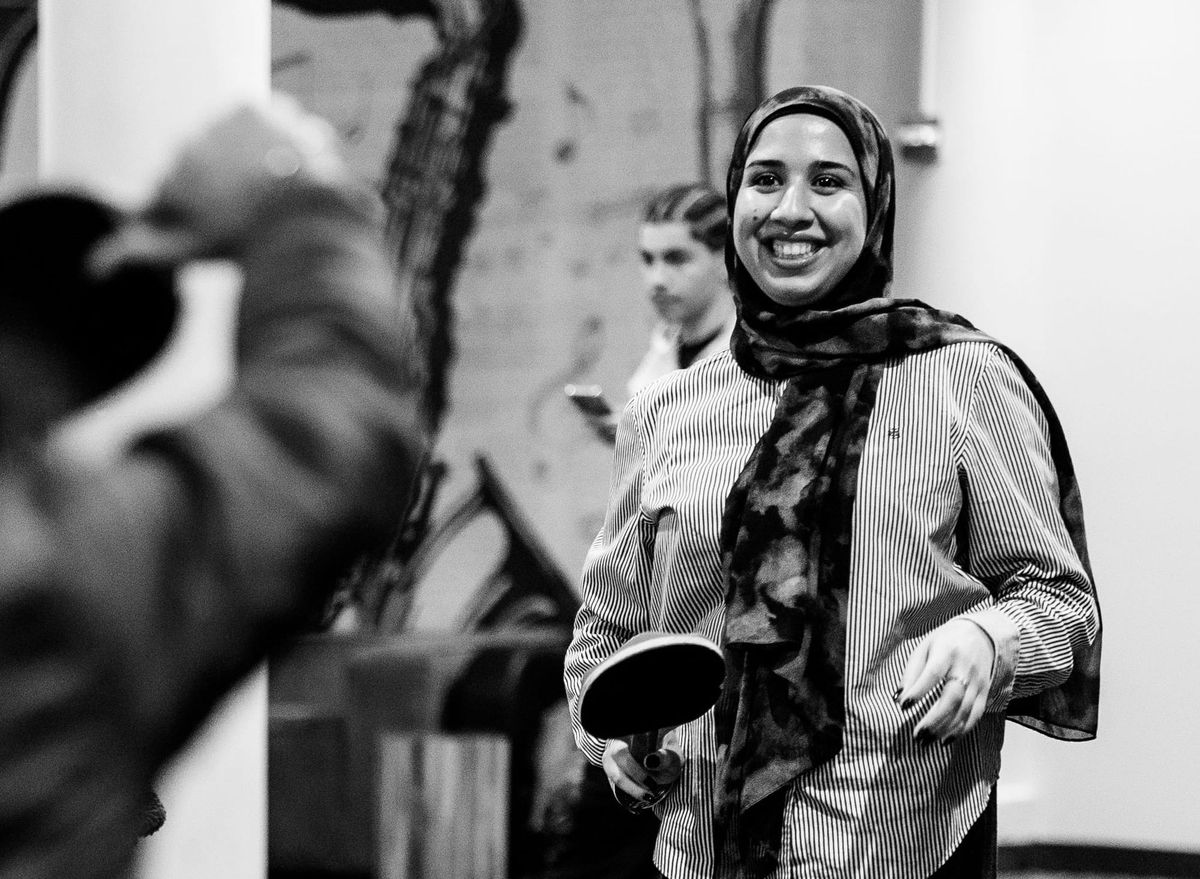
Hiba came to Champions at a moment of transition.
She had recently graduated from Eastern Michigan University with a degree in Political Science and a minor in Cybersecurity Policy.
Based in Michigan, just outside Detroit, she was exploring what might come next: employment, law school, public service?
She was already capable, thoughtful and ambitious — but she was also standing at one of those important thresholds in life, where achievement alone is not enough.
The question was no longer simply, What have I learned?
It was becoming: Who am I becoming — and how do I want to lead?
Hiba’s story had already been shaped by movement, resilience and identity.
Of Iraqi descent, born in Syria, and arriving in the United States as a refugee in 2008, she had lived across cultures, communities and expectations.
She grew up first in Idaho and later Michigan, the middle child in a family of five — old enough to take responsibility, young enough still to be finding her own way.
She had learned to observe, adapt, care for others and navigate different worlds.
Now she was asking how those experiences could become a source of leadership.
When she joined the first Champions retreat in Chicago, Hiba was nervous. She was meeting most of the group in person for the first time.
She was also entering a programme unlike an academic class. It was about people, relationships, self-awareness, stories and practice.
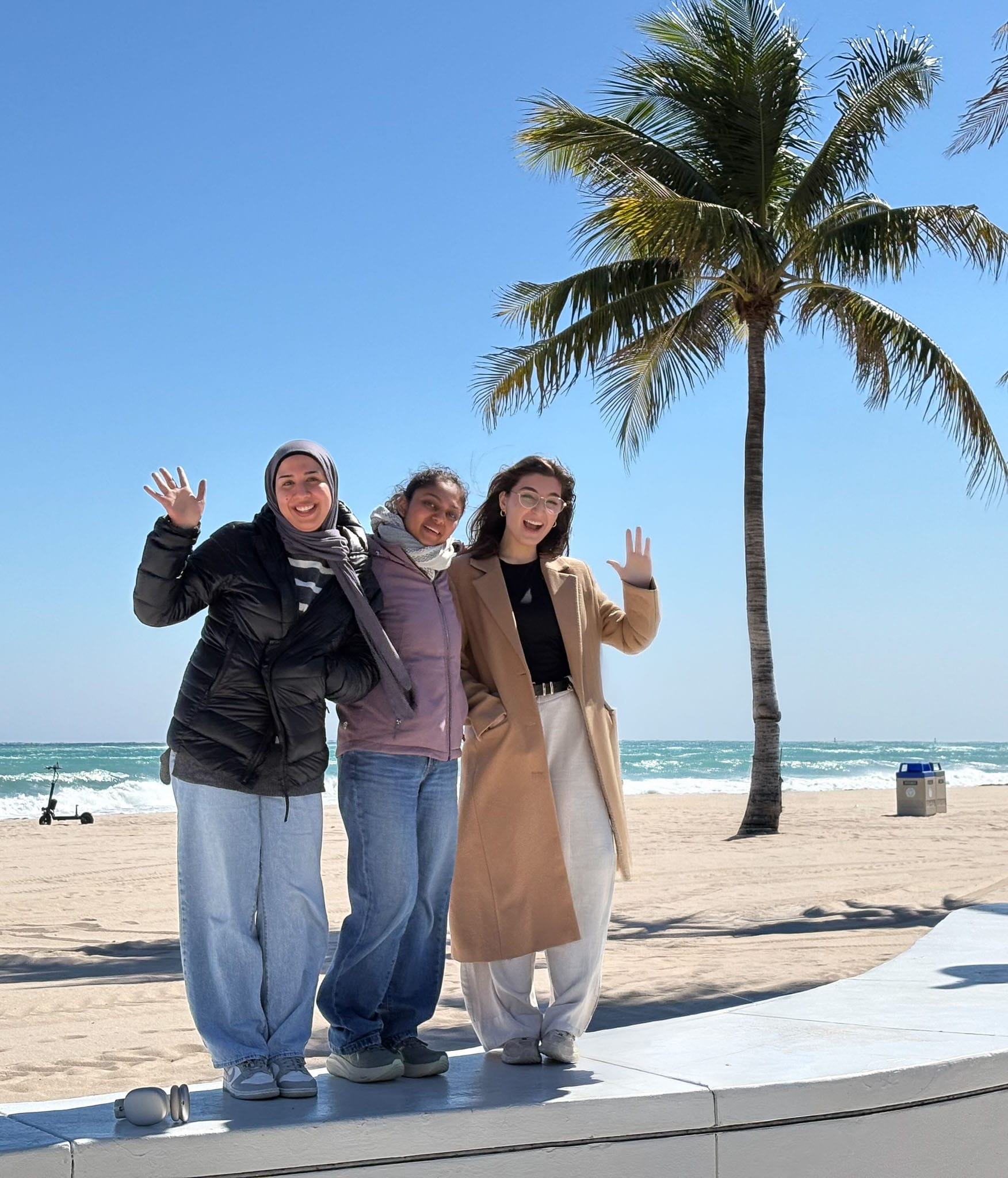
Her reason for joining was clear.
She wanted leadership skills that classrooms had not given her.
She understood that moving into the workplace meant moving from being a student receiving instruction to someone who might need to give instruction, influence others and take responsibility.
One of her first breakthroughs came through understanding communication.
Hiba began to see that people do not all communicate, think, respond or lead in the same way.
Some move quickly. Some need time to think. Some lead from the front. Others contribute more quietly. Some need directness. Others need warmth, context and relationship.
This was not just interesting to her. It was practical.
She began to realise that effective leadership does not begin with asking, How do I prefer to communicate?
It begins with asking, What does this person need from me?

By the time she reflected after the second retreat, she could see the difference in both her professional life and personal relationships.
She was paying greater attention to the personalities around her — at work, at home and among the people she cared about — and adapting how she communicated.
But the shift went deeper than technique. She began to rethink leadership itself.
Like many young people entering professional life, she had seen leadership modelled as authority, toughness and control.
She described it as “ruling with an iron fist.”
Champions challenged that assumption.
Hiba discovered that she could lead with compassion — not softness, not weakness, but compassion.
She did not have to copy the leadership traits of people above her. She did not have to become someone else to be taken seriously.
She could lead with the qualities she already carried — calm, understanding, thoughtfulness and strength.
Ai video of Hiba's Champions story
Her confidence grew and her voice became more grounded.
Even when she was not formally in charge, she felt her opinions were being heard. Friends, family and colleagues noticed the difference.
They saw her speaking with more calm and less emotional reactivity. They noticed that she was leading with greater understanding.
Hiba herself recognised an important shift: she was no longer seeing people simply as “a team,” but as individuals within it — each with their own needs, motivations, communication style and story.
Then she began putting what she had learned into practice.
By April 2026, Hiba was applying Champions in her workplace in law enforcement in Michigan. She led an exercise with supervisors and colleagues using the communication styles process she had learned through the programme.
It worked well, and her growing confidence at work was being noticed.
She was no longer simply learning. She was beginning to share what she had learned with others.
But perhaps the deepest part of Hiba’s journey concerned purpose.
After the second retreat, she spoke about having a clearer understanding of what mattered to her and how she wanted to move forward.
She became more confident standing her ground when something did not align with her — and equally confident recognising when something did.
Then came the statement that perhaps best captures her journey.
She was “100% sure” that she wanted to lead a life of service.
Not necessarily through a traditional route or a single role, but by taking what she had learned — academically, professionally and personally — and using it to serve other people, her community and her country.
For Hiba, service was becoming a way to organise her life.
At the same time, she learned something important: service does not mean pleasing everyone. It does not mean losing yourself or abandoning your own purpose to meet the expectations of others.
She began to understand that she could serve others without losing herself.
She became more comfortable in her own skin and more grounded in her direction.
Hiba came to Champions seeking leadership skills beyond the classroom. She found greater confidence, she discovered that compassion and strength can coexist and she found a clearer sense of purpose.
Importantly, she began to recognise that her own experiences — movement, resilience, identity and service — could themselves become a source of leadership.
What Hiba’s story means for us
Hiba’s story reminds us that leadership does not begin with a title.
It begins with understanding ourselves — and learning to understand others.
Her experience challenges the idea that leadership means control. The “iron fist” is not the only model available to us. Leadership can be compassionate, calm and grounded without becoming weak.
Her experience with communication makes this practical. Respecting how another person thinks and communicates means moving beyond our own assumptions and paying attention to the individual in front of us.
And Hiba did not leave these ideas in the training room. She took them into her workplace and shared them with others.
Perhaps most importantly, she arrived asking what came next in her career and emerged with a bigger question answered: what kind of life did she want to lead?
Her answer was service. She does not yet know exactly where that will take her and she does not need to.
Hiba is learning that she can serve others, remain true to herself, and lead in her own way.
For someone standing at the beginning of her professional life, that is a powerful place to start and its been a true privilege to see her grow and develop as a person this past year.
Enjoyed this story? Become a Champion, either as a free member, or pay it forward and help fund the next generation of young Champions.