Glen's Story
In his mid-thirties, Glen Ford gave up a secure 20-year corporate career to walk alongside the survivors of Rwanda's genocide. Two decades later, he is taking what he learned to the wider world.

One night in the early 1970s, a house in London caught fire. Upstairs, a mother made a split-second decision and threw her four-year-old son out of the window. A neighbour caught him before he hit the concrete below.
The boy was Glen Ford. His right hand still carries the scars from the flames he passed on the way out.
"Life can be short," he reflects. "We only get one round. And sometimes we need someone to catch us."
More than half a century later, Glen is the founder of Champions, a movement that puts what makes us human at the centre of leadership. He started it in March 2025, after a 40-year career that took in 20 years in Britain's road-building industry and more than two decades working alongside Rwandans on reconciliation, recovery and rebuilding.
It is an unusual path from quarries, to genocide memorials, and now to humanity-centered leadership. But looking back, the thread running through it is surprisingly consistent.
A FAMILY THAT CHOSE
Glen was born in London in 1967. His father, Norman, was Anglo-Indian, born and raised in India, and came to Britain after Partition. While supervising the unloading of ships in India, Norman once refused to let a man be turned away because of the colour of his skin. He was known as someone who could be trusted.
His mother, Valerie, fell in love with this "tall, dark, handsome" man in 1950s London. Many people disapproved, including members of her own family. She married him anyway.
Much of Glen's education was spent at a boarding school on the south coast of England, all historic buildings and dormitories. For his later school years he moved to Cambridge. There, new in town and looking to meet people, he joined a youth group recently started at a local Baptist church. It was led by the vicar's teenage son, Andrew Cave.
The two have been friends ever since. Andrew went on to become a journalist and author, and recently joined Glen on a Champions trip to Chicago.
Faith became central to Glen's life. So did lifelong friendships with people of other faiths and of none, which strengthened his belief in simple, shared humanity.
A READY-MADE FAMILY
At 17, Glen joined Tarmac, then the UK's largest road-building company, as a trainee manager. The company sent him to college, combining study with work on site. He learnt how to use explosives, blow up rock, manage heavy machinary, manage people and build roads.
At Christmas 1986, aged 19, he became engaged to Janet. She was a few years older and had two daughters from a previous marriage, Gina, then six, and Dinah, five. They married in July 1987, a few months after Glen turned 20. He had left just college in the June, to work full time as a trainee manager.
It was a lot of responsibility for someone so young, and he knew it. Not the work, but taking on a ready-made family. He reached out to Marina Smith, a Methodist minister's wife and religious education teacher, who ran a small counselling retreat with her family in rural Nottinghamshire.
Glen had become connected to Marina through mutual friends who knew Janet.
Marina became a mentor to Glen and his family. Nobody could have guessed then how much that connection would shape what followed. And Glen credits his family, what it would become, down to Marina's steadfast love and advice over many years.
LESSONS FROM THE QUARRY
Glen had spent three years learning the trade, gaining an Higher National Diploma in Quarrying and Road Engineering, followed by ten years managing quarries and asphalt plants across southern England.
Quarries are unforgiving places. When management and systems fail, people die.
In his early twenties, Glen was put in charge of a limestone quarry where a worker had died a few years before he arrived.
He made safety his personal business. Around 18 months later, in 1992, the site won a national safety award, the first Tarmac site ever to be recognised nationally for excellence in safety management.
He was 25.
At around the same time, the local planning authority gave the quarry six months to resolve a compliance issue or close. Ticking boxes might have satisfied the regulations, but it would not win over the neighbours. So Glen opened the gates instead.
He invited local schoolchildren, their parents and the wider public, and led the tours himself. One summer, a couple told him they had chosen the area for their holiday because of the quarry visits.
More than 30 years on, the quarry is still working, and the local community has agreed it can stay for another 30.
The lesson stayed with him. When people are seen and brought closer, fear can turn into trust.
FROM QUARRY TO BOARDROOM
While running the quarry, Glen studied part time for an MBA at Bournemouth University, finishing in 1997. The following year he swapped a small quarry for head office, as a business analyst to the chief financial officer of Tarmac plc.
At 30, he was the "old man" in a team of young accountants and analysts.
All his experience and expertise in managing teams, operations and safety were of limited relevance. The question now was how fast and well could he produce a discounted cash flow model or prepare an executive briefing for the CEO. It was a sharp and steep learning curve, but one that would be important.
After Anglo American acquired Tarmac, he became development manager for its building products division, a £300 million-a-year business employing 2,000 people.
Reporting to the divisional managing director, he helped shape strategy across four business units and led acquisitions from valuation through to competition approval.
THE CHOICE
Meanwhile, Marina's sons, Stephen and James Smith, had transformed her retreat into Beth Shalom, which opened in 1995 and is now the UK's National Holocaust Centre and Museum. It became a place where Holocaust survivors found dignity, friendship and a voice.
In 1999, the brothers founded the Aegis Trust, which took that work to Rwanda. Glen became a trustee of both organisations in late 2003.
In early 2004, ten years after the genocide against the Tutsi, he flew to Kigali as a volunteer to help build the Kigali Genocide Memorial, which opened that April. It is the final resting place of more than 250,000 victims.
There he saw both the depths of inhumanity and the extraordinary resilience of survivors. Hatred, he realised, is not abstract. It is learned, normalised and acted on by ordinary people. But healing, empathy and responsibility can be learned and practised too.
That May, Marina asked him to stay involved, and challenged him to choose. He could not fully pursue his corporate career and this work at the same time.
It was a considerable gamble. Glen had a pension, share options, a company car and the security of a major employer. He was his family's sole breadwinner. He and Janet now had two more daughters, Emily, 16, and Abigail, 11.
Yet, trusting the woman who had mentored him for nearly 20 years, he left. He and Janet had recently sold their home, given part of the proceeds to the work in Rwanda, and were living in rented accommodation.
Freddy Mutanguha, who lost 80 members of his family in the genocide and worked alongside Glen at the Memorial, remembers it this way: "He was so moved by what he experienced that he gave up his career and walked this path with us, with survivors and the team at the Memorial."
YEARS OF CREATION
To pay the bills and stay free to volunteer, Glen set up a management consultancy with a former Tarmac colleague. He also became a professional photographer, shooting some 300 weddings over the next eight years.
He remained a trustee of the National Holocaust Centre until 2010 and of the Aegis Trust until 2013, and helped create The Journey exhibition at the Centre.
When the 2009 financial crash threatened the museum's future, he stepped in as interim director that summer and worked with the senior team to put both organisations on a sound footing.
In 2012 he moved to Kigali as Managing Director of Aegis, charged with raising major funding to expand its peace education work. Over the following decade, funding reached some $30 million, ten times the previous level.
That money helped extend the Kigali Genocide Memorial, now a UNESCO World Heritage Site. Its peace education programme was adopted across Rwanda's school system and today reaches 2.5 million children a year.
From 2013 to 2023, as Director of International Development, Glen built support for Aegis in the US and Australia.
In 2014 and 2015 he secured $10 million for violence-prevention programmes in Kenya's Rift Valley, South Sudan and the Central African Republic. In Kenya, the 2015 Walk for Peace helped bring calm to communities across a region of around 10 million people.
At the heart of all this was storytelling. Survivors' stories were used to build empathy, critical thinking and personal responsibility. Research later suggested they could support mental health and healing too.
In 2018, Glen began organising visits to the Memorial for international business groups, using a social enterprise model to carry its lessons further.
He also supported enterprises that grew out of Aegis, including the White Rose shops in the UK, and visitor services and social enterprises in Rwanda, such as Good Human Coffee, the Humanity Badges at the Memorial.
WHY CHAMPIONS
Glen retired from Aegis in early 2025 and founded Champions that March.
Across four decades, from quarries and boardrooms to genocide prevention, one lesson kept coming back: people matter.
So do the choices they make, the relationships they build and what they create together.
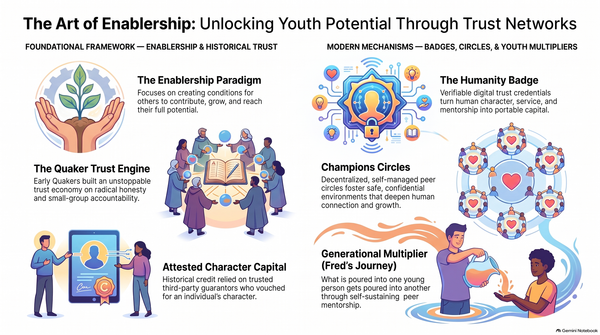
In hindsight, the Champions Pathway of Choice, Connection and Creation was there all along.
A choice took Glen to Rwanda. Connection gave that choice meaning. And together with many remarkable people, it created possibilities he could not have imagined when he arrived in Kigali as a volunteer in 2004.
Glen lives in the UK. He and Janet have four daughters and five grandchildren. He bakes bread, makes cheese, takes photographs and loves meeting new people and discovering new places.
Most of all, he enjoys helping others become the best versions of themselves.
He is, he says, grateful above all for the people he has met and the stories they have trusted him with.
"The future has not happened yet," he says. "What we do next matters."
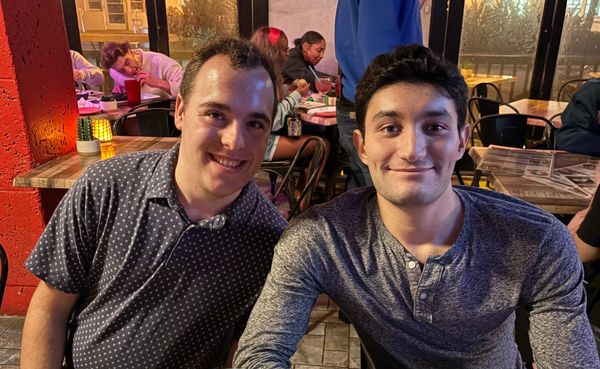
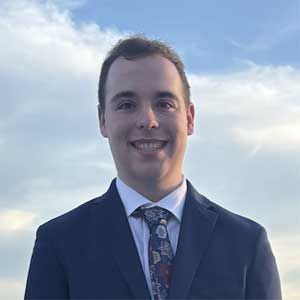
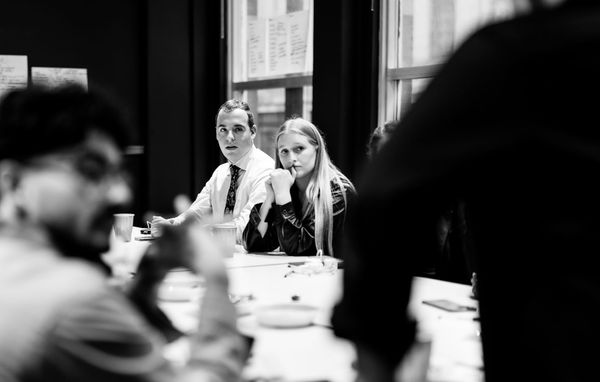
Below: a few pictures.


And below are short videos of Glen speaking at a Young Presidents Organization event in New York, September 2023 — with fellow panelist Dr Denise Garcia from Northeastern University, Boston.
Glen speaking at an event in New York, September 2023
Q&A session from the same event
And below, Glen gives an interview in 2024 on his journey to Rwanda