Humanity-Centered Leadership: The Story of Lafayette
What is humanity-centered leadership, and why does it matter? What are ripples of humanity, and why are they so important?
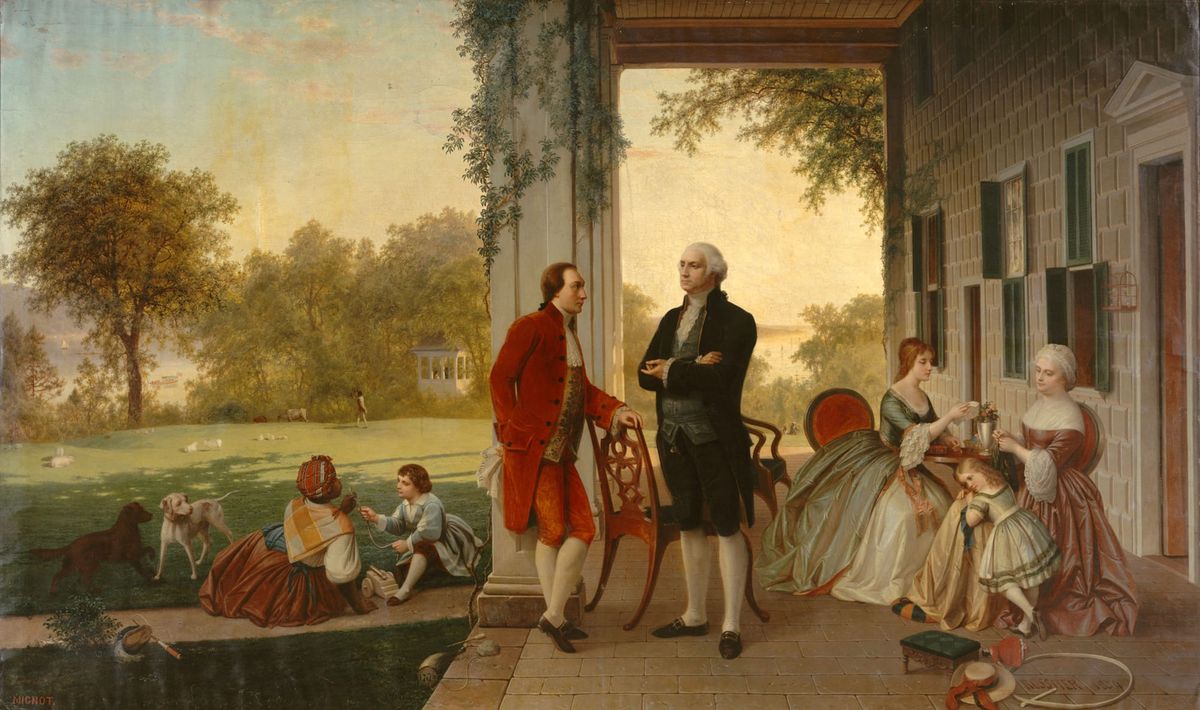
In my last post I wrote about Francine LeFrak, someone I regard as a Champion of Humanity.
Today I am sticking with the French-American connection, but looking back in time.
This post follows the life of Lafayette — the Marquis de Lafayette (1757–1834).
This story defines what we mean by Champions: leadership centered on what makes us human.
Or in simple terms: humanity-centered leadership.
It also uncovers two principles that sit at the heart of everything we do at Champions: the strength of gentleness, and the power of little virtues.
And it shows the enduring power of ripples of humanity — how ordinary acts, passed quietly from one person to the next, can bend the arc of history.
This is a long post, around 3,000 words. It serves as a reference on what we mean by humanity-centered leadership.
As you'll read, this is not a technique. It is about becoming you, the best version of you.
For those in a hurry
Lafayette was a remarkable man who played a key role in the birth of America, and more besides.
He was a great leader and a great human being.
He was not born like this, although he may have benefited from certain natural abilities and resources.
His story is well documented.
What is less known is how and when he developed his humanity.
We talk about the Champions Pathway, of choice and connection, and how these combine to enable creation — what we create.
The focus here is connection.
In particular, the ripples of humanity that have spanned hundreds of years.
They have been called forward by generations of individuals, of 'champions'.
This was not a single individual.
This was a movement, with a philosophy and a structure that has endured the test of time.
This is humanity-centered leadership.
It's about who you become and the ripples of humanity you create.
As I have said before, champions write their story and then go live that story, not the other way around.
Because it starts with choice, is strengthened through connection — and the combination is what enables you to live that story, to create your own story and your own ripples of humanity.
It's what Francine has done, Freddy Mutanguha, James Oglethorpe, and what Lafayette did.
It is also what Union Health Service are doing in Chicago.
And the US college students who joined the Champions program last year. Like Fred and Hiba, and others besides.
Read on to discover more.
Part One: The Story
A brilliant young man
For those less familiar with the period, Lafayette was a young French aristocrat and soldier who fought alongside George Washington in the American Revolutionary War.
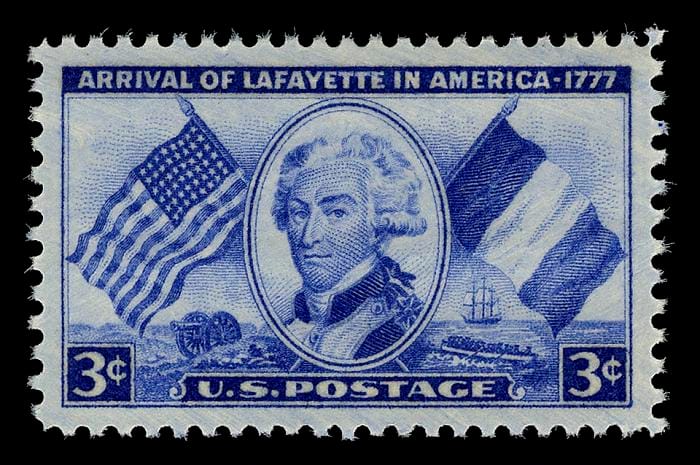
He was only 19 when he arrived in America in June 1777.
Despite that, he played a critically important role — on the battlefield and later as a diplomat.
I could say much more, but I won't. It is well documented elsewhere.
In short: he showed great leadership and great humanity.
But where did his humanity come from?
That is the question that caught hold of me.
It also demonstrates what we mean by humanity-centered leadership.
Three weeks
When Lafayette was 12 years old, his life changed in the space of three weeks.
First his mother died, suddenly, in April 1770. His father was already gone, killed in battle when Lafayette was 23 months old.
Now, at 12, he was an orphan. He was also an only child.
His closest surviving relative, his maternal grandfather, was already on his own deathbed — and three weeks after his mother, he died too. His other grandparents had died years before or lived hundreds of miles away.
It was a traumatic time for the young boy.
It also made him one of the richest boys in France. The La Fayettes were old provincial nobility of modest means; the fortune arrived through inheritance, all at once, in the very weeks that left him alone.
So much so that when he was 19 he bought his own ship to sail to America. Not many teenagers could do that, or would be allowed to.
That is capability.
Yet he also developed great humanity.
We can learn leadership. Perhaps we are gifted with some of it, or perhaps it is a combination of the two.
But nobody develops great humanity simply by learning a skill.
So where did it come from?
A house and home of humanity: the house he walked into
In April 1774, aged 16, Lafayette married Adrienne de Noailles. She was 14.
The young couple did not set up their own household. They lived with her family, at the Hôtel de Noailles.
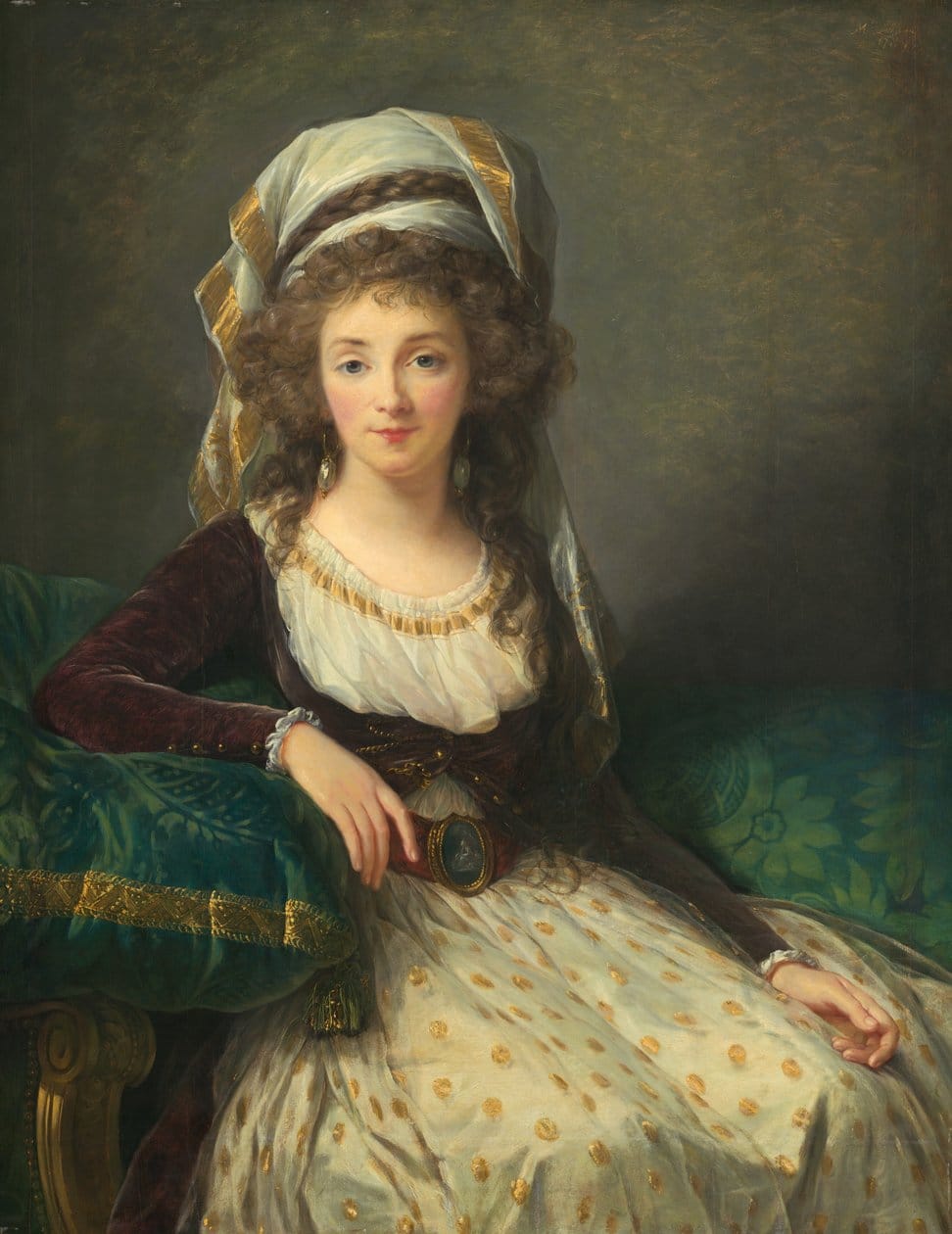
Which brings us to Henriette, Adrienne's mother — the Duchesse d'Ayen.
She was no ordinary mother-in-law.
Here is a detail I love.
According to the family's own account, written years later by Lafayette's daughter Virginie de Lasteyrie, Henriette had opposed the marriage.
Not on grounds of rank or money. She opposed it because Lafayette was an unprotected, fabulously wealthy orphan — and because her daughter was only 12 when the match was first agreed.
She could not stop it. But the couple stayed under her roof, and she made full use of the years that gave her.
The arrangement could have ended badly. It did not.
Virginie records that her father developed an immense and lifelong gratitude and respect for his mother-in-law.
His biographers describe her as the surrogate mother of his teenage years.
So: if every ripple has a source, where did her humanity come from?
That is where this story becomes remarkable.
The enduring power of gentleness
"Nothing is so strong as gentleness; nothing is so gentle as real strength." — Saint Francis de Sales (1567–1622)
Henriette was born in February 1737. Her mother died the day after she was born.
Her paternal grandfather was Henri François d'Aguesseau (1668–1751), Chancellor of France, and by every contemporary account a man of enormous integrity — repeatedly exiled from court for refusing to sign off on schemes he believed would harm ordinary people.
He played a significant part in her life. But he did something else that matters more.
He placed her at the Convent of the Visitation at Saint-Denis, in the care of one particular woman: Madame d'Héricourt.
She was chosen. Not assigned.
Historical records on Madame d'Héricourt are sparse. But much can be inferred from what she was steeped in, and from the young woman who walked out of those walls at 14.
Because the Order of the Visitation was not just any convent.
It had been founded in 1610 — some 130 years before Henriette was born — by Francis de Sales and Jane de Chantal.
“. . . what is the special spirit of the Visitation? I have always judged it to be a spirit of deep humility before God and of great gentleness towards our neighbor.”
Saint Francis de Sales
I am no Roman Catholic, and I am not an advocate for any particular religion. But I can recognise humanity when I see it.
The Order was built on Sales' philosophy of gentleness, and on what they called the little virtues: patience, humility, simplicity, kindness.
Not heroism. Sales' insight was that we are rarely offered the chance to be heroic, but we are offered the chance to be patient roughly every twenty minutes.
Get the small things right and the big moments look after themselves.
And he knew what he was talking about.
Sales was not born serene — his biographers called him a volcano beneath the snow.
"I have made a pact with my tongue," he wrote, "not to say a word when I am angry."
Asked once why he would not simply crush a critic, he replied:
"Would you have me destroy in a quarter of an hour the little building of interior peace I have been working on for eighteen years?"
Eighteen years. Gentleness was not his temperament. It was who he chose to become.
The Power of Two — the power of connection
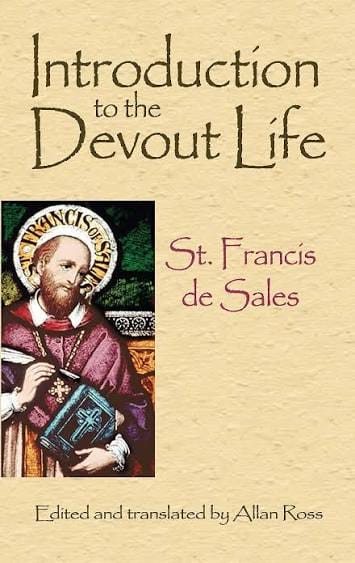
Sales had the vision, the idea.
Jane de Chantal was clearly a gifted business administrator.
But first, she was human. She faced a near impossible choice.
This has echoes of the remarkable experiences I have seen in Rwanda.
Before she became a nun, she was married. In 1601, her husband was tragically killed in a hunting accident. He was 35 and she was 28. He lived for a few days, forgiving his friend before he died. Jane was overcome with grief and anger.
Later, after hearing Francis de Sales speak, she took small steps to reconcile: greeting him in the street, then inviting him to her home. Eventually, she became godmother to one of his children to publicly show her forgiveness.
A few years later, she co-founded the Order with de Sales.
She used her skills to hard-wired his philosophy into the structure of the Order — into how people were chosen, formed, mentored and held accountable.
For Jane, this was not an academic process. It was a life she had chosen to be her life. She did it in such a way that it survived its founders and kept transmitting, generation after generation, for four centuries.
It was into one of these small communities that Madame d'Héricourt had joined. She had become a trusted and valued member.
And so Henriette, a motherless girl, was surrounded by loving-kindness, gentleness and the daily practice of the little virtues.
She also spent time at her grandfather's country estate at Fresnes, where he taught her to garden and to read deeply.
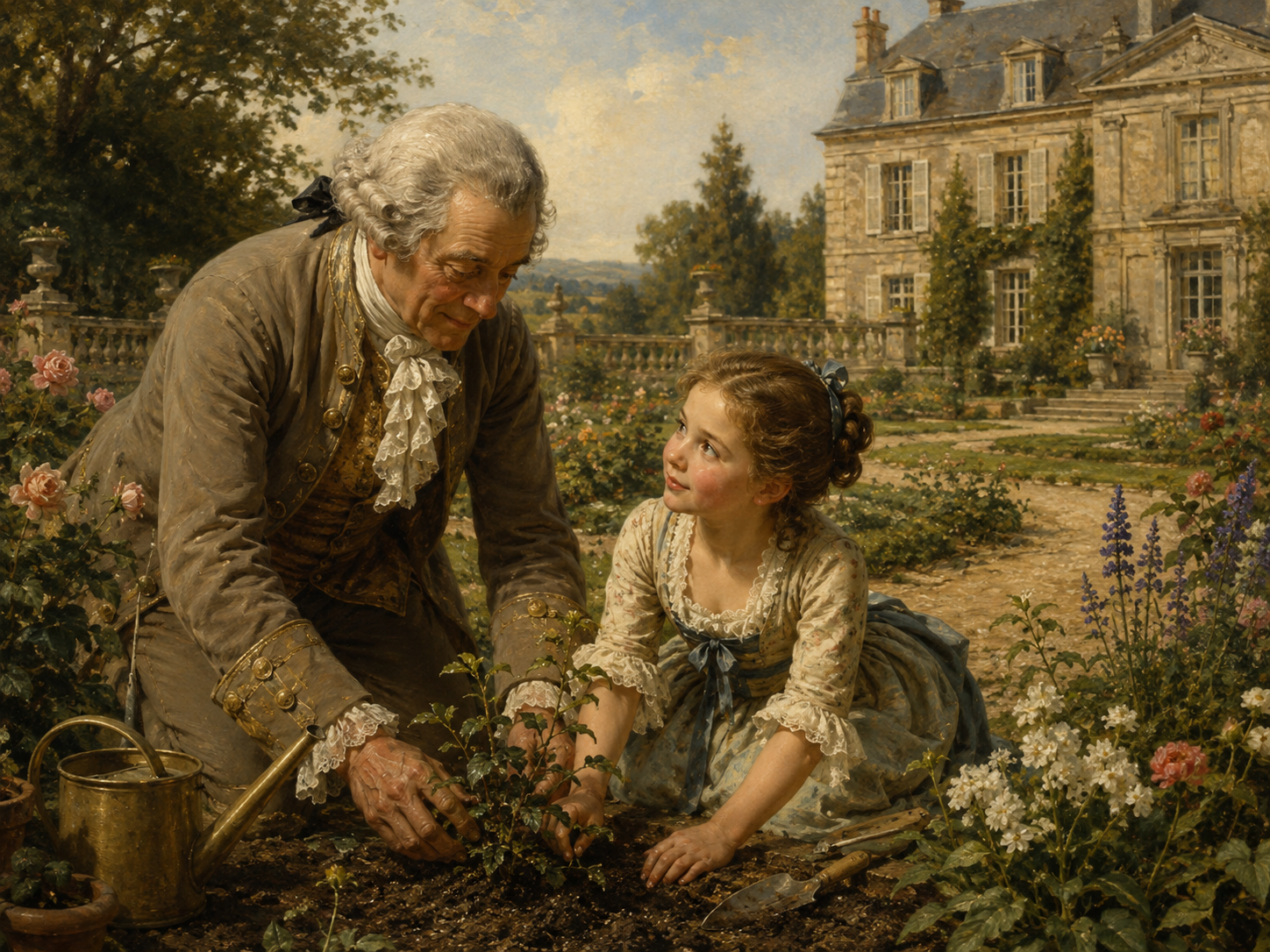
It seems the combination was the perfect tonic for the young Henriette.
Her own choices mattered, of course.
They always do. But so did the ripples that reached her from 130 years before she was born.
What she did with it
Henriette had eight children. Three died in infancy. Five daughters reached adulthood.
She raised them the way she had been raised.
There is a lovely detail here.
She broke sharply with 18th-century aristocratic custom by raising her children personally, inside her own chambers.
Upper-class children were traditionally handed to wet nurses, governesses and tutors, and kept at a distance from their parents.
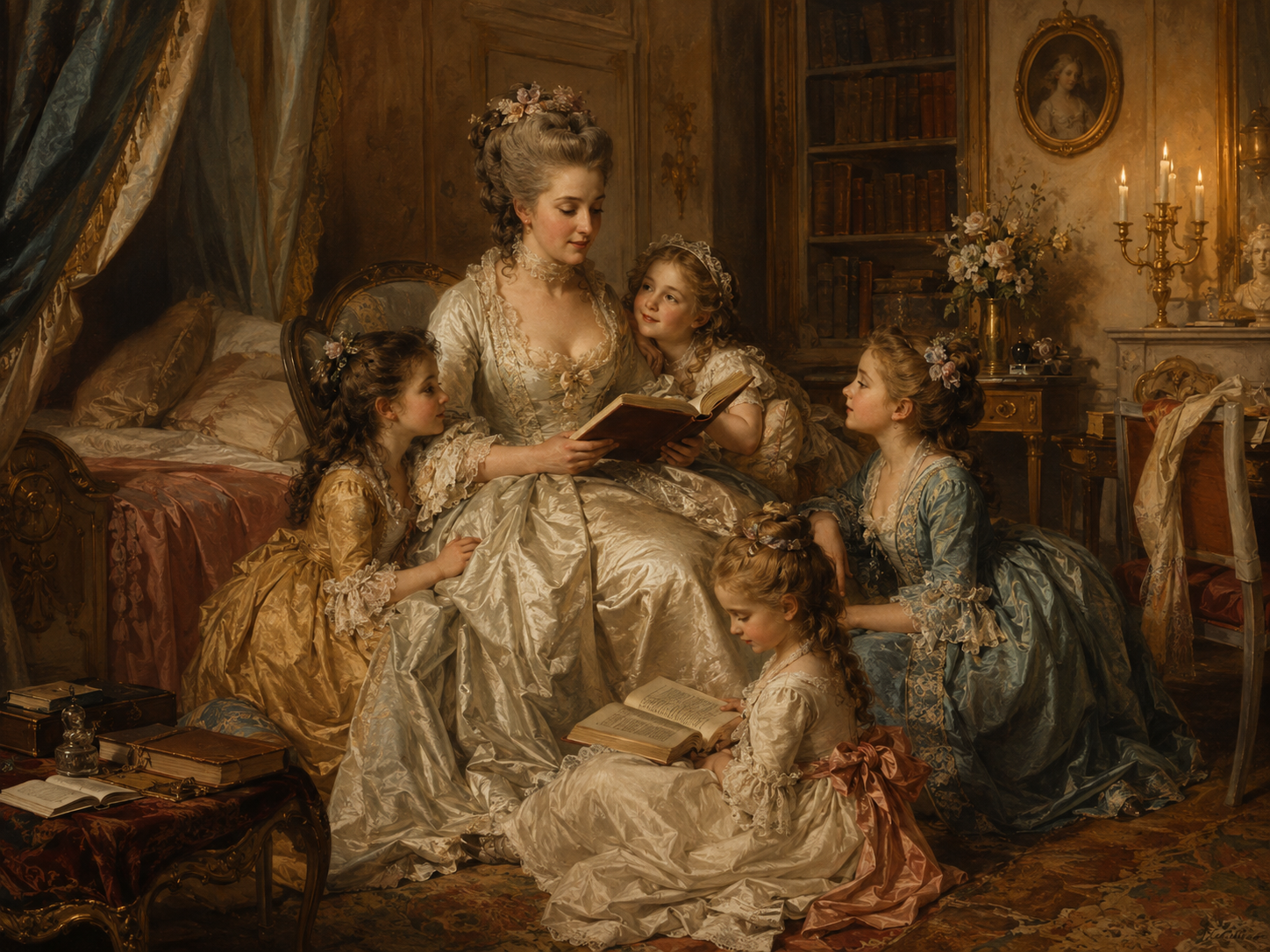
Henriette rejected that cold standard.
She turned her rooms into a warm, deeply educational sanctuary. She filled them with books and spent hours reading aloud to her daughters.
Her husband, the Duke of Ayen, was a gifted scientist and a detached courtier, absorbed in Versailles. Henriette, a pious introvert, used her private rooms deliberately — to shield her daughters from the superficiality and cynicism of the court.
Adrienne, her second daughter, inherited her mother's capacity for love, her fierce family devotion and her unshakeable moral strength.
This was the house Lafayette walked into in 1774.
Three years
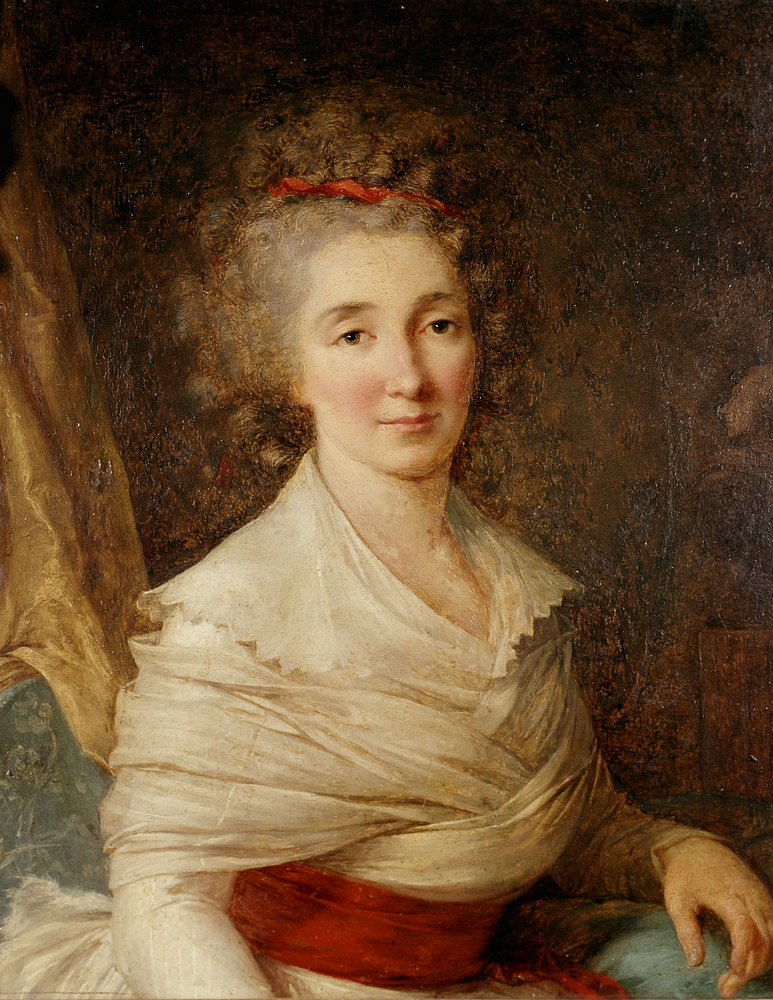
He was there for three formative years.
He fell deeply in love with Adrienne. He formed a mother-son bond with Henriette.
And he became close to his brother-in-law, Louis-Marie, Vicomte de Noailles, who had married Adrienne's elder sister Louise the year before — himself a man of deep humanity.
He would later join Lafayette in America and serve as a French commissioner at the British surrender at Yorktown in 1781.
Lafayette had arrived a lost soul with no family.
He now had a wife, a mother and a brother.
He had found a home.
He became part of a family rooted in love. His home of humanity.
Three years later, aged 19, he bought a ship with his own money and sailed for America.
And almost immediately he was noticed — not only for his ability, but for how he treated people.
Through the winter of 1777–78 at Valley Forge, he shared the conditions of the camp and spent his own money buying uniforms and muskets for his men.
A boy who had lost everyone had watched a woman step into the gap for him.
Now he was buying coats for other people's sons.
He spent the rest of a long life fighting for the dignity of others.
The part that hurts
On July 22, 1794, at the height of the Reign of Terror, Henriette was taken to the guillotine. She was 57.
She was executed alongside her own mother-in-law and Louise, her eldest daughter.
Having read and immersed myself in her story, that part hurts, even today.
Robespierre, the architect of the Terror, fell five days later. He went to the same guillotine. The Terror ended.
Henriette's daughter Adrienne — Lafayette's wife — survived. So did Henriette's grandchildren.
Adrienne later found the unmarked mass graves of the Terror, and turned that ground into a place of peace and remembrance, at Picpus in Paris.
Her mother is buried there. So, eventually, was Adrienne. And so is Lafayette, beside her, under soil carried back from Bunker Hill.
There is a lot more to this story, but I want to end here, for now.
For me, this summarises how harm was transformed into harmony, the healed became the healer, the gentle became the strong.
The young Lafayette, orphaned and alone at 12, had become a strong leader, gentle of spirit and kind of heart.
And he had played a key role in the birth of a nation: America.
Part Two: What This Means
Ripples always have a source

Most of us know about Newton's laws of motion. I especially like the illustration of Newton's cradle — the executive desk toy.
Lift one ball, let it fall, and the ball at the far end swings out.
The balls in the middle barely move at all. They transmit the force.
That is Madame d'Héricourt. That is Henriette.
So let me propose a law of my own:
Every ripple has a source, and every ripple creates outcomes — some far beyond our line of sight.
By ripple I mean ripples of humanity.
It works exactly the same way for ripples of inhumanity and indifference, as the Reign of Terror shows.
This does not deny the importance of personal choice, which in the Champions model is critical.
But choice needs connection.
We all need a source — something that encourages us, challenges us or ignites us.
Humanity-centered
This is where I want to be precise, because the distinction matters.
I am not referring to human-centered leadership.
That is a management approach which prioritises employee wellbeing, empathy, authenticity and growth. It optimises the work environment for individuals inside an organisation. It is a technique, a framework, a mindset shift.
Humanity-centered leadership goes deeper.
It treats core human traits — empathy, trust, accountability, gentleness — not as soft extras but as performance multipliers.
And it links them to identity: who we are, and who we choose to become.
The belief underneath it is simple.
Identity drives behaviours. Behaviours drive impact.
And identity is not fixed.
That is the Champions Pathway: choice, connection, creation.
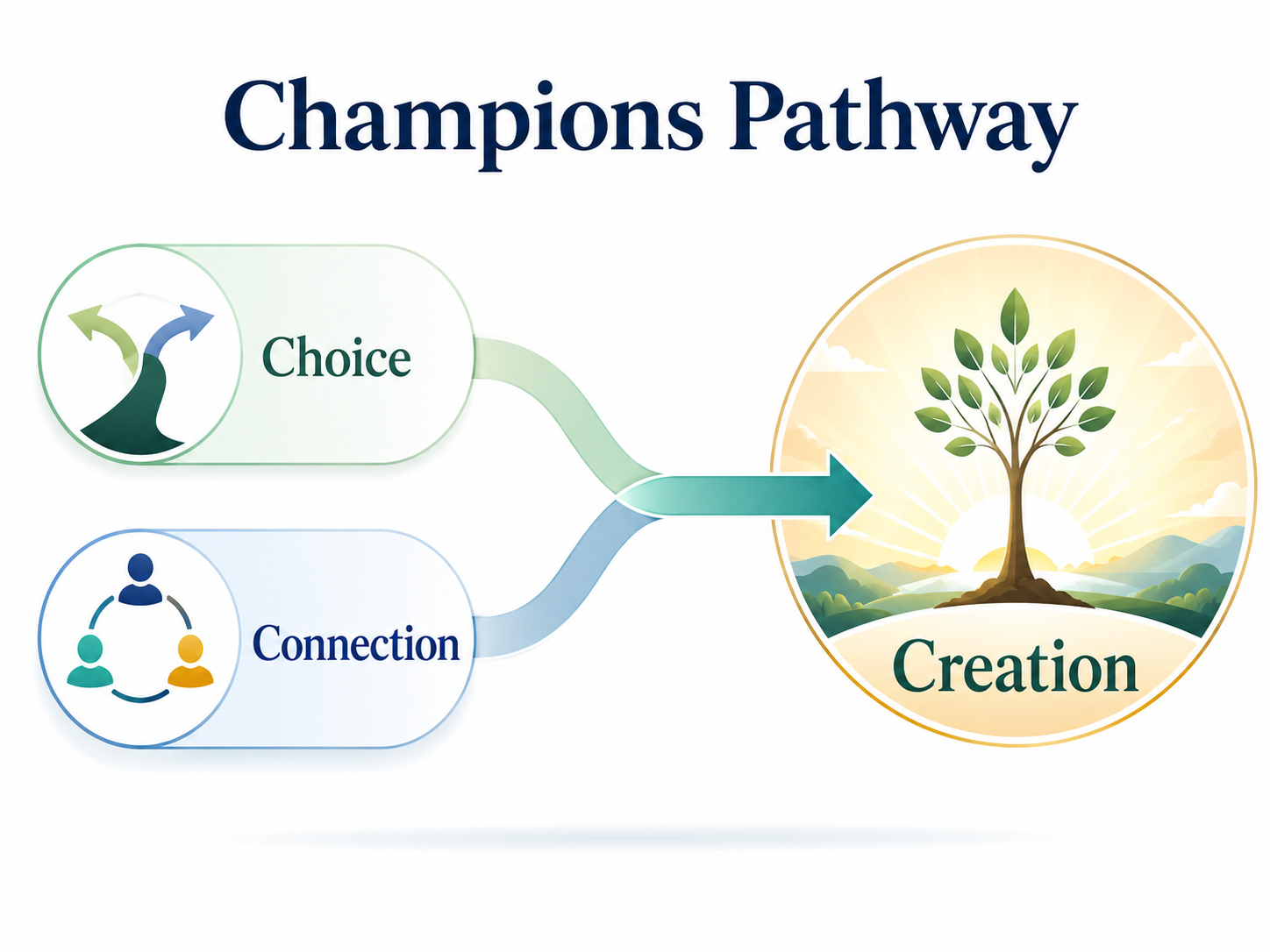
Humanity-centered leadership is about what you become.
The goal is a point where being a good human under pressure is no longer an effort, because it has become who you are.
We call that unconscious humanity.
Capability and humanity
We look at human behaviour through two dimensions: capability and humanity.
Lafayette had enormous capability at a young age. But capability alone tells you almost nothing about what someone will do with it.
Combine the two and four types emerge:
- Champion Leaders — great capability and great humanity
- Champion Angels — limited capability, yet great humanity
- Hubris — great capability, low humanity
- Brutes — limited capability and limited humanity
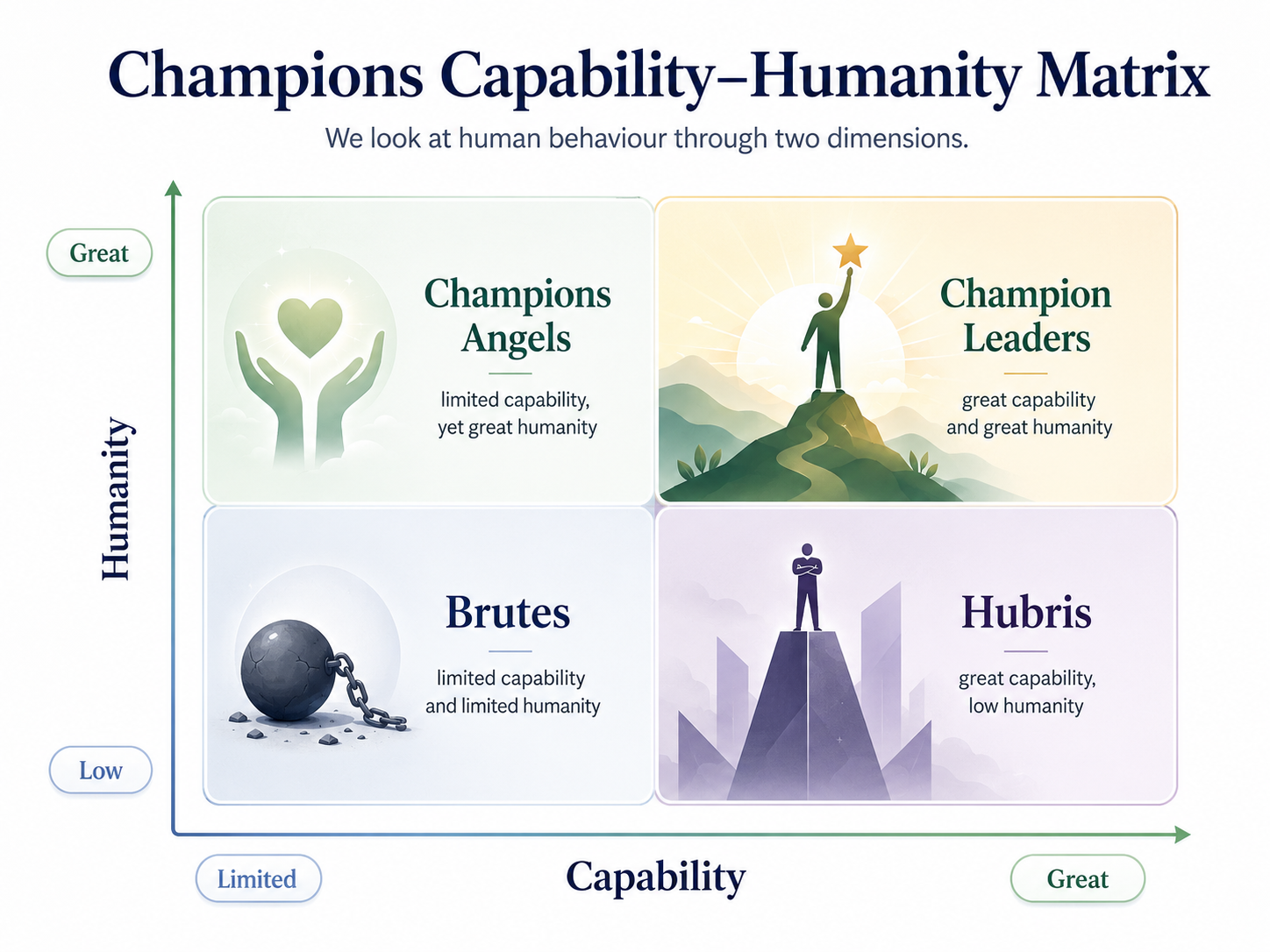
It is not a static analysis. We are all prone to mistakes, and capability changes with circumstance.
Why this matters now
Here is the uncomfortable part.
Technology is pulling our capability sharply and exponentially upward.
It is doing nothing of the sort for our humanity.
If anything, it does the reverse. Modern life can feel like the proverbial gerbil wheel — the quality of being human quietly lost inside the busyness.
Which leaves us with a widening gap.
And high capability with low humanity is the most dangerous combination there is.
It is not incompetence. It is competence pointed the wrong way — and it now scales in seconds.
The counterweight cannot be a wellness day and a values poster.
Humanity has to be built as deliberately as capability: structured, practised, mentored, held to account.
This is why we established Champions.
And it is what a Champions Circle is: a small group, meeting regularly, practising the little virtues on purpose — the pause before you respond, the gentle answer, the honest repair — until it stops being an effort and simply becomes normal.
Small communities. Chosen mentors. Shared language. A habit of repair.
The same architecture Jane de Chantal built four hundred years ago.
And it works.
In our programme with Union Health Service in Chicago, staff moved from "What's your problem?" to "What are they going through?" Every member of staff interviewed reported increased emotional awareness and self-regulation. Nine in ten reported better collaboration across teams.
Young students who went through Champions, like Fred and Hiba, say much the same.
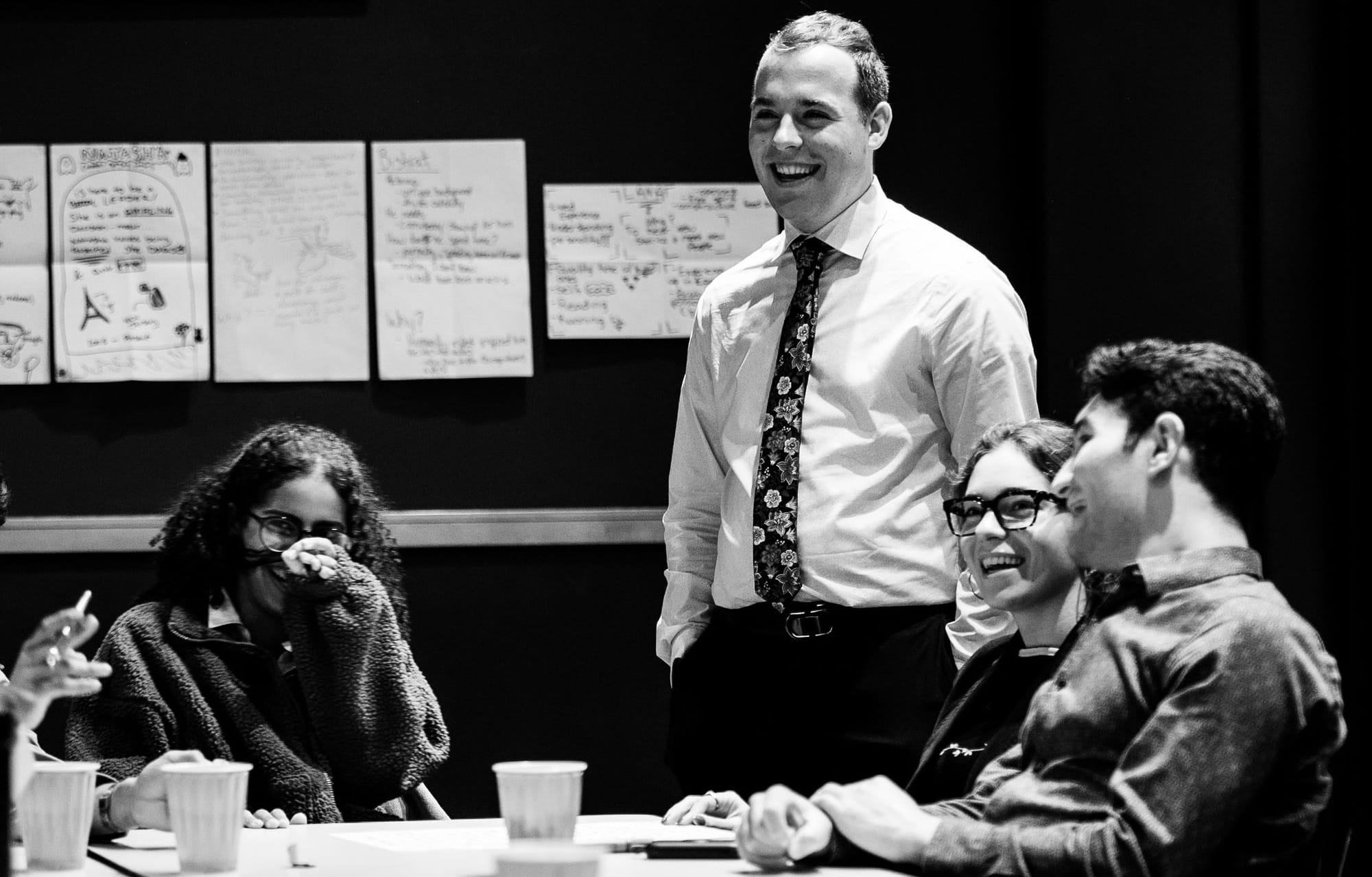
The same principles. Four centuries apart.
We are not inventing this.
We are calling our humanity forward and passing it on.
The question
Every ripple has a source, and every ripple creates outcomes. Some we can see. Most we cannot.
Francis de Sales could never have imagined what might unfold when he made an active choice to lead a gentle life.
Equally, Jane de Chantal could not have thought that her administration would carry that gentleness across four centuries — and counting.
Madame d'Héricourt never knew that the quiet work she did with a motherless child would surface, decades later, at the birth of a nation.
Henriette had no idea that her love for a lonely, orphaned boy would help shape America and beyond.
Most of the time, our ripples are nothing dramatic. But they are the heartbeat that brings joy, hope, love — humanness — to everyday life.
They are the antidote to the challenge we all face: how to remain human in a world that increasingly feels unhuman.
Get these right, and the bigger moments take care of themselves. They become like muscle memory.
So:
What kind of ripple are you creating — and do you know?
Are the little virtues part of your daily life?
Is gentleness your strength?
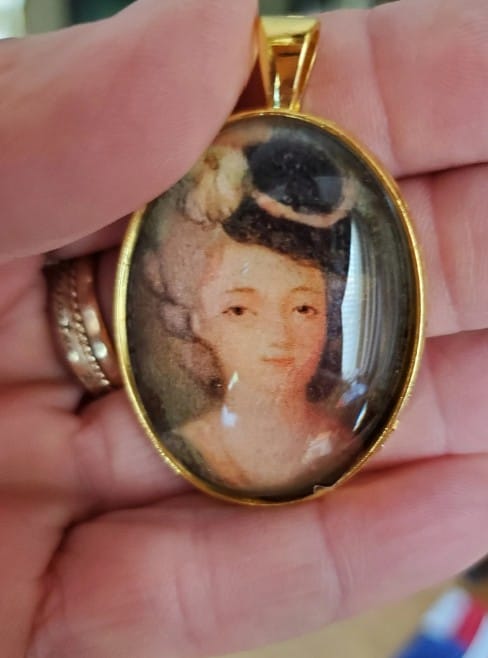
I want to end with the love that grew between Adrienne and Lafayette.
They had been married at 16 and 14, in an era when aristocratic marriage was a transaction and nothing more.
Theirs became something else entirely.
When Adrienne died in 1807, her last words to him were: "Je suis toute à vous." I am all yours.
Lafayette later wrote:
"For so long as her right hand had any power of movement left, she laid mine first to her mouth, then to her heart… I could feel it move, and it was as though that movement were repeating the last words she ever spoke: 'I am all yours.'"
That was not the 12-year-old orphaned rich boy.
That was the man he became.
If this story has inspired you to stay in touch, then join the 35Champions site, either as a free member or paying it forward.
A note on sources
The historical spine of this piece — the dates, the deaths, the marriage, the executions — is drawn from standard biographical sources on Lafayette, Adrienne and the Noailles family, and from The Life of Adrienne d'Ayen, Marquise de La Fayette, written by their daughter Virginie de Lasteyrie, which is the closest thing we have to testimony from inside the household.
The records on Madame d'Héricourt are genuinely thin. What I have said about her is inference from the tradition she was formed in and the woman she raised.
The Sales quotation on gentleness is universally attributed to him, but has never been traced to a specific passage in his written work. It is very likely a distillation of his teaching rather than a sentence he set down.
It is, though, a universal maxim — and it summarises the enduring strength of humanity-centered leadership.