Champions Circles — How to Reach 250 million people
At the Kigali Genocide Memorial, the following words are displayed:
If you knew me and really knew yourself, you would not have killed me.
There is something in understanding that is powerfully preventative.
It is also formative: it enables, creates and sustains.
And the key to understanding is authentic, human connection.
Think back to February 2024.
I had just stood down from 20 years of volunteer and service leadership with the Kigali Genocide Memorial. I had only gone for a few weeks in early 2004 as a volunteer to help build the Memorial.
But those few weeks transformed my life. And, through the bonds of humanity that were created, something truly special developed.
Today, 2.5 million children in Rwanda receive peace & values education, baked into the education system.
It is truly remarkable. But is it enough?
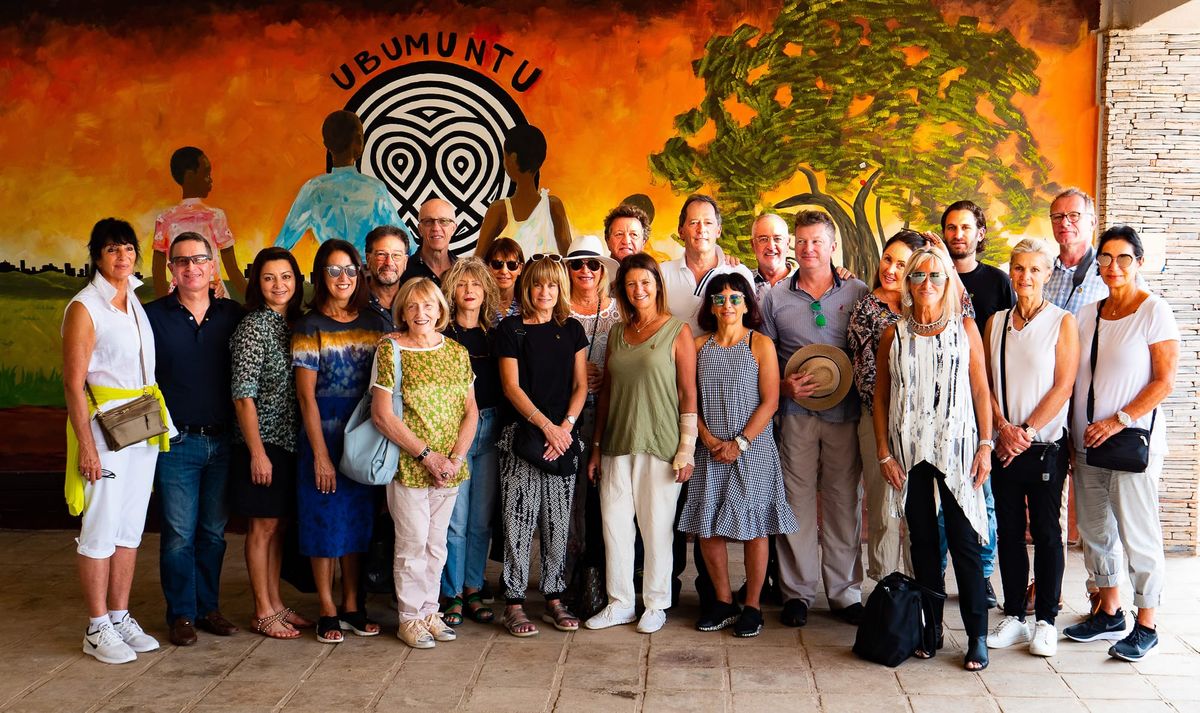
February 2024: I had just curated a visit by 230 international CEOs to the Memorial, a day that would now transform their lives. One wrote to me:
Hi Glen,
Great to meet you last week in Rwanda. This experience was life-changing and amazing. It would be great to disseminate it to the world!
All the best
Ali
That is why I created Champions — a story of humanity about all of you, about us.
If you’d like to join me on the next journey, shoot me a message.
The short video below followed a pilot program in 2025/26 with college students from across ten universities. Their feedback was simply astounding.
Podcast
Ai delivery because it’s so efficient, but the content is all mine
The podcast below is the story of Champions, how it came to be.
Overview
And this gives an overview of the vision.
Ten People. 250 Million Lives.
The Power of Human Connection.
Imagine giving 250 million people hope, and a future they can believe in. Within five years. Starting with just ten.
Why this matters
We are more connected than ever, and lonelier than ever
In school, at work and out of it. Burnout is rampant, and part of that is because of the loss of authentic, human connection.
I've spent more than 20 years working with Rwanda genocide survivors and perpetrators: understanding, experiencing what it means to be human.
What I've seen is the power of authentic, human connection.
This is the vision for Champions Circles, my vision to take this humanity, that I have seen and experienced, from Rwanda to a wider world. Not as charity, but as an engine of hope, happiness, healing and economy. Connection builds trust and trust creates economy. It's all about the power of small groups.
The math
How ten becomes 250 million
Ten people. Six months. Those ten facilitate new Circles. Every six months the numbers multiply by ten.
Do the math. It is mind-blowing, and it is mathematically correct. But it's not just the big number that matters. Each person, every 250 million of them, belongs to a small group of around five, within a wider framework. That's the engine that builds vibrant, dynamic communities.
The practical stuff
What happens in a Circle
Small enough for one real conversation. (Put ten round a dinner table and it always splits into three or four.) A Champions facilitator takes the Circle through the Champions Program, in three steps. Each one earns a badge.
A few hours a month: small bites, not a big commitment. Then the Circle carries on, in whatever way its members choose. And each Champion goes on to lead Circles of their own.
That's not just paying it forward: you learn by teaching others. And that's how ten becomes 250 million.
Why it works
Proven, simple, connected
The evidence
The Champions Program works
A healthcare organisation in Chicago
This past year, an independent evaluation after just 16 weeks:
“Champions shifted how people think about one another, and you can see it.”
CEO, healthcare organisation, Chicago
Young people: the 35Champions Youth Program
A pilot program, run in 2025–26 with 15 students from ten colleges across America. The feedback from students was remarkable.
“The transformation has been like night and day.”
Fred Gale, one of the students on the program
Research backs it up. A review of 148 studies found that people with strong relationships have about 50% higher odds of survival. In Mayo Clinic trials, doctors meeting in small groups saw burnout fall. Google found that feeling safe to speak up was the biggest factor in its best teams.
The evidence is clear: people thrive in small, trusted groups.
History has done it before
There's a reason they call him Alfred the Great
He was just 21 when he became king of Wessex, one of the Anglo-Saxon kingdoms of England, over 1,000 years ago.
By 28 he was hiding in a swamp for his life. The Vikings had taken nearly all of England, except that swamp. He was the last man standing.
He felt England had fallen because it had lost its faith, its soul and its humanity. He turned to ordinary people. He gave them a structure to organise themselves, so they could farm and defend themselves, resolve disputes locally, and trade.
It grew into what became known as the Tithings and Hundreds, a form of organisation that became a trust economy, lasting in some form for more than 1,000 years.
It was grassroots, built by people, not by government. No one wrote a grant application. No one ran a fundraising campaign.
This created the ethos that led to the Magna Carta: that no one should be judged except by their peers, the same principle the small groups had lived by. And the culture of trust it created helped make Britain the strongest nation on Earth, and shaped the world we live in today.
Trust economies built on small groups win. That's why they call him Alfred the Great.
The Humanity Badge
Wear it, share it, fund it
Every movement needs a symbol. Ours says one thing:
“I am a Champion of Humanity.”
Every badge starts a conversation, and pays it forward.
Earned
Marks each stage a Champion reaches. People wear them with pride.Given
Anyone can buy one, and it funds Circles for young people.It already works: the Kigali Genocide Memorial
“I wear this badge in honor of my father Steven Krulis who survived the horrors of Auschwitz and the Holocaust to teach me what it is to be a Champion of Humanity.”
Tommy Krulis
Badge designs are for illustration only.
How it pays for itself
Not a charity. A snowball.
Champions Circles isn't a charity that relies on donations. Yes, it will need patrons, Champions who initiate the system, like Alfred, but then it becomes a snowball, creating its own momentum.
Champions is a Champions-led, Champions-owned movement. Once it's running, it pays its own way, from five sources:
And because Champions go on to lead the next Circles themselves, growth doesn't wait on the next grant.
Trust creates economy.
Join me
It starts with ten. It could start with you.
I'm inviting a small group of people I know and trust to prime the pump: Patrons who bring starting funds, leadership and connections, and get the first Circles running.
“Never doubt that a small group of thoughtful, committed citizens can change the world; indeed, it's the only thing that ever has.”
Margaret Mead
Investing in humanity: the best bet you will ever make.
Contact usThe full detail follows below, for those who like to dig.
Detail - for those that like more
 Glen Ford

 Glen Ford
 Glen Ford
And you can see much more on the 35Champions site.
Yours always, Glen